
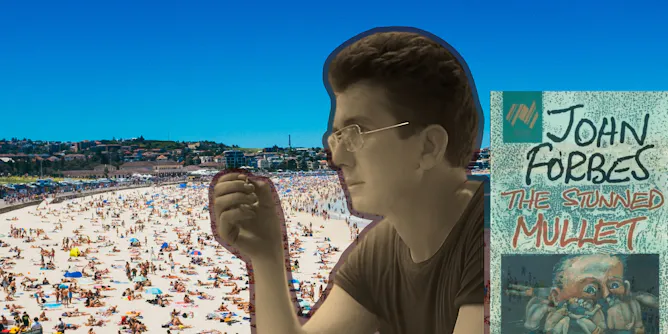
David Malouf declared John Forbes ‘the most elegant and inventive poet’ of his
generation.
Articles on Poetry
Displaying 21 - 40 of 405 articles
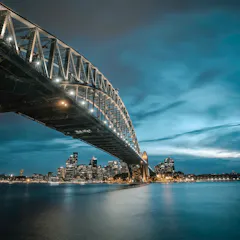
Five Bells is an elegy for Kenneth Slessor’s friend Joe Lynch, an artist who drowned in Sydney Harbour in 1927 after falling from a ferry.
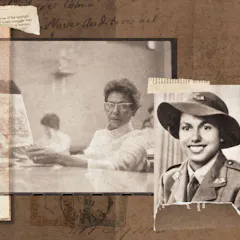
Oodgeroo’s debut collection We Are Going was the first ever book of poetry published by an Aboriginal person.
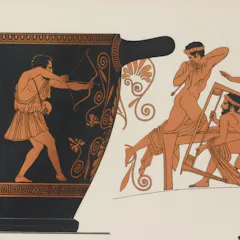
When the Odyssey first began to circulate in ancient Greece, no one knew its author. So how did ‘Homer’ become the name on the book’s cover?
Sharon Kernot knows how to make a pressing, potent, aching song from a stanza of free verse lines – and how to make a page of poetry talk its way into your head.
Is Christopher Nolan’s adaptation a definitive film version of Homer’s Odyssey? No, it isn’t. In fact, it can’t be.

Maitland was an educated, intellectual and self-determining woman and who found (and, sadly, lost) her big love.

Mary Leapor worked as a servant at Edgcote House and documented the goings on below stairs in her poetry.

Young poets wrestled with loneliness, fractured families, violence and other challenges – but also showed an unwillingness to surrender to despair.
AI-powered translation tools are certainly impressive. But there is an important frontier for translation technology, one AI might never be able to breach: the poem.
A suspicion of prose poetry permeated Anglophone countries in the 20th century. Today, it is rejuvenating poetic traditions.

A haiku builds a scene and then breaks it. Climate change has exactly that shape, which means the form itself can carry the science.
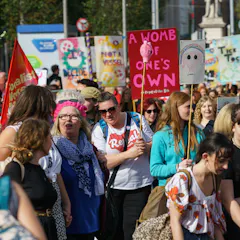
No poetry collection on the subject of abortion has come out of Ireland.
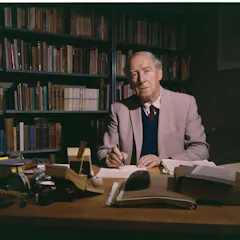
In A.D. Hope: A Life, Susan Lever shows the philosophical reach, formal brilliance and impassioned force of Hope’s poetry.
Contrary to popular belief, poetry doesn’t have to rhyme – and rhyme is not a marker of quality, or ease. Some of the world’s most famous poetry proves it.

Poetry will not fill potholes. However, poet laureates can help cities attend to memory, grief, language and a sense of belonging.
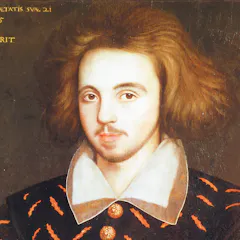
Marlowe’s artistic brilliance was arguably more concentrated, his imagination more original and his ideas more daring than Shakespeare’s.

Loss is inevitable, but the formalised language of poetry may help us endure it.

The Conversation invites academics across the UK and Ireland to write a poem inspired by climate change research.

These poems span over 200 years and a range of emotions, from sorrow, to fear and hope.
Top contributors
-

Emeritus Professor of Creative Writing, The University of Melbourne
-
Professor of Creative Pedagogies, Edinburgh Napier University
-
Lecturer, Creative Writing, UNSW
-
Emeritus Professor of Literature and Environment, Curtin University
-
Associate Professor of Writing, USC Dornsife College of Letters, Arts and Sciences
-
Honorary Associate Professor, English and Writing, University of Sydney
-
Professor in Australian Literature and Writing, The University of Queensland
-
Honorary Fellow, RMIT University
-
Senior Lecturer, English and Creative Writing, Southern Cross University
-
Professor of Writing and Literature, Deakin University
-
Distinguished Professor Emerita of Creative Practice, Faculty of Arts and Design, University of Canberra
-
Distinguished Professor, North Carolina State University
-
Senior Lecturer In Creative Writing, University of Roehampton
-
Professor of English Literature, Aberystwyth University
-
Political Scientist, University of the Western Cape