
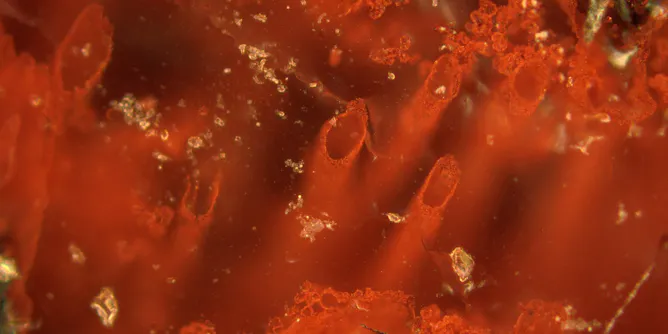
Tiny tubes and filaments of iron found in rocks in Canada turned out to be the remains of microbes from over 3.7 billion years ago.
Articles on Origins of Life
Displaying 41 - 58 of 58 articles
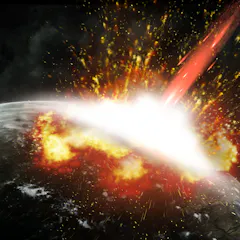
New research suggests how asteroids may have helped create conditions for life on Earth. But we shouldn’t get too carried away with the idea – yet.
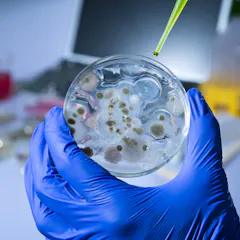
Bacteria are single-celled organisms but you’d be fooled to think they weren’t also hugely complex.
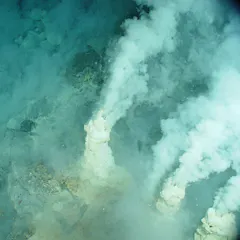
New research suggests the “primordial soup” theory can’t explain how living cells evolved to harness energy.
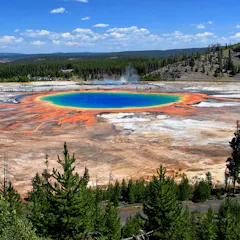
Scientists have uncovered genes they believe have been passed down from an ancestor organism that all life evolved from.
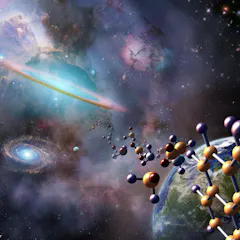
A new theory could explain why the key molecules of life - DNA and RNA - only come in one of two possible forms.
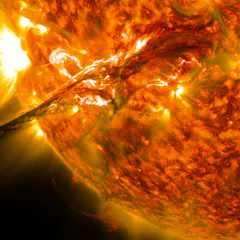
Life on Earth may have started with a bit of sunshine and showers, followed with a light breeze of laughing gas and a sprinkle of hydrogen cyanide.
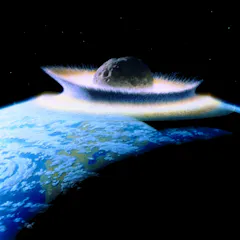
Study suggests that comets and meteorites could have seeded planets beyond our own solar system with life.
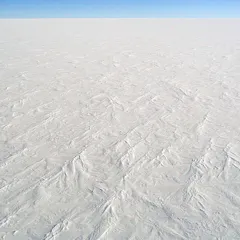
Is this where it all began?
The origin of life is still an unsolved riddle. How were life’s building blocks first assembled?
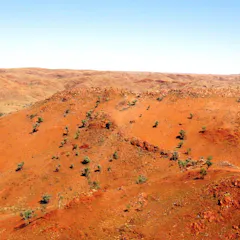
The debate has raged for years on the origin of life-like structure in an ancient rocky find in Western Australia. But is it evidence of early life?
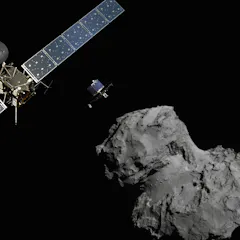
Scientists working with data sent back by the now-slumbering Philae lander have announced the discovery of organic molecules on the comet 67P/Churyumov-Gerasimenko. Finding organic compounds on 67P’s surface…
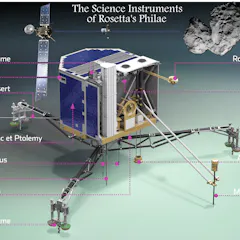
The drama of Philae’s slow fall, bounce and unfortunate slide into hibernation was one of the most thrilling science stories of a generation. But what in its short 60 hours of life on Comet 67P did it…

Theoretical physicists are caricatured in the popular imagination as only involved in abstruse and difficult-to-imagine topics. But some of these theoretical physicists are involved in something closer…
A chemical found in hair bleach may help answer questions about the origins of life and explain why new life does not emerge on modern Earth. Hydrogen peroxide may have helped transform RNA (ribonucleic…
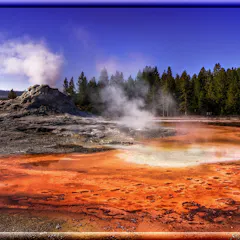
Scientists have simulated the electrical energy produced in the Earth that may have led to life 3.5 billion years ago. Using a fuel cell, researchers from the University of Leeds and NASA’s Jet Propulsion…
How life came about from inanimate sets of chemicals is still a mystery. While we may never be certain which chemicals existed on prebiotic Earth, we can study the biomolecules we have today to give us…
No one knows how life began on Earth. But for it to happen, some simple chemical building blocks would have been needed. Many scientists argue the Earth’s violent past, with its massive volcanoes and regular…
Top contributors
-

Professor of Planetary and Space Sciences, The Open University
-
Director of the Centre for Bacterial Cell Biology, Newcastle University
-
Associate professor, Australian National University
-
Scientist, Max Planck Institute for Solar System Research
-
Associate Professor in Chemistry, Dublin City University
-
University Distinguished Professor of Astronomy, University of Arizona
-
Postdoctoral research associate, University of Oxford
-
Professor of Evolutionary Palaeobiology at the Milner Centre for Evolution, University of Bath
-
PhD Candidate in Prebiotic Chemistry, UNSW
-
Postdoctoral Researcher of Evolutionary Biology, University of Pennsylvania
-
PhD Candidate in Biology, University of Bath
-
Postdoctoral Scholar in Chemical Engineering, University of Chicago
-
Honorary Senior Lecturer, School of Physics, UNSW
-
Lecturer in Bioinformatics, University of Nottingham
-
PhD Student in Astrobiology, Dublin City University