
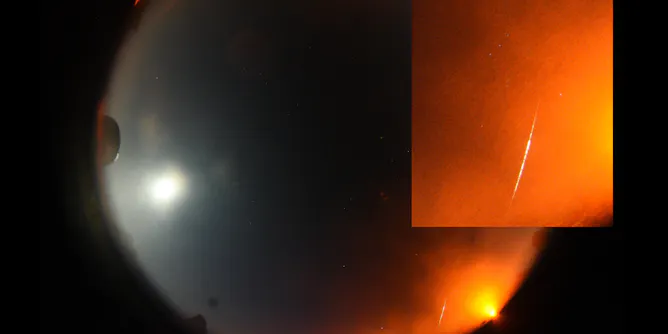
Within hours of its landing, samples of the Winchcombe meteorite had been recovered and its origins tracked back beyond Mars to the asteroid belt.
Articles on Origins of Life
Displaying 21 - 40 of 58 articles
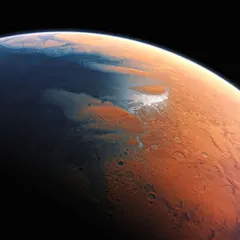
A study has found that microorganisms living on Mars billions of years ago may have left the planet uninhabitable.

The chemical reaction that forms essential biomolecules like proteins and DNA normally doesn’t occur in the presence of water. Microdroplets provide a unique environment that make it possible.
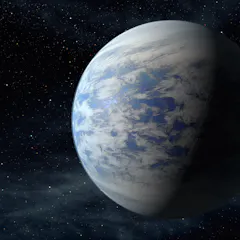
Newly discovered super-Earths add to the list of planets around other stars that offer the best chance of finding life. An astronomer explains what makes these super-Earths such excellent candidates.

We may be on the brink of discovering whether water and organic material, which enabled life on Earth, came from asteroids.
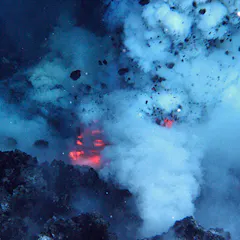
Volcanic eruptions on the seafloor are mysterious, but new research provides fresh clues.
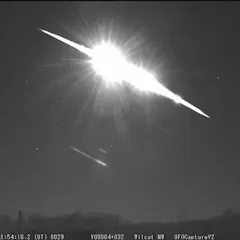
It looks like a broken barbeque brickette, but the newfound meteorite is a capsule of the Solar System’s history that could reveal the secrets of the origin of life.
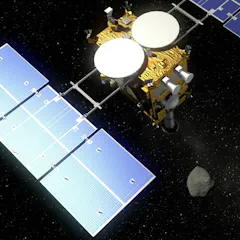
If the building blocks of life were present at the time that Earth was born, this could mean life is common in the universe.
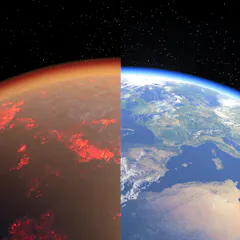
Unlike our hellish neighbour Venus, Earth was far enough from the Sun for liquid water to form and create a more hospitable environment for life.
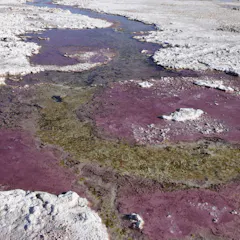
How ancient microbes survived in a world without oxygen has been a mystery. Scientists discovered a living microbial mat that uses arsenic instead of oxygen for photosynthesis and respiration.

Considering what we know about the key ingredients for life’s formation on Earth, here are three explanations for how this process may have occurred on our sister planet.
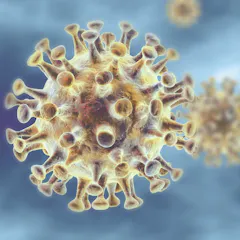
We don’t fully understand viruses, and we’re still trying to understand life.
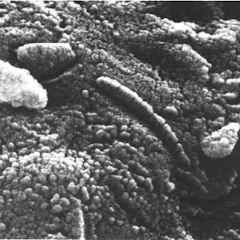
New research shows how rock features that look like fossilised microbes can form without life.
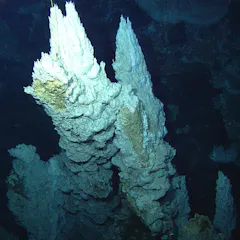
Scientists have for the first time created shown how the precursor to living cells could have formed around deep-sea hydrothermal vents.
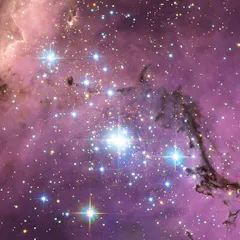
Humans evolved through a series of highly unlikely events – so finding another intelligence like us would be like winning the lottery many times over.

Current plans for lunar exploration may end up destroying ancient, genetic samples from Earth that have ended up on the moon.
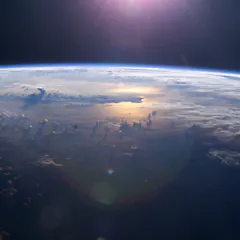
Genetic data has helped scientists develop new estimates for the origin and evolution of life on Earth.

Recent discoveries of ancient viruses are helping scientists understand their origins.
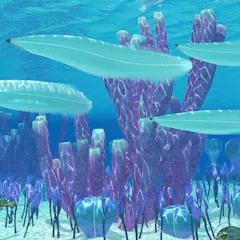
New research suggests life on Earth became more diverse because of a change in biology related to stem cells, not just rising oxygen levels.
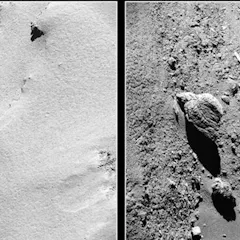
Dust can be instructive. The analysis of those collected around the comet 67P/Churyumov-Gerasimenko provided new information on the history of the solar system.
Top contributors
-

Professor of Planetary and Space Sciences, The Open University
-
Director of the Centre for Bacterial Cell Biology, Newcastle University
-
Associate professor, Australian National University
-
Scientist, Max Planck Institute for Solar System Research
-
Associate Professor in Chemistry, Dublin City University
-
University Distinguished Professor of Astronomy, University of Arizona
-
Postdoctoral research associate, University of Oxford
-
Professor of Evolutionary Palaeobiology at the Milner Centre for Evolution, University of Bath
-
PhD Candidate in Prebiotic Chemistry, UNSW
-
Postdoctoral Researcher of Evolutionary Biology, University of Pennsylvania
-
PhD Candidate in Biology, University of Bath
-
Postdoctoral Scholar in Chemical Engineering, University of Chicago
-
Honorary Senior Lecturer, School of Physics, UNSW
-
Lecturer in Bioinformatics, University of Nottingham
-
PhD Student in Astrobiology, Dublin City University