
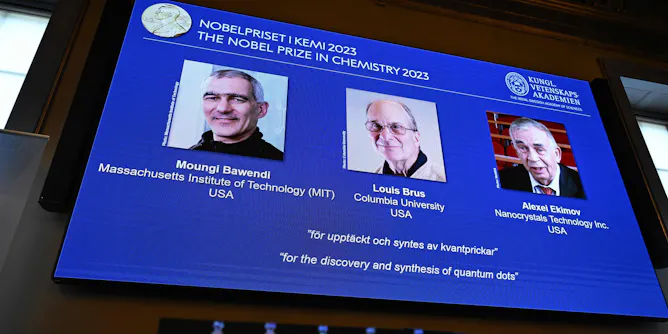
Louis Brus explains some of the foundational research – and how even the letter carrier wants to shake your hand when you’ve just won a Nobel Prize.
Articles on Nobel Prize
Displaying 61 - 80 of 280 articles
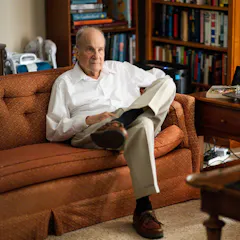
Louis Brus, one of the newest Nobel laureates in chemistry, speaks to The Conversation Weekly podcast.
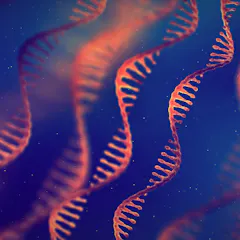
The goal of mRNA technology is to harness the power of the cell to potentially prevent infections and treat diseases.
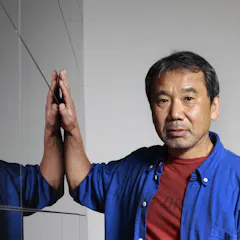
Japanese and English readers have read Murakami in quite different contexts and chronologies.
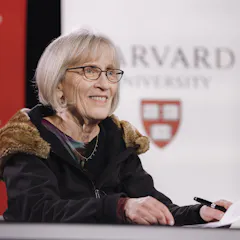
Goldin is showing the world that economics is about more than just finance.
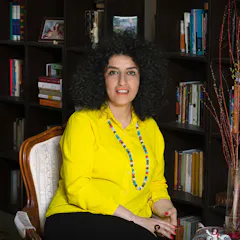
Narges Mohammadi is the second Iranian woman, after Shirin Ebadi, to win the Nobel Peace Prize. She remains locked up in Evin, Iran’s most notorious prison for political detainees.
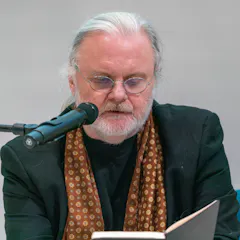
The prize has gone to a Norwegian playwright and novelist whose work examines the lives of ordinary people on the outer reaches of society.
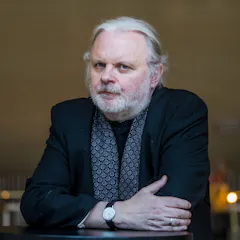
For Jon Fosse, the fourth Norwegian to win the 2023 Nobel Prize in Literature, writing has been a way of surviving.
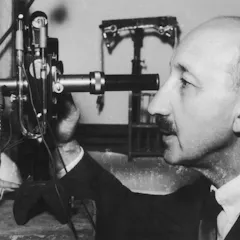
Some Nobel Prize-winning ideas originate in strange places, but still go on to revolutionize the scientific field. George de Hevesy’s research on radioactive tracers is one such example.
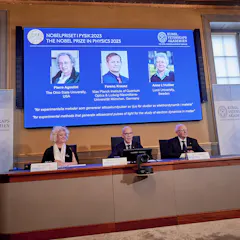
The discussions in the committee are always open, frank and sometimes emotional, but never hostile.

Quantum dot technology has also helped revolutionise medical imagining.

Quantum dots are a prime example of the way nanotechnology engineers materials at an atomic scale.
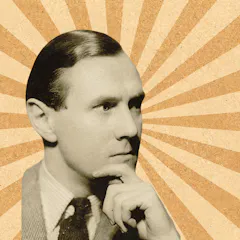
The aura of a major literary prize will inevitably fade. What we are left with is the work itself.
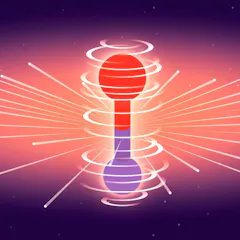
The 2023 Nobel Prize in physics recognized researchers studying electron movement in real time − this work could revolutionize electronics, laser imaging and more.

L'Huillier was busy teaching when she her Nobel prize was awarded.
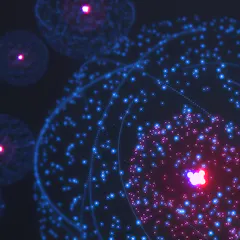
Three scientists won the 2023 Nobel Prize in physics for their work developing methods to shoot laser pulses that only last an attosecond, or a mind-bogglingly tiny fraction of a second.

The 2023 Nobel Prize in physics has been awarded “for experimental methods that generate attosecond pulses of light for the study of electron dynamics in matter”.
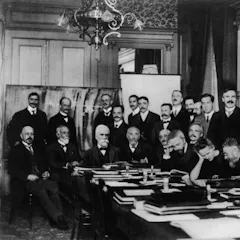
Superconductivity may sound like science fiction, but the first experiments to achieve it were conducted over a century ago. Heike Kamerlingh Onnes, credited with the discovery, won a Nobel Prize in 1913.
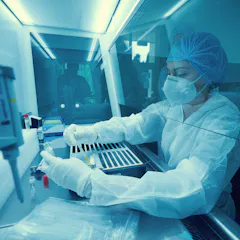
The winners of the 2023 Nobel Prize in physiology or medicine made a discovery that helped create the COVID-19 vaccines. They couldn’t have anticipated the tremendous impact of their findings.

The science that wins the Nobel Prize in Physics each year can be hard to get your head around – but it often has real everyday implications.
Top contributors
-

Emeritus Robert Reford Professor and Professor of Medicine, McGill University
-
Professor of Nuclear Physics, Michigan State University
-
Laureate Professor Emeritus, The Peter Doherty Institute for Infection and Immunity
-
Professor of Science Communication and Chemistry, University of Hull
-
Chancellor's Professor of Medicine, Liberal Arts, and Philanthropy, Indiana University
-
Professor of Chemistry, Connecticut College
-
Senior Lecturer, Discipline of English and Writing, University of Sydney
-
Professor and Lincoln Professor of Ethics in Public Affairs, Arizona State University
-
Professor of Writing and Literature, Deakin University
-
Professor, Monash University
-
Lecturer in African and African Diasporan Literature, University of Lagos
-
Head of School for Physics, University of Sydney
-
Emeritus Professor, Brunel University of London
-
Professor at Division of History of Ideas and Sciences, Lund University
-
Senior Lecturer in Economics, Cardiff University