

The vast prayer camps challenge stereotypes of Nigerian cities as chaotic, dysfunctional, and driven by religious tension.
Articles on Nigeria
Displaying 21 - 40 of 1376 articles

Armed groups in the Sahel are finding new ways to profit from the rapidly expanding lithium trade.
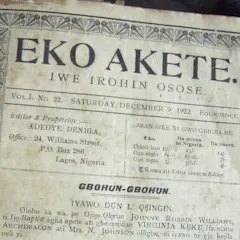
English was imposed as Nigeria’s official language, but the British had no way of controlling what people did with it.
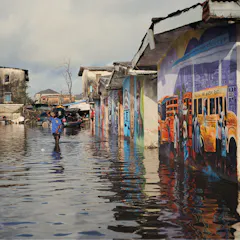
Crises that add up on top of each other have to be addressed in an integrated way.
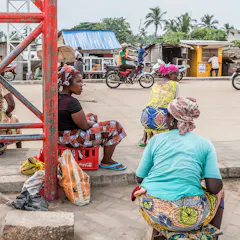
Border closure fails when it ignores the daily political and economic dynamics operating in the borders.
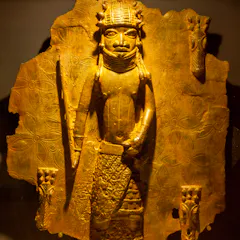
Archaeology can repair past harm, create work for people in the present and preserve cultural heritage for the future.
Africa still needs millions of better-paying jobs and higher productivity to reduce poverty. What has changed is the route to achieving those goals.

Nigeria’s new Virtual Assets Council doesn’t close all the loopholes in crypto-asset regulation.
It’s not lack of ambition that keeps young women out of politics.

For some people caught in conflict zones, remaining is the choice they feel they can live with.
The current security situation in Nigeria calls for establishment of state police.
A child born into a community with a history of political unrest is at higher risk of abuse as they grow into a young adult.
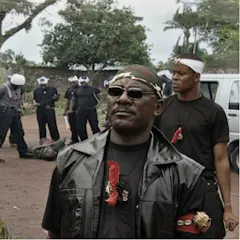
One of west Africa’s most popular action films speaks to Nigeria’s pressing security issues.
Generative AI’s overemphasis on Western moral concerns could reinforce global disparities in sensitive applications such as public health messaging and global communication.
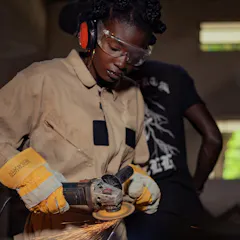
Youth employment programmes need to be built around real jobs, capable institutions and the young people they are meant to serve.
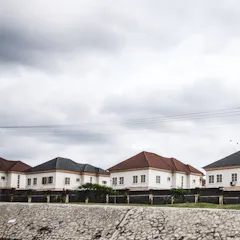
Nigeria’s housing policies have failed to meet the needs of its federal capital residents.
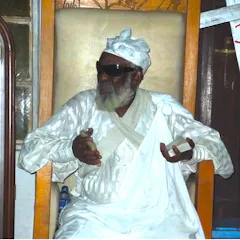
To secure health and wealth, many people combine elements from different religious traditions. One such movement is Chrislam.
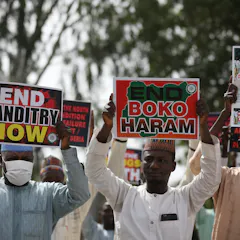
Banditry is widespread in Nigeria but knowledge about its character and nature is limited.
When armed groups use child recruitment or sexual violence, the impact of conflict on schooling is much more severe than in conflicts without these tactics.

Understanding what drives recruitment into these academies is not a defence of fraud. It is a precondition for dismantling it.
Top contributors
-

Professor of Economics & Business, Allegheny College
-
Professor of Sociology (Criminology, Victimology and Security Studies), University of Ibadan
-
Reader (Associate Professor) Department of Political Science, Federal University of Lafia, Nigeria, Federal University Lafia
-
Fellow, Nigerian Academy of Science
-
Research Fellow, Obafemi Awolowo University, Regional Coordinator, Institute for Security Studies
-
Economist and Postgraduate Supervisor, University of Lancashire; Keele University
-
Professor of World Politics, SOAS, University of London
-
Associate professor in Politics and International Relations, Leeds Beckett University
-
Associate Academic Officer – Risk and Recovery Governance, United Nations University
-
Lecturer in Political Economy of Violence, Conflict and Development, SOAS, University of London
-
Executive Secretary, Nigerian Academy of Science
-
Researcher, Centre for Peace and Security Studies, Modibbo Adama University of Technology
-
Professor, Obafemi Awolowo University
-
Professor, Obafemi Awolowo University
-
Professor of Demography and Social Statistics., Obafemi Awolowo University