
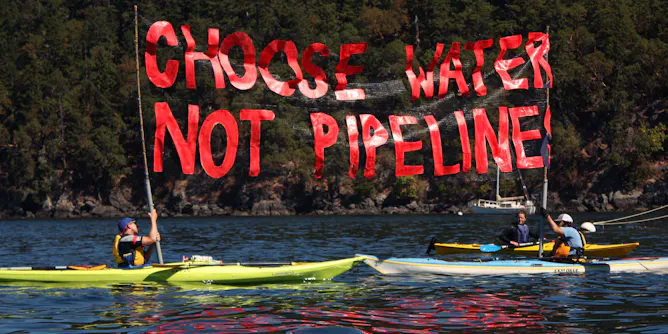
Legal experts see a current lawsuit against the environmental group Greenpeace as a classic example of using litigation to stifle public criticism.
Articles on Native Americans
Displaying 21 - 40 of 221 articles

Diversity, equity and inclusion programs are designed to help first-generation students, people with disabilities and veterans – including white people.
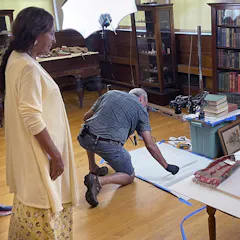
Repatriation is now a legal responsibility, but also a matter of human rights, an anthropologist writes.

Humans have become a geologic force by cooking the planet – using fire on a scale that is altering land, water, air and ecosystems.
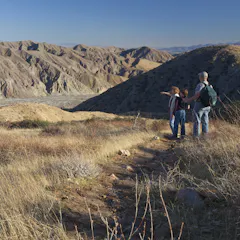
The Interior Department manages about one-fifth of all US land. Its secretary mediates among many competing uses for it, from recreation to energy production.
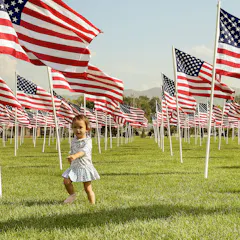
Since the earliest days of the nation, any person born on US soil is a US citizen. A new Supreme Court ruling limits judges’ ability to block Trump’s order.
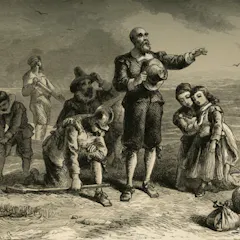
Puritans and Pilgrims came out of the same religious culture of 1570s England. Pilgrims hosted the first American Thanksgiving, and Puritans arrived later.
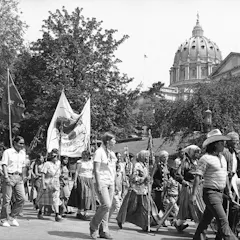
Movements like the Journey of Nishiyuu walk the land to reclaim culture and push for Indigenous nations’ rights.

Despite assumptions to the contrary, Tallchief showed that Indigenous people could not just exceed the standards of Western arts but also set new ones, writes a scholar of Indigenous cultures.
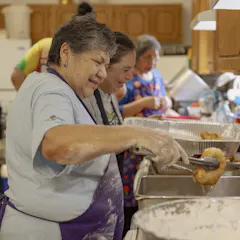
Frybread — a simple, versatile “comfort food” for many Indigenous communities — embodies the contradictions that have dictated Indigenous food and health in North America since colonization.
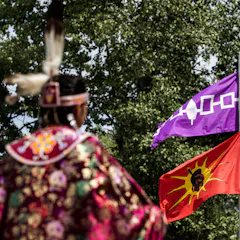
Native American communities were elaborate consensus democracies, many of which had survived for generations because of careful attention to checking and balancing power.

From the 19th to 20th century, Native children were physically removed from their homes and put into boarding schools. A scholar asks if that was genocide.

On July 4, 1891, Oklahoman farmer Oscar Weber Bilby served his neighbors the very first hamburgers on buns.

The behaviour of modern humankind has played a large part in the advent of new communicable diseases.
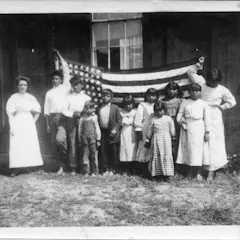
Why few Native Americans are celebrating the centennial of the Indian Citizenship Act of 1924.
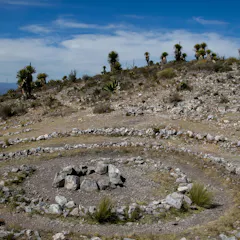
A historian of astronomy writes about the role of astronomical events in Indigenous cultures − and also the exploitation of their sacred traditions in present times.
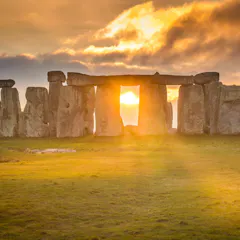
The monument’s ancient connection to the skies may run even deeper than we realised.
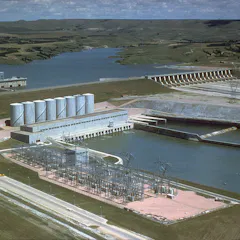
The Federal Energy Regulatory Commission recently ruled that it won’t approve energy projects on Native lands without tribal consent. But many more applications are pending.

U.S. laws on the repatriation of Indigenous artifacts and remains still uphold inequities in the relationships between Indigenous people and the agencies holding their materials.
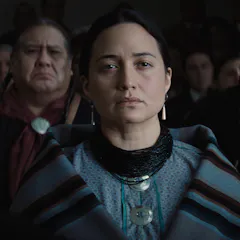
Gladstone has used her platform in the run-up to this year’s awards season to highlight issues affecting Native American communities in America today.
Top contributors
-

Professor of History, University of Illinois Urbana-Champaign
-
Distinguished Professor and Professor of the Humanities, USC Dornsife College of Letters, Arts and Sciences
-
Professor of Law and Adjunct Professor of Political Science, Wayne State University
-
Associate Research Professor of Anthropology, University of Colorado Denver
-
Assistant Professor, History, Coventry University
-
Associate Professor of Indigenous Literatures, University of Dayton
-
Associate Professor of Native American and Indigenous Studies, San José State University
-
Assistant Professor of Anthropology, Florida State University
-
Assistant Curator for History and Culture, National Museum of the American Indian, Smithsonian Institution
-
Indigenous Governance Program Manager and Professor of Practice, University of Arizona
-
Professor of English and Literary Arts, University of Denver
-
Professor of Environment and Sustainability, University of Michigan
-
Associate Professor in Modern US History, University of Bristol
-
Executive Director, American Indian Policy Institute, Arizona State University
-
Lecturer, Post-1945 US History and Transatlantic Relations, University of Stirling