
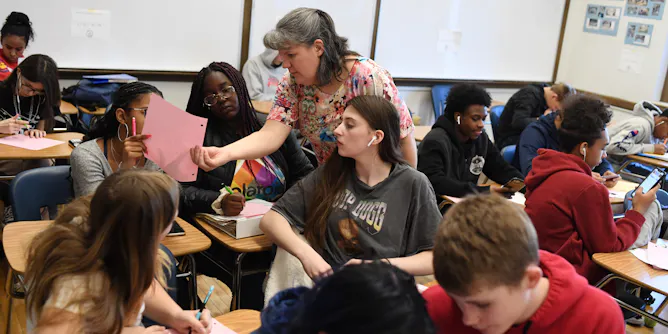
The reasons are not yet fully understood, but researchers consider societal influences that encourage greater compliance among girls as a potential cause.
Articles on Mathematics
Displaying 41 - 60 of 647 articles
The world’s huge investment in AI relies on some big assumptions.

A lack of gender diversity in maths means technologies such as AI and quantum computing are mainly designed by – and for – men.
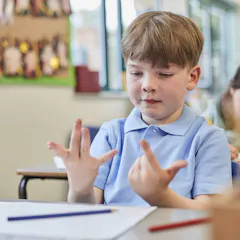
There is no need to discourage finger counting at any time. Children naturally stop using their fingers when they no longer need them.

A new collection of research papers examines how humans conceptualize numbers and the numeral systems we’ve build around them.
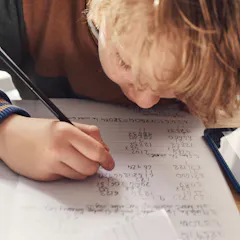
The third maths and stats curriculum for primary and intermediate schools in less than three years is being introduced on an unrealistic timeline.
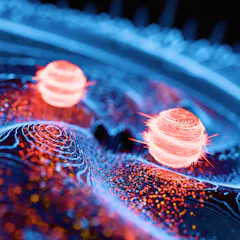
Virtual particles may not be real, but they help physicists track how forces move, and allow for incredibly precise measurements in particle physics.
Maths is often feared and rejected by teenagers. This has serious implications for Australia’s future.
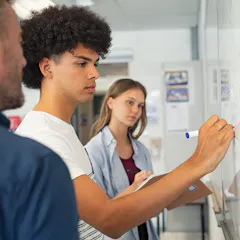
Many courses at university include mathematical or quantitative elements but do not require A-level maths for entry.
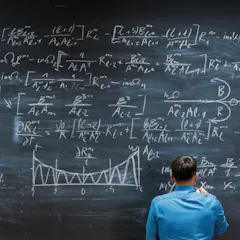
Maths allows people to be immensely expressive in their scientific and artistic ideas.

Researchers have used lab models to study how rogue waves form, but these don’t always transfer over to the natural world.

Students created sci-fi and fantasy stories with characters that represented ideas in statistics.
A new study shows painless brain stimulation technique may improve people’s ability to learn maths skills.
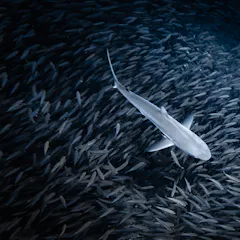
A new study proves for the first time that the ‘two-thirds scaling law’ applies to large animals as well as small ones, offering key lessons for conversation.

Recalling multiplication facts doesn’t automatically help children to apply their knowledge.

A researcher offers families advice on playful paths to summer STEM learning for children.
Science, technology, engineering and maths are still not an equal playing field for all. Here’s what needs to change.
Today, people use complex computing networks to search for prime numbers with millions of digits. But early mathematicians were running these calculations by hand.
Focusing on student learning preferences could boost the number of students from underrepresented groups earning science and engineering degrees.

Before becoming the pope, Robert Prevost gained a degree in mathematics.
Top contributors
-

Laureate Professor of Mathematics, University of Newcastle
-
PhD; Lawrence Berkeley Laboratory (retired) and Research Fellow, University of California, Davis
-
Emeritus Professor, University of Nottingham, (currently Vice-Chancellor at MILA University, Malaysia), University of Nottingham
-
Professor of Mathematics, University of Florida
-
Professor of Mathematical Biology and Public Engagement, University of Bath
-
Lecturer in Mathematics Education, University of Sydney
-
Senior Lecturer in Mathematics Education, University of Sydney
-
Senior Lecturer in Mathematics, Department of Mathematical Sciences, City St George's, University of London
-
Research Fellow, School of Biological Sciences, Monash University
-
PhD Candidate, Australian National University
-
Professor of Mathematics, Toronto Metropolitan University
-
Associate Professor, Department of Physiology, Monash University
-
Mathematician, University of Portsmouth
-
Lillian Gilbreth Postdoctoral Fellow, Purdue University
-
Professor of Mathematics and Statistics, University of Maryland, Baltimore County