
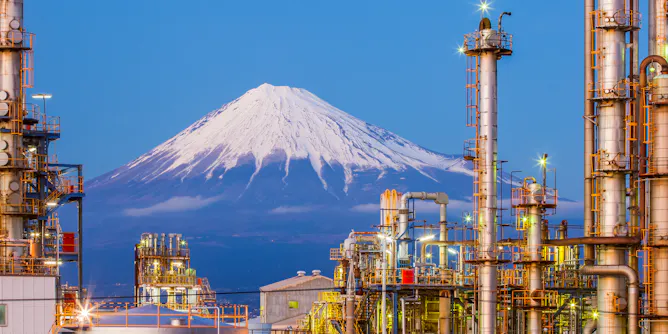
Without Japanese public funding, Australia’s LNG boom would have slowed
Articles on Liquefied natural gas (LNG)
Displaying 21 - 40 of 123 articles
Labor came to power promising real change on climate. But their reliance on accounting tricks, carbon sinks, offsets and a future for gas has cast a very large cloud.

Why is Australia talking about opening new gas fields as a way to reach net zero?
The US Department of Energy will review its process for approving new LNG projects.
Banning public funding for overseas fossil fuel projects will boost Australia’s climate leadership. But can it take the next step and do it domestically?
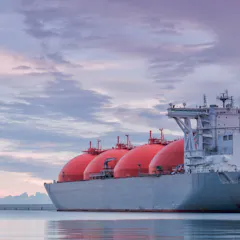
LNG carriers were delayed in unloading in EU ports because there weren’t enough terminals to process the fuel.
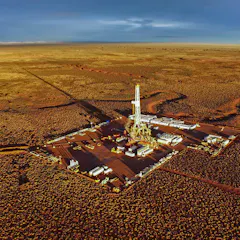
In May, the Northern Territory government greenlit the mammoth Beetaloo Basin fracking project. But they did so based on a report with optimistic projections on offsets and emissions.

Those who think the worst of Europe’s energy crisis is over are getting ahead of themselves.

To address the climate crisis, governments need to limit new fossil fuel developments. But foreign investors are often protected under trade and investment agreements.
Changes to the petroleum resource rent tax (PRRT) are long overdue, but Labor’s modest attempt at reform represents a missed opportunity.
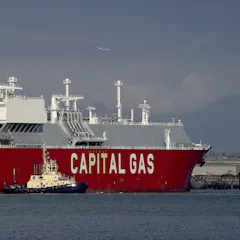
Capping the wholesale gas price is a poor attempt to decouple the domestic market from the volatile international market. The only sure way forward is a domestic reservation policy for the east coast.
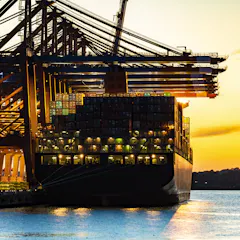
Shipping companies have billions invested in fleets that were built to last decades. Now, the US is calling for zero emissions by 2050, and the EU is raising the cost of fossil fuel use.
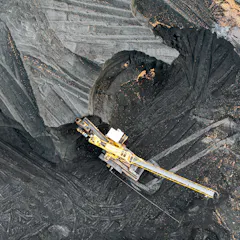
The Greens wanted Australia to rule out new coal and gas projects. Instead, we have a hard cap on emissions – and that should make many fossil fuel projects unviable

For the first time, Australia has moved to cap natural gas prices in a bid to stop energy price pain. Is the cap too high – or was it necessary to mollify the producers?

Energy bills are about to hurt. But what can the government actually do to ease the pain?
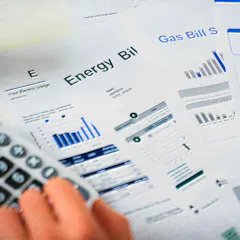
Thanks one of the treasurer’s most trusted confidants, we can now piece together what the government’s likely to do next about rising energy bills. Here’s what I expect to see over the next month.

Two-thirds of those surveyed back capped gas prices, an extra tax on gas exporters that would subsidise prices, or rules requiring Australian gas to be reserved for Australian use.

Offsetting carbon emissions sounds great. In practice, it’s often used to maintain the high-emissions status quo.

Pipeline rupture may cause EU gas demand to peak sooner than expected.
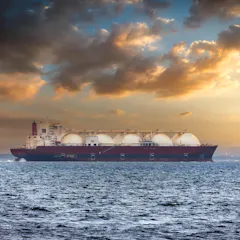
Hopes that prices will ease are probably wishful thinking.
Top contributors
-

Professor of Law, Deakin University
-
Professor of Global Energy, Warwick Business School, University of Warwick
-
Adjunct Professor of Energy, Murdoch University
-
Senior Fellow in Energy and Climate Change, Grattan Institute
-
climate campaigner
-
Visiting Fellow, Crawford School of Public Policy, Australian National University
-
Adjunct Senior Research Fellow, Business Law and Taxation Dept, Monash Business School, Monash University
-
Energy Advisor, formerly, The University of Melbourne
-
Honorary Fellow, The University of Queensland
-
Nonresident Fellow in Energy Studies, Baker Institute for Public Policy, Rice University
-
Honorary Associate Professor, Centre for Climate Economics and Policy, Australian National University
-
Associate Professor of Sociology, School of Public Policy, Oregon State University
-
Royal Academy of Engineering Chair in Emerging Technologies - Intelligent & Resilient Ocean Engineering, University of Southampton
-
Professor of Energy and Natural Resources Law, Macquarie University
-
Professor of Political Science, School of Regulation and Global Governance, Australian National University