

Some people swear by it, others find it painfully distracting. Here’s what the research suggests about the best way to use it.
Articles on Learning
Displaying 101 - 120 of 414 articles
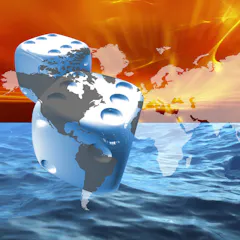
Students found the topic of climate change less boring when they studied it using a numbers estimation game.
If you stop to think about it, most of your knowledge can’t be clearly tied to one particular experience.

Artificial intelligence ‘bots’ may be widely available to teach in the coming years. But will they be effective? An expert on technology in education weighs in.
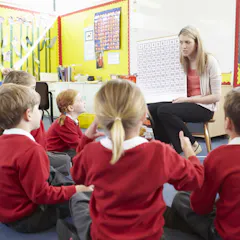
There is a new push for ‘explicit teaching’ around Australia. This includes changes for New South Wales schools announced this week.

Giving and receiving criticism can be difficult. This class tries to make it easier.
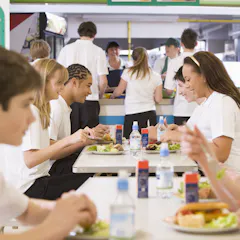
The government is reducing the scope and scale of the free school lunch programme. But evidence suggests expanding it would be good for children, communities and local businesses.

Audiobooks can develop children’s listening skills, expand their vocabulary and encourage independent learning.
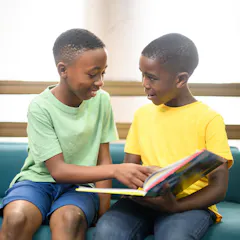
Classroom reading clubs can be a space for children to share ideas and build understanding.

Making physics more engaging means meeting students where they are, highlighting the ways in which it plays a role in their communities.

Very compressed study schedules lead to a catastrophic amount of forgetting.
Florida’s school safety data dashboard is one of the most comprehensive in the US. A school safety researcher explains how schools and parents can use it.
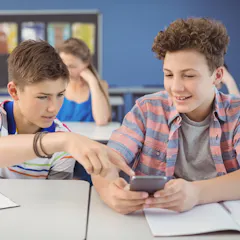
Smartphones are undoubtedly a distraction to learning. We should keep an open mind about the school ban and give teachers and students time to see what works.

Teaching students strategies for learning embedded in all courses should be an important part of all conversations about student retention.
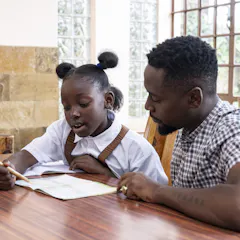
Studies show that teaching parents how to support their children can lead to improvements in literacy.
Assessment is involved in many of the challenges facing higher education.
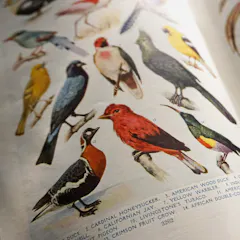
Mid-century encyclopaedias claimed the power to decide what counted as knowledge and what didn’t – much as online publishing platforms and social media companies do today.

In response to threats, we learn to avoid challenge and comply with external rules (instead of wondering how systems can be improved). We protect our feelings and restrict our thoughts to what’s safe.
Pisa measures 15-year-olds in reading, maths and science every three years - but is that the best way to test an education system?

To boost post-pandemic math learning, a multi-dimensional approach is needed that promotes the success of the whole child: academic, physical and socio-emotional.
Top contributors
-

Professor of Reading and Children’s Development, The Open University
-
Professor of Higher Education, Rhodes University, South Africa, Rhodes University
-
Research Scientist, African Population and Health Research Center
-
Associate Professor of Teacher Education, University of Sydney
-
Professor of Educational Psychology, University of Wollongong
-
Director of the Learning, Instruction & Technology Lab and Professor of Educational Psychology, School of Education, The University of Queensland
-
Scientia Professor and Professor of Educational Psychology, UNSW
-
Professor of Early Childhood Studies, The University of Melbourne
-
Campus and Secondary Principal at the International School of Geneva's La Grande Boissière, Research Associate at the University of Geneva's department of Education and Psychology, Université de Genève, Université de Genève
-
Professor, School of Education, University of Southern Queensland
-
Professor of Education, Durham University
-
Professor, Melbourne Graduate School of Education, The University of Melbourne
-
Senior Lecturer (Adjunct), Nutritional neuroscientist, Adelaide University
-
Deputy Director, ARC Centre of Excellence in Cognition and its Disorders, Macquarie University
-
Professor Emeritus, Swinburne University of Technology