
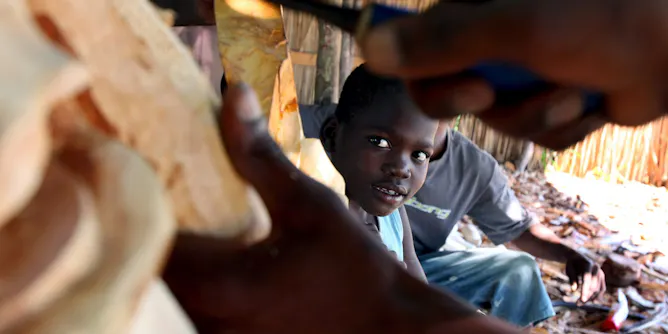
More than 100 nations have pledged to end deforestation by 2030. But there’s no mention of the need for Indigenous people to give their prior informed consent.
Articles on land rights
Displaying 21 - 40 of 54 articles
History is being repeated with the Northern Territory government finding ways to stop Aboriginal people from gaining access to water to use or trade.

Colonialism, political turmoil and unmet citizen promises all lie behind the rise of attacks on foreign-run fossil fuel plants in Mozambique.
Malawi’s revamped subsidy regime is designed to reach many more farmers. But a granular look shows that women aren’t reaping the benefits.
Institutional problems make it difficult to satisfy livestock and crop farmers’ interests, already in contest over agricultural resources.

Traditional leaders do not adequately represent the interests of rural communities in dealing with mining companies.

Part of an Indigenous ancestral trail was cleared by a logging company last summer, despite it being a protected cultural site under Alberta law.
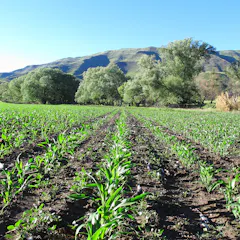
As African economies recover from the COVID-19 pandemic, governments should explore technologies like global positioning systems and blockchain for use in the registration of land rights.

Forests must improve communities’ livelihoods to rise as a sustainable management solution
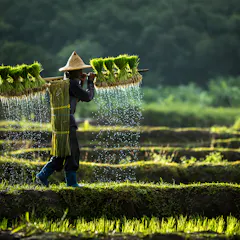
Land reform has always been closely tied to shifts in the wider political economy of countries.
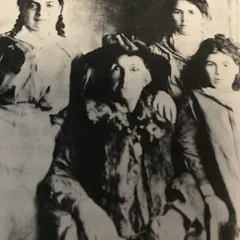
In the late 1880s, Gomeroi woman Mary Jane Cain began petitioning Britain for land rights. A matriarch and Queen to her people, she recovered 600 acres that became home to displaced Aboriginal families.
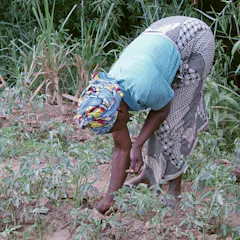
Civil society organisations in Zambia help women get access to land.
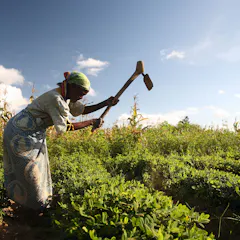
We found that even when women own land, their husbands are still perceived as household heads.

Preparations for next month’s Commonwealth Games on the Gold Coast are pushing homeless people out of town, and out of the state. Sadly, that’s not unusual for events of this sort.
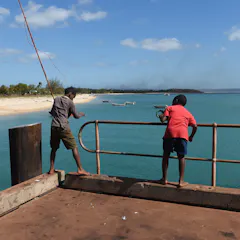
In an article published in the lead up to Australia Day, WA Liberal Party policy committee chairman Sherry Sufi said “native title can only exist if Australia was settled, not invaded”. Is that right?
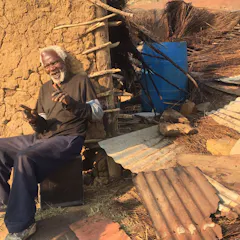
Farm dwellers’ conclusion is that the politics associated with land is not about an organised emancipatory movement. Farm dwellers are mainly preoccupied with daily survival strategies.

The Uluru-Kata Tjuta National Park Board of management has this week announced that tourists will be banned from climbing Uluru from 2019. Sammy Wilson, chairman of the park board, explains why.
What happens when the gap between a company and its umbrella group gets too wide? We’re about to find out.
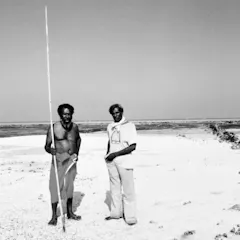
The Mabo decision changed Australia’s concept of land ownership. It was a divisive yet important step toward recognising Indigenous rights and establishing native title.
The ecological needs of the land need to be considered together with the social and political needs of its people.
Top contributors
-

Professor, Australian and Aboriginal History, Faculty of Arts, Design and Architecture, Convenor: Indigenous Land & Justice Research Group, UNSW
-
Professor, RMIT University
-
Associate Professor of First Nations Studies; Adjunct Professor of Education, University of Northern British Columbia
-
Postdoctoral research fellow, University of the Western Cape
-
PhD student, Swiss Graduate School of Public Administration (IDHEAP), Université de Lausanne
-
ANU Visiting Professor, Politics and International Relations, Australian National University
-
Professorial Fellow, University of Canberra
-
Associate Professor, Institute for Sustainable Futures, University of Technology Sydney
-
Professor of Linguistics, The University of Queensland
-
Senior Lecturer, UNSW Law, UNSW
-
Writer, Historian and PhD Candidate, Western Sydney University
-
PhD Candidate, School of Social Sciences, University of Tasmania, and Senior Research Consultant, Institute for Sustainable Futures, University of Technology Sydney
-
Research Director, Institute for Sustainable Futures, University of Technology Sydney
-
Senior Lecturer in Social Research and Policy, UNSW
-
Former Visiting Fellow, SPRU, University of Sussex Business School, University of Sussex, University of Staffordshire