

The Land Rights Act was a step toward Indigenous self-determination. Communities took back the right to manage and protect their own cultural heritage.
Articles on Aboriginal Land Rights
Displaying 1 - 20 of 26 articles

The Yolngu Bark Petitions were immediately recognised by many as emblems of the unshakeable confidence of Indigenous Australians in their right to their territory.

The sad reality is that if the demands of these early activists had been met nearly a century ago, we would not be suffering the severe disadvantage that hovers over Aboriginal lives still today.
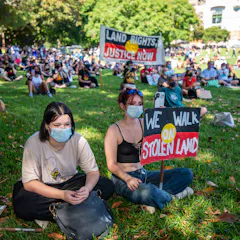
In NSW and wider Australia, there is a history of First Nations people fighting for land rights. However, while there have been successes, there are a significant number of unprocessed claims in NSW.
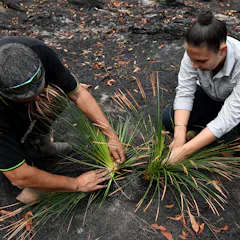
Country by Bruce Pascoe and Bill Gammage is a dialogue between experts on First Nations ways of farming and agriculture. It is also a call to Australia to look after Country better.

Senate Inquiry report “A way forward” recommended Aboriginal heritage protection be co-designed with Aboriginal people. However WA’s new Aboriginal Heritage Act seems to prioritise mining interests.
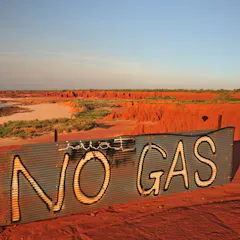
Western Australia’s Aboriginal Cultural Heritage Bill 2021 is set to become law. But the new legislation states one elected official will decide whether heritage sites are destroyed for development.
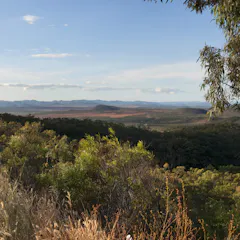
How can we improve the management of Queensland’s heritage sites? Can farming and the conservation of Aboriginal heritage co-exist?
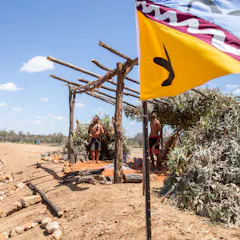
Recently Queensland police recognised the cultural rights of Wangan and Jagalingou people to conduct ceremony under provisions of a Human Rights Act. What does this mean for other Traditional Owners?
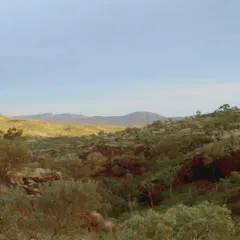
The A Way Forward report addresses the issues of cultural heritage protection in Australia after Rio Tinto destroyed Juukan Gorge. However, achieving change will be far from straightforward.

There is a contradiction between the New South Wales government’s plan for Closing the Gap and its persecution of Aboriginal people who want to maintain their saltwater culture.
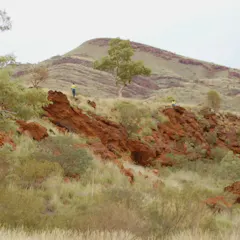
In the wake of the Juukan Gorge blast, more land authority is shifting back to First Nations people.
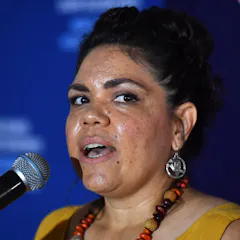
Jacinta Price’s parliamentary agenda
Jacinta Price discusses her pre-selection victory and political agenda with Michelle Grattan

An honest reckoning with Captain Cook’s legacy won’t heal things overnight. But it’s a start
The Conversation41.4 MB (download)
The impact of 1770 has never eased for Aboriginal people. It was a collision of catastrophic proportions.
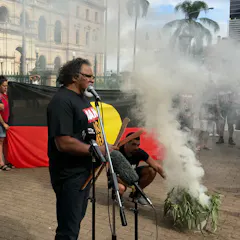
An appeal to the full court of the Federal Court still stands in the way of Adani’s proposed Carmichael coal mine.
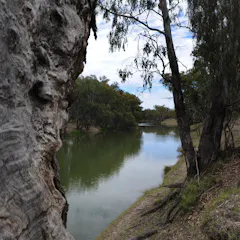
Neither of the two federal investigations into fish deaths in the Darling River include any Indigenous representation.

A federal system could deliver on three of the four key elements of the Uluru Statement. Plus, all the elements already exist or are in the works in Australia.
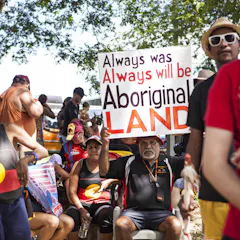
The decision will have huge implications for Indigenous peoples who have lost their land rights and for state and territory governments that may be liable for compensation.
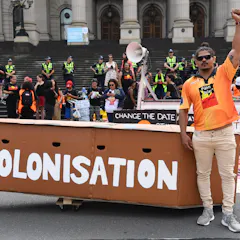
Enthusiasm for Indigenous treaties at the state and territory level is misplaced. The power to bring about real change lies only at federal level.

While planning policies and practices have contributed to marginalising Indigenous people, planners can now work with them to ensure they have their rightful say in shaping Australian communities.
Top contributors
-

Chair of National Native Title Council and Ngalia Cultural Leader | EthnoEcologist, Indigenous Knowledge
-
Professor of Urban Planning, Centre for Urban Research, RMIT University
-
Director/Chair of Aboriginal History - The Wollotuka Institute, University of Newcastle
-
McKenzie Postdoctoral Fellow, The University of Melbourne
-
Senior Lecturer, Victoria University
-
Writer, Historian and PhD Candidate, Western Sydney University
-
Managing Director, Triple Helix Consulting; Honorary Professor, ANU Fenner School for the Environment and Society, Australian National University
-
Honorary Professor Alfred Deakin Institute, Deakin University
-
Adjunct Fellow, T.C. Beirne School of Law, The University of Queensland
-
Masters student, The University of Melbourne
-
Senior Lecturer in Anthropology, University of Sydney
-
Professor, Australian Rivers Institute, Griffith University
-
Associate Professor, Department of Management and Marketing, The University of Melbourne
-
PhD Candidate, University of Technology Sydney
-
Former Visiting Fellow, SPRU, University of Sussex Business School, University of Sussex, University of Staffordshire