
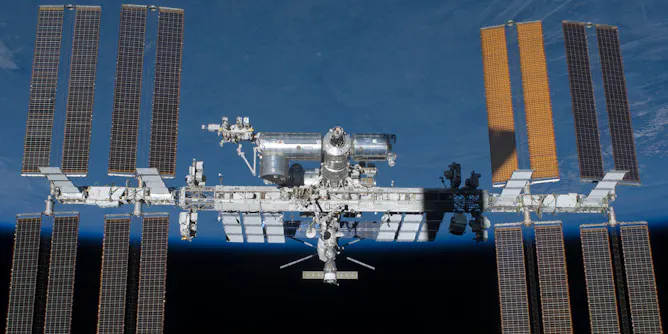
Humans have been living on the International Space Station for two full decades. So what comes next for this ailing technology, and what does it mean for future International ventures in space?
Articles on International Space Station (ISS)
Displaying 61 - 80 of 138 articles
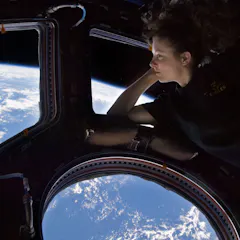
After two decades as a home to astronauts, the International Space Station still has plenty to teach us about how humans can live away from Earth.
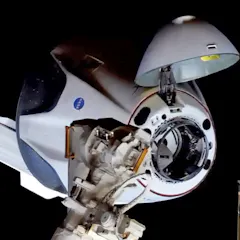
Extreme velocities and temperatures makes the return flight to Earth the most perilous part of a space mission.
A new country launches a mission to Mars. A space expert explains what this means for the Middle East and the African continent.

Why are scientists trying to grow organs at the International Space Station? People live on Earth not in zero-gravity. A stem cell expert explains why it is useful to do these experiments in space.

How do people in a special airplane flight get to float like there is no gravity – just like astronauts? An aerospace engineer explains.
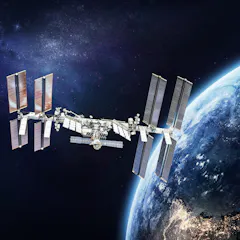
The distance between the ISS and Earth is the same as about 3,850 football fields. To bring the station down, rockets will lower it a bit, and then gravity will send it crashing the rest of the way.
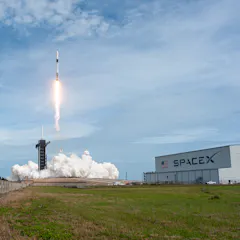
About 770 Australian entities are already developing space-related infrastructure, most of which are privately owned.
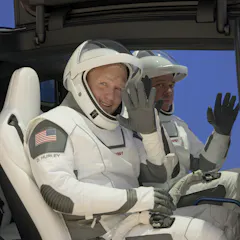
To intercept the ISS, the capsule must match the station’s speed, altitude and inclination.
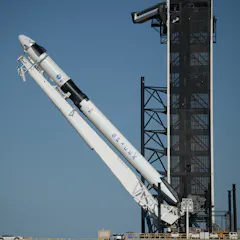
SpaceX’s launch of astronauts to the International Space Station will make it the first private company to launch humans to space. The effort has ramifications for NASA and spaceflight in general.
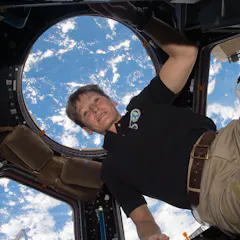
Female astronauts may be better off avoiding combined hormonal contraceptive pills to control their periods in space, according to new research.
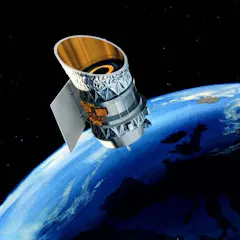
Two defunct satellites passed within metres of one another, prompting renewed focus on the dangers of space debris. But with many satellites treated as military secrets, how do we track the hazards?
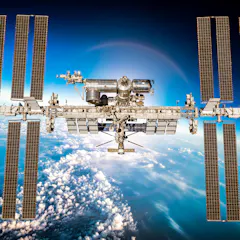
The International Space Station is the biggest human made structure in space and the third brightest object in the sky. But the living conditions for the six astronauts on it are quite cramped.
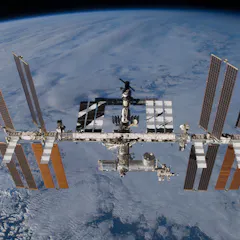
NASA is reportedly investigating the first alleged crime in space. But criminal jurisdiction aboard the International Space Station is much more straightforward than it would be for space tourists.
CC BY-ND30.8 MB (download)
The fifth episode of the To the moon and beyond podcast series explores where we will be travelling in 2069.
The future of lunar exploration and space travel will be possible only through advances in robotic design and implementation.
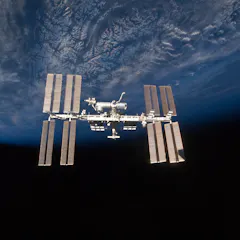
The short answer is yes, but it’s really, really difficult.
Compared to other governments’ support of lunar business and technology, Canada needs to be more strategic and active in lunar exploration or we will be left behind.
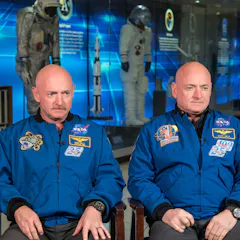
Before sending humans to Mars or the moon, scientists need to understand what long-term space living does to the human body. Now results are coming in from the Kelly brothers in the TWINS Study,
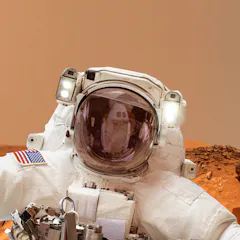
As commercial spaceflight companies lower the cost of reaching space, nations can launch more missions. But while astronauts are great for whipping up enthusiasm, is a manned mission worth the cost?
Top contributors
-

Professor of Strategy and Security Studies, Air University
-
Professor of Planetary and Space Sciences, The Open University
-
Senior Lecturer in Physics, Nottingham Trent University
-
Kevin Orrman-Rossiter is a Friend of The Conversation.
Sterrenkenner, History & Philosophy of Science, The University of Melbourne
-
Postdoctoral research associate, University of Oxford
-
Co-Director Space Technology and Industry Institute, Swinburne University of Technology
-
Associate Dean of Innovation and Engagement, Swinburne University of Technology
-
Assistant Professor of Space and International Relations, Johns Hopkins University
-
Professor, Canada Research Chair in Space Robotics and Space Technology, Carleton University
-
Associate Professor in Astronomy, Monash University
-
Professor (Astrophysics), University of Southern Queensland
-
Professor of Art History, Archaeology and Space Studies, Chapman University
-
Associate Professor in Archaeology and Space Studies, Flinders University
-
Professor of Aerospace Medicine and Rehabilitation, Northumbria University, Newcastle
-
PhD candidate in Computational Physics, University of Cambridge