

What do the concepts like ‘cheating’ and ‘performance enhancing’ mean to young African footballers?
Articles on International Olympic Committee (IOC)
Displaying 101 - 120 of 147 articles
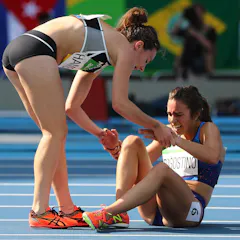
Although the Olympics have come to an end, fans will continue to be gripped by the infinite micro-narratives that sports fixtures provide. But are these narratives comparable to literary creativity?

Extensive drug use was reported at the 1952 Helsinki Games, but it was the death of two athletes that finally galvanized international sporting authorities into taking action against doping.
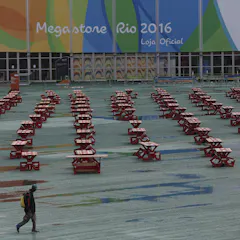
Instead of showcasing a rising global power with a booming economy, the 2014 Games put a spotlight on Brazil’s most serious economic recession since the 1930s, along with a host of social problems.
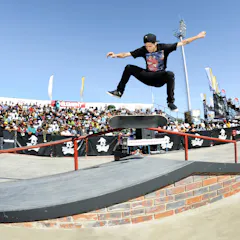
Can skateboarding – with its anti-establishment ethos and emphasis on individuality – mesh with the corporatized Olympics?
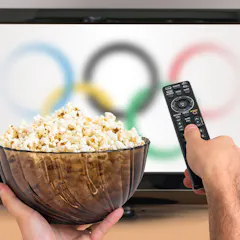
Television is dead; long live the Olympics.
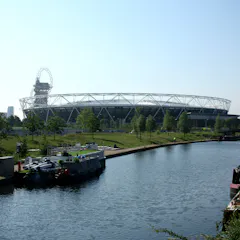
Looking back on the legacy of London 2012, it’s clear the local artistic community has lost out.
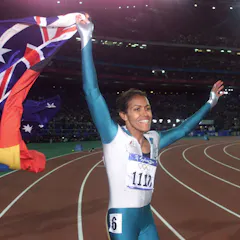
Athletes are increasingly expected to be good role models. But we don’t usually expect them to sacrifice their chance of winning to help others.
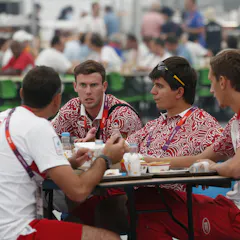
We all know that competing at the Olympics is the end product of years of training, but how much fuel do elite athletes need?
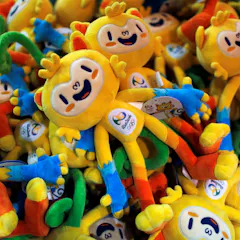
Olympic organizers are known for fiercely protecting their many related trademarks. It helps maintain their value – but to whose advantage?
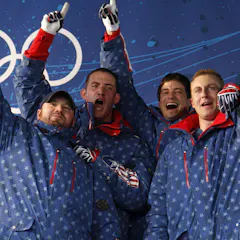
A former Olympic gold medalist reflects on his own financial struggles as he trained and competed for the 1984 Games. Decades later, not much has changed for many Olympians.
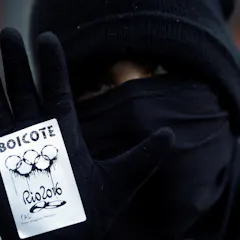
Protests against the Rio Olympics must be understood in the context of the growing global reaction to both the way these mega-events are organised and the entities promoting them.
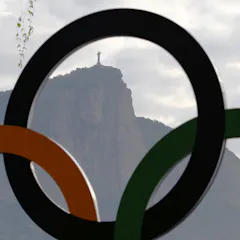
Will Brazil’s troubles in preparing for the Rio Games change the global narrative of the value of hosting the Olympics?
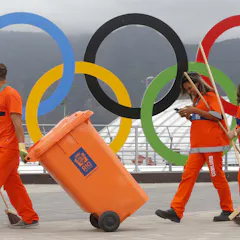
The doping scandal has dragged the Olympic brand through the mud – and making it shine again will be no easy task.
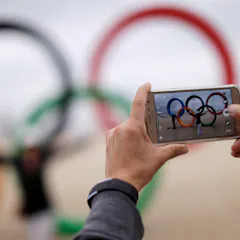
The mainstream media has knocked Brazil for the Zika virus, doping scandals and safety concerns. But citizen social media users, by revealing an alternate narrative, could even the score for Rio.
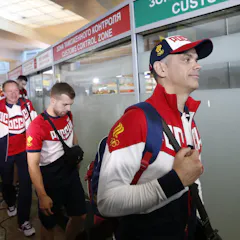
The IOC will allow Russian athletes to compete in Rio 2016 if they’ve been cleared by their respective international sporting federation of doping. Should other countries pull out of the games?
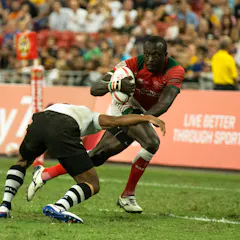
It’s down to money, popularity and a lot of lobbying.
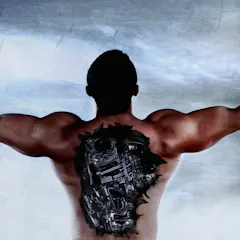
As technology becomes fully integrated into our everyday lives, we may see athletes as the last vestiges of our humanity.
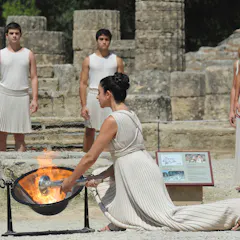
In a time when war and sports are the primary means of competition, Olympic gold has never been so valuable – or expensive.
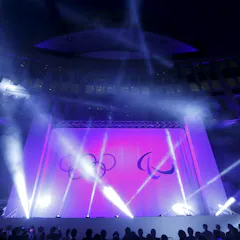
The Olympic Games are a theatre — sometimes farce, sometimes tragedy, reality TV, morality play or soap opera — where geopolitical, social and technological dramas are played out.
Top contributors
-

Fellow, Saint Mary’s University
-
Professor in Sociology of Sport and Gender, University of Waikato
-
Professor of Sports Law, Melbourne Law School, The University of Melbourne
-
Professor Emerita of Sociology and Equity Studies in Education, University of Toronto
-
Professor of AfroEurasian Sport, EM Lyon Business School
-
Professor, School of Psychological and Social Sciences, University of Waikato
-
Senior Lecturer, Faculty of Health Sciences and Sport, University of Stirling
-
Honorary Professor, School of Kinesiology, Western University, London, Canada; Adjunct Fellow, Olympic Scholar and Co-Director of the Olympic and Paralympic Research Centre, Institute for Health and Sport, Victoria University
-
Senior Lecturer, Modern European History and Sports History, Macquarie University
-
Assistant Professor, School of Media, Toronto Metropolitan University
-
Associate Professor of Sport Management, University of Technology Sydney
-
Professor Emeritus of Kinesiology and Physical Education, University of Toronto
-
Associate Professor, Gordon S. Lang School of Business and Economics, University of Guelph
-
Professor of Sport Management, University of Florida
-
Professor of Sport Management, University of Stirling