
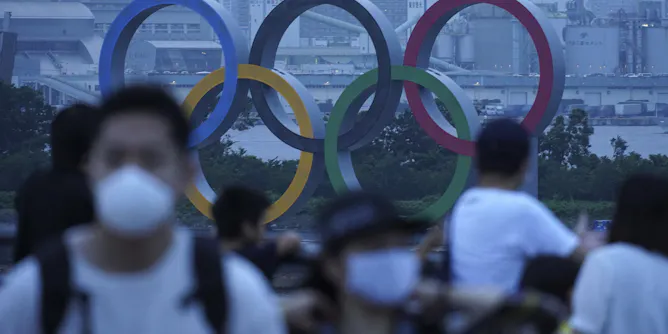
Cancelling the Tokyo games would be yet another blemish for the new government and could doom its chances in the next election later this year.
Articles on International Olympic Committee (IOC)
Displaying 61 - 80 of 147 articles

As COVID-19 vaccines roll out, a debate about whether athletes should be prioritized over more vulnerable populations has emerged.
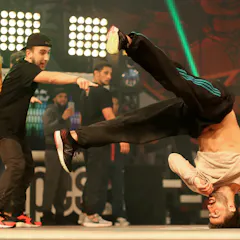
New sports are being added to the Olympics all the time in an effort to remain relevant to younger audiences, while others (sorry baseball) are left out.
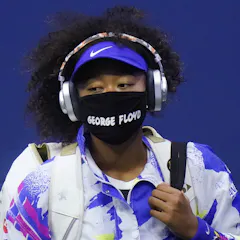
The IOC has set strict guidelines on protests and political expression, but athletes aren’t entirely happy. The question now is whether the two sides can compromise in time for the 2021 Tokyo Games.
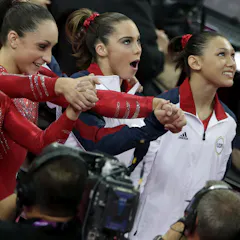
As allegations of abuse in women’s gymnastics mount worldwide, it is time to raise the minimum age.
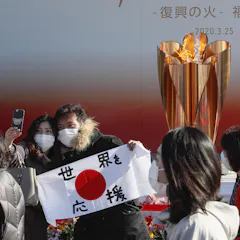
The event may have been postponed until July 2021 because of the coronavirus pandemic, but there is already a big cultural legacy to Tokyo 2020.

An athlete who competed in the 1964 Tokyo Olympics says when the rescheduled Olympics take place, the Games can help rebuild societies in a humanitarian way through the spirit of Olympism.
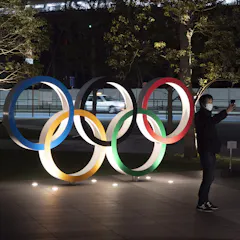
The decision to reschedule the Olympic and Paralympic Games was the right move. But how should we decide whether and when the Games should now be held?
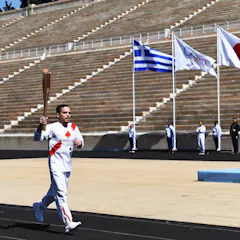
Legally, the Tokyo organisers are protected from events that are out of their control. And it’s unlikely broadcasters and sponsors would press legal claims during a global pandemic.
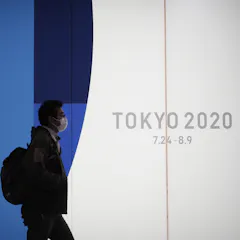
While sporting events around the world have put their seasons on pause, the International Olympic Committee has refused to cancel the Summer Olympics in Tokyo. For athletes, the delay is a dilemma.
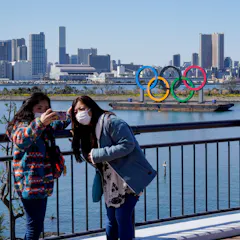
Could the Olympic Games be postponed for the first time in its history?
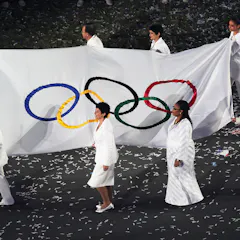
From Peter O'Connor waving the Irish flag in 1906 to rainbow colours at Sochi, athletes have always used the Olympics to share their politics.

Divestment doesn’t affect global demand for oil, it just transfers power to state-run oil companies – which have higher carbon footprints. But there are other things we can do.
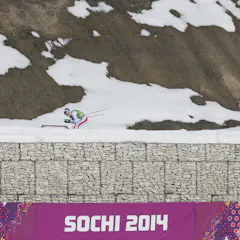
As the cost of holding the Winter Games rises, local taxpayers around the globe are losing interest in hosting the event.
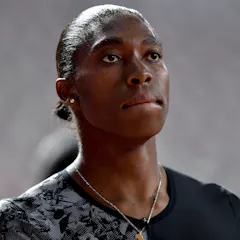
If the Semenya ruling by the Court for Arbitration in Sport remains unchallenged, this way of thinking and behaving might filter into the International Olympic Committee
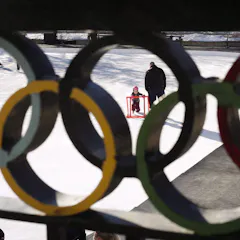
Calgary is the latest city to reject bidding for the Olympics. A lack of a vision for the city and a council concerned with short-term political gains explain why an Olympic plebiscite was defeated.

The decision by the World Anti-Doping Agency to lift its ban on Russia’s drug testing has set off another controversy about whether there will ever be a level playing field in the world of sports.

A disc-golf boom is coinciding with a ball-golf bust.
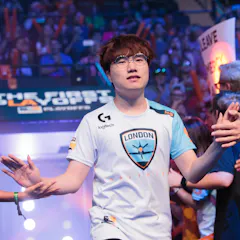
The International Olympic Committee recently hosted a meeting on e-sports – organized video competitions. Should e-sports be in the Olympic Games? An Olympian says no.

We should consider the messages that violence and aggression in sports of all kinds give children and young people – and devise strategies to lessen the impact.
Top contributors
-

Fellow, Saint Mary’s University
-
Professor in Sociology of Sport and Gender, University of Waikato
-
Professor of Sports Law, Melbourne Law School, The University of Melbourne
-
Professor Emerita of Sociology and Equity Studies in Education, University of Toronto
-
Professor of AfroEurasian Sport, EM Lyon Business School
-
Professor, School of Psychological and Social Sciences, University of Waikato
-
Senior Lecturer, Faculty of Health Sciences and Sport, University of Stirling
-
Honorary Professor, School of Kinesiology, Western University, London, Canada; Adjunct Fellow, Olympic Scholar and Co-Director of the Olympic and Paralympic Research Centre, Institute for Health and Sport, Victoria University
-
Senior Lecturer, Modern European History and Sports History, Macquarie University
-
Assistant Professor, School of Media, Toronto Metropolitan University
-
Associate Professor of Sport Management, University of Technology Sydney
-
Professor Emeritus of Kinesiology and Physical Education, University of Toronto
-
Associate Professor, Gordon S. Lang School of Business and Economics, University of Guelph
-
Professor of Sport Management, University of Florida
-
Professor of Sport Management, University of Stirling