
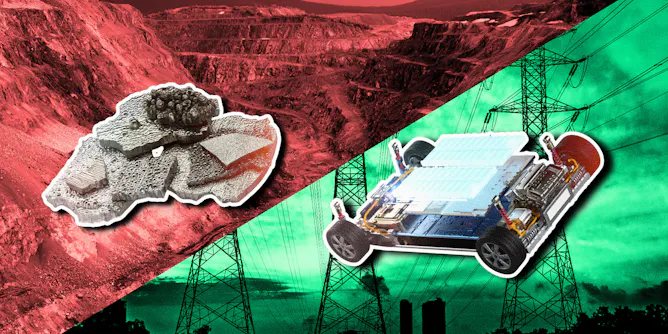
Big batteries used in electric vehicles and grid storage have long relied on metals with tarnished supply chains. But this is changing.
Articles on green energy transition
Displaying all articles
It’s easy to think cheaper EVs will encourage more people to switch. But new research shows subsidising these vehicles is poor value for money. There’s a better way.

The urgent need to slash Australia’s carbon emissions is undeniable. But the sluggish transition is making it tougher to offer certainty for workers.
If Australia hits 82% renewables by the end of the decade, wholesale power should be a third cheaper.
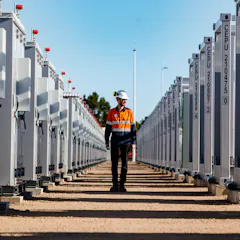
Gas was long thought to be essential as a backup for a clean energy grid. But enormous growth in grid-scale batteries has changed the game.

To cut emissions fast, the Australian government will have to dial back its command-and-control approach – and put a price on carbon.
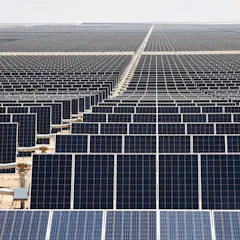
Weaning ourselves off fossil fuels is glacially slow – isn’t it? This pessimistic narrative doesn’t stack up against evidence of very rapid change in the real world.
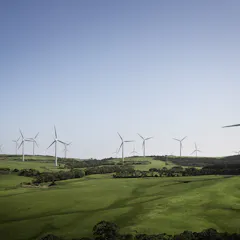
Is climate action a cost or benefit? The debate is dividing big Australian businesses. But the answer is clear: benefits from action far outweighs the cost.
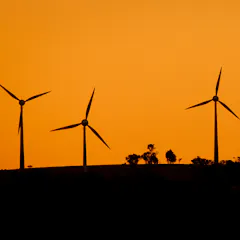
Ideally, Australia’s emerging green grid would have plenty of solar, storage and wind. But rising costs are stalling many wind projects.

A proposed shake-up of the global shipping industry would encourage the use of clean fuels and penalise companies that stick to cheaper, more polluting fuels.
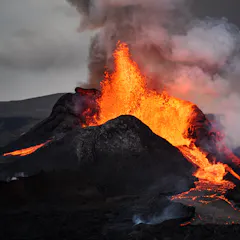
Ancient volcanoes in New South Wales created a rich deposit of precious rare earths – and left clues for finding more.

Your electric water heater uses a lot of electricity overnight. Shifting it to soak up solar could be a win-win.
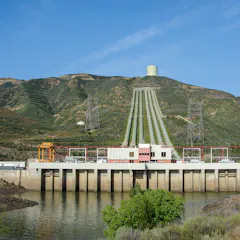
Pumped hydro and batteries can easily provide all the storage needed for 100% renewable electricity generation, eliminating the need for polluting gas power plants.
Australia and the Pacific are now tipped to be hosts of the 2026 global climate talks. That brings opportunity – and scrutiny.

Seeing solar around your neighbourhood is a surprisingly large reason you might choose to do the same.

When Australian leaders go to the main Pacific nations meeting, there’s a fossil fuel elephant in the room.
Top contributors
-

Adjunct Professor in Sustainability, The University of Western Australia
-
Professor of Sustainability, Curtin University
-
Senior Fellow in Energy and Climate Change, Grattan Institute
-
Lecturer in International Politics and Policy, James Cook University
-
Associate Professor in Engineering and IT, University of Technology Sydney
-
Professor in Sustainability Science, University of Twente
-
Research Associate, Institute for Climate Risk and Response, UNSW
-
Adjunct professor, Business, Adelaide University
-
Associate professor, School of Management, RMIT University
-
Professor of Engineering, Australian National University
-
Professor, Fenner School of Environment & Society, Australian National University
-
Postdoctoral Researcher, Adelaide University
-
Research Associate in Renewable Energy Engineering, UNSW
-
Senior lecturer in Renewable Energy Engineering, UNSW
-
Professor of Chemistry, UNSW