

Local conflict and development needs drive the demand for digital authoritarianism technologies.
Articles on Government
Displaying 21 - 40 of 278 articles
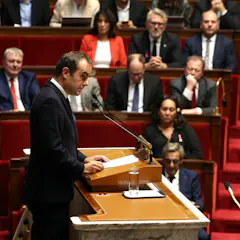
Will the new French government last? The suspension of the controversial reform until after the 2027 French presidential election was key to the Socialist Party agreeing not to support a potential no-confidence vote in the government.

Prime Minister Sébastien Lecornu’s decision to step down follows decades of disruption to politics in France.
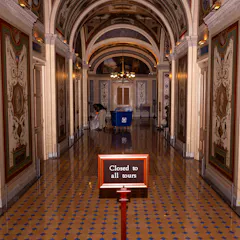
A study of the 2013 shutdown that lasted 16 days revealed long-term negative effects on federal workers and led to weakened government performance.
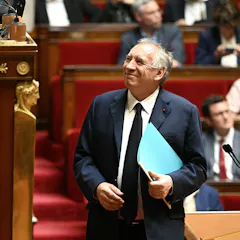
France’s Prime Minister François Bayrou has resigned after failing to win a confidence vote. What options might President Emmanuel Macron use to break a political deadlock?

Australia’s recent track record on implementing major reform has been patchy. Here’s what’s getting in the way.
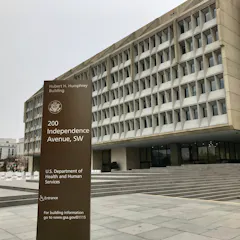
Cuts to Medicare and Medicaid may harm vulnerable populations that depend on government-funded care. Proponents of such cuts often frame them in a different way.

Tolerance for the use of force in the conflict in Cameroon has undermined the appeal of dialogue and negotiations.

Herodotus showed how human beliefs and choices affected the fate of nations. His insights are still relevant.

Obviously, the government can’t set wages directly. But research shows recent policies that have increased worker power are associated with strong wage growth.
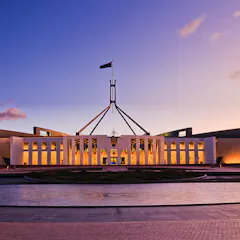
Canberra has reallocated thousands of roles formerly performed by consultants and external hires to public servants.
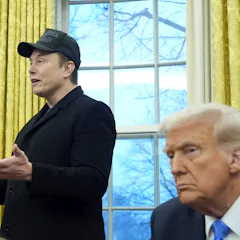
The president’s executive orders are part of a decades-long trend of shrinking government’s role while expanding private sector control over public services.
At a time of low trust in government, conflicts of interest can further erode Americans’ confidence in officials.

A new form of public-private partnership is reshaping urban landscapes: Community-centered, public-private partnerships, or CP3s.

Silicon Valley’s history of efforts to replace public services or make them more efficient has produced mixed results.

Augustine had divisive opinions – and didn’t mind sharing them. But his writing also has lessons about talking to people who don’t see eye to eye.

Nobel Prize-winning American economist Joseph Stiglitz made the assertion on ABC’s Q&A on Monday night. What exactly did he mean, and does the claim stack up?

The tax leaks scandal offered us an opportunity to ask hard questions about the role of big business in Australian society. Many of these remain unanswered.
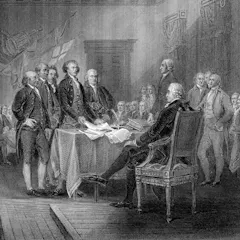
The founders saw a need for government to intervene in markets.

Data show young Australian women are less politically engaged than men. Given the negative experiences of female politicians, that’s hardly surprising. But there’s a glimmer of hope.
Top contributors
-

Professorial Fellow, University of Canberra
-
Associate Professor, Faculty of Law, Monash University
-
Vice Chancellor's Fellow at Victoria University and Adjunct Professor of Economics, Victoria University
-
Honorary Fellow, School of Social and Political Sciences, The University of Melbourne
-
Professiorial Fellow, The University of Melbourne
-
Professor of Business Economics, University of Birmingham
-
Part-Time Professor of Economics, The New School
-
Economist, UNSW
-
PhD Student, Massachusetts Institute of Technology (MIT)
-
Professor of Economics, Department of Economics, Deakin Business School and Alfred Deakin Institute for Citizenship and Globalisation, Deakin University
-
Program Director, Housing and Economic Security, Grattan Institute
-
Professor of Industrial Strategy & Regional Development, Co-Director Centre for Governance, Regions and Industrial Strategy (CGRIS), University of Bath
-
Vice Chancellor, Sheffield Hallam University
-
Visiting Fellow, Macquarie University Applied Finance Centre, Macquarie University
-
Scientia Professor of Economics, UNSW