

Food shortages have revealed weaknesses in UK supply chains.
Articles on Food supply chain
Displaying 21 - 33 of 33 articles
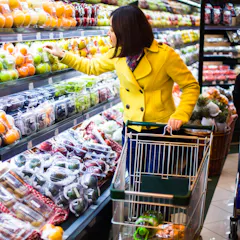
What’s really causing food prices to rise?
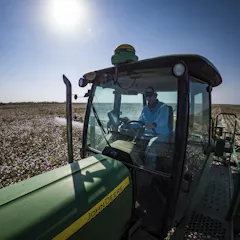
Bringing advanced technologies to the ancient practice of farming could help feed the world’s growing population, but it could also open the door for people looking to disrupt the global food system.
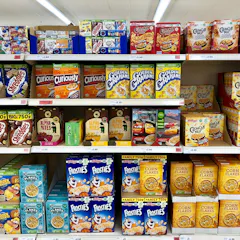
It’s surprisingly difficult for most to make a profit.
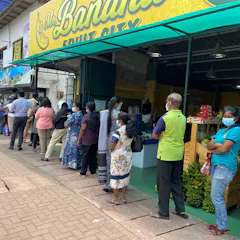
Food, fuel and fertiliser prices were rising fast even before war broke out. We need to act now to avoid a humanitarian crisis.

In the short term, the war is causing energy prices to soar and prompting fears of famine in some countries. In the long term, it could remake the modern global supply chain.

Food is a fundamental human right. But governments have left it to charities and food suppliers to step in after disasters. That has to change as climate change throws up greater stresses.
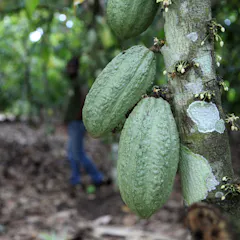
Côte d'Ivoire and Ghana produce almost two-thirds of the world’s cocoa, and face high rates of deforestation. But the cocoa industry could make changes to become more sustainable.
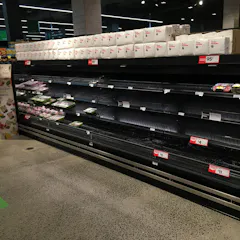
Since COVID hit, many Australians have seen first-hand what shocks to the food system can do.
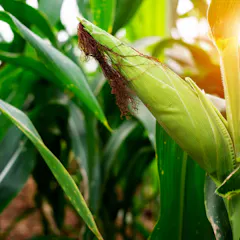
Large-scale droughts can have cascading impacts on food security. They can reduce yield, increase food prices, trigger changes in consumption and lead to unstable supply.
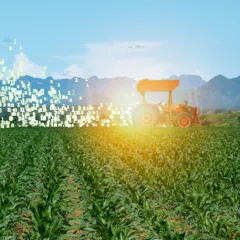
Year round local food production is within our grasp, and will slash agriculture’s climate impact — but only if we embrace agricultural technology.
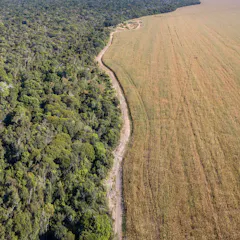
Deforestation in Brazil recently reached a 12-year high, prompting France to cut soybean imports from the country.
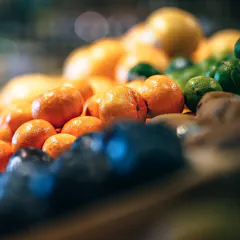
It’s vital to look through a systems lens to understand how future food chains should interact and how risk should be managed. This is particularly critical as we confront a second wave of COVID-19.
Top contributors
-

Eugene M. Isenberg Chair in Integrative Studies, UMass Amherst
-
Professor of Agricultural Economics, Lincoln University, New Zealand
-
Associate Professor of Digital Forensics, Arizona State University
-
Senior Lecturer in Development Economics, University of Manchester; Independent Social Research Foundation
-
Strategist, Advisor, Academic Researcher, Founder Shantalla Inc., University of Reading
-
Research Fellow, Deakin University
-
Professor, Operations and Supply Chain Management, University of Calgary
-
Adjunct lecturer, University of Sydney
-
Professor, Queensland University of Technology
-
Senior Lecturer in Operations and Innovation Management, CQUniversity Australia
-
Visiting Scientist, Humboldt University of Berlin
-
Bernard T. Ferrari Professor of Business, Johns Hopkins University
-
Senior Lecturer in Climate Science, Imperial College London
-
Associate Professor in Food Systems, The University of Melbourne
-
Postdoctoral Research Fellow, Queensland University of Technology