
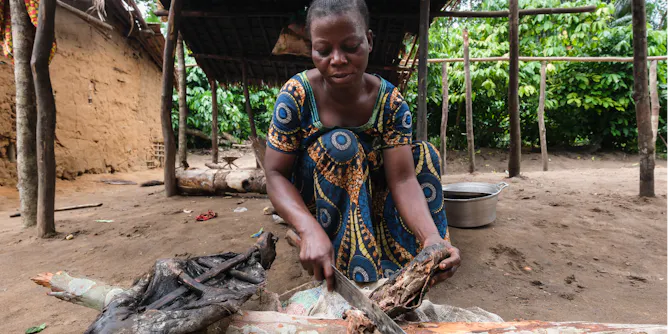
As many as three-quarters of emerging infectious diseases originate from wildlife.
Articles on Food security
Displaying 61 - 80 of 553 articles

We considered many different explanations for why some dialogue processes were more successful than others.
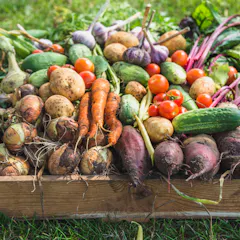
Food co-ops are local groups where people join together to buy food in bulk, usually straight from farmers or wholesalers.

South Africa’s agricultural extension advisors need to start training farmers to grow nutritious indigenous crops that have been largely forgotten.
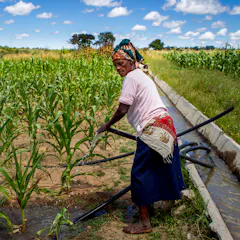
Small-scale irrigation schemes in southern Africa can produce more food, support more jobs and be more profitable for the local community.
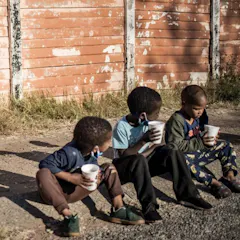
Fragmentation of services is a barrier in addressing severe child poverty.
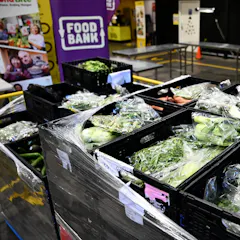
The cost-of-living crisis means more Australians are going without adequate food. The growing problem must be tackled by a promised food security strategy.

The cost of a daily nutritious diet in Burkina Faso, Mali and Niger is 110% higher than the west African region’s daily minimum wage.
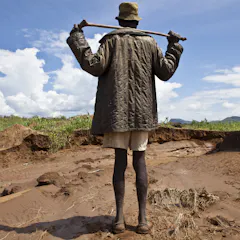
The absence of the early warning network will affect Kenya’s ability to address food insecurity.
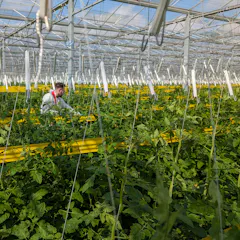
Around 70% of the Britain’s 12,000 greenhouses are more than 40 years old. So there’s a huge opportunity for hi-tech horticulture to improve food security.

The world’s largest indoor vertical farm closed its doors in late 2024, capping a bad run for this fledgling sector.

Biodiversity loss, climate change and pollution do not happen in isolation, but proposed solutions too often fail to account for this. Two major reports point the way forward.
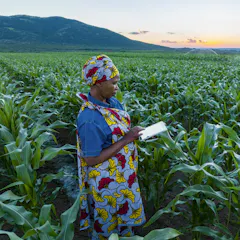
The hype around digital tools can divert attention from farmers’ real, on-the-ground challenges.
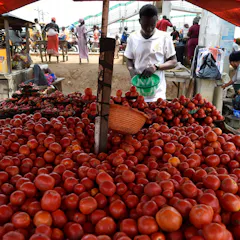
Four urgent things need to be done in 2025 for Nigeria to feed its citizens better and ensure their food security.

Establishing a nationwide system of community restaurants could help tackle the current food and farming crisis.
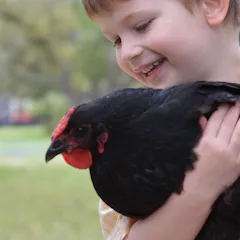
Research has found people see backyard chickens as pets – but wouldn’t take them to the vet. It raises important questions about how we relate to the non-human world.
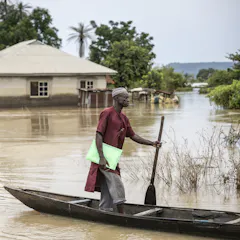
Nigeria’s representative at COP29 must realise that an unimpressive outing will leave citizens more at the mercy of climate change impacts.
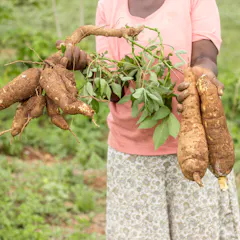
Local water conservation measures could buffer the potential negative impacts of climate change in eastern Africa and boost food production.

Faced with the collapse of biodiversity, there is an urgent need to protect the genetic diversity of species. But to preserve fruit trees, seed banks are not enough.
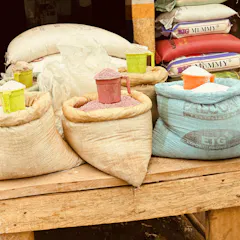
The world faces compounding crises in food availability. Efforts in Sierra Leone to address these challenges could serve as a foundation for wider food security initiatives.
Top contributors
-

Senior Fellow, Department of Agricultural Economics, Stellenbosch University
-
Associate Professor in Food Systems, The University of Melbourne
-
Research Fellow, Tegemeo Institute, Egerton University
-
Associate Professor, Department of Entomology; African-American Studies, University of Illinois Urbana-Champaign
-
PhD, Political Economy, Macquarie University
-
Professor of Food Policy, City St George's, University of London
-
Researcher in sustainable food systems, The University of Melbourne
-
Director of the Arrell Food Institute and Professor in the Dept. of Geography, Environment and Geomatics, University of Guelph
-
Network and Research Manager: ARUA – UKRI GCRF FSNet Africa, University of Pretoria
-
Professor in Food Security; Head of the Department of Agricultural Economics, Extension and Rural Development, University of Pretoria
-
Emeritus Fellow in Plant Biochemistry, University of Westminster
-
Professor of Social Development Studies, University of Johannesburg
-
Food Systems Research and Partnerships, The University of Melbourne
-
Adjunct Professor, Curtin Business School, Curtin University
-
Climate Scientist and Researcher, University of Cape Town