
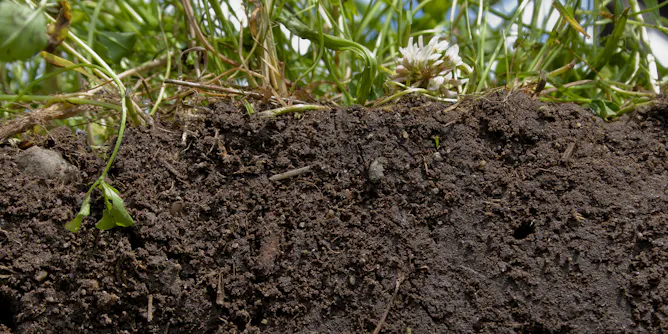
Conventional wisdom says we need industrial agriculture to feed the world. Not so, says geologist David Montgomery: Practices that focus on creating healthy soil can transform agriculture.
Articles on Food security
Displaying 381 - 400 of 553 articles

South Africa’s social grants, which benefit a third of the country’s population, are widely celebrated. But these grants fall far short of addressing the country’s malnutrition challenge.

New technologies are developing with exponential velocity, breadth and depth. Their systemic impact is likely to be profound.

Urban consumers in Africa are rapidly growing and they are demanding high quality, pesticide free food.

According to widely-cited estimates, world food production must double by 2050 to keep up with population growth. New research challenges this target and calls for balancing growth with conservation.
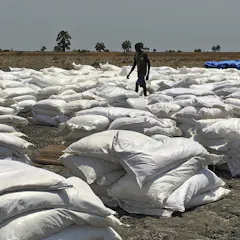
At a time when poverty and hunger levels are declining around the world, famine is recurring, driven by conflicts and natural disasters. But timely action by governments and aid groups can save lives.
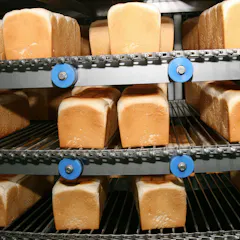
The main source of global warming isn’t baking or transport, but fertiliser used to grow wheat.
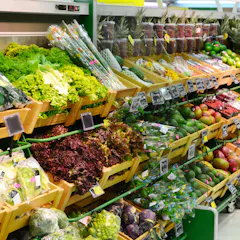
Getting food on to our plates out of season relies on a fragile business ecosystem. The latest shortages show how easily this can break down.
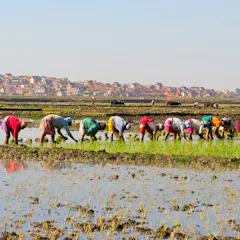
Reflections on World Wetland Day on how this precious resource can be used sustainably to reduce rural poverty, improve food security and strengthen livelihood in the face of climate change.
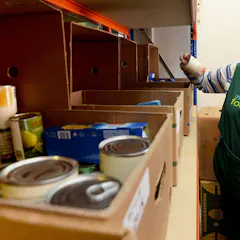
Recycling leftovers from supermarkets does not address the roots of food poverty and removes responsibility from the government.
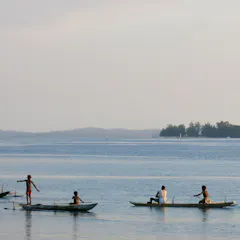
Coastal indigenous peoples consume nearly four times more seafood per capita than the world average and have strong cultural ties to the sea. Global ocean policies should preserve these connections.
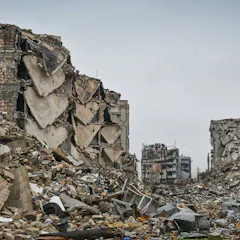
Food, water and climate are complex, interconnected systems that when disrupted can cause severe social and political shocks.
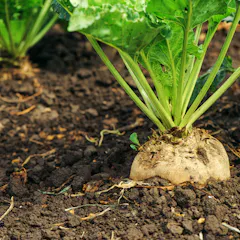
Researchers are developing biological tools that can boost crop yields to feed a growing world population without harming human health or the environment.
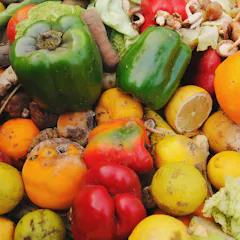
Rich countries waste a lot of food. Producers and consumers need to rethink eating habits if this problem is to be solved.
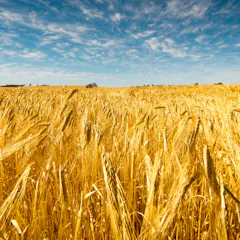
Australia’s wheat harvest has stalled over the past 26 years, and worsening weather is to blame.
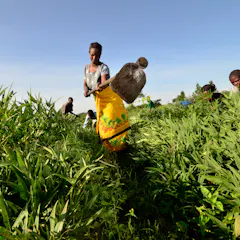
Cassava is a key food source in tropical countries, but yields have been flat for decades. New genetic research is identifying many options for boosting production of this valuable staple crop.
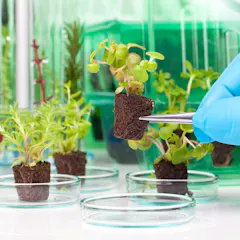
Many people are suspicious of GM crops, but new techniques could massively increase food production.
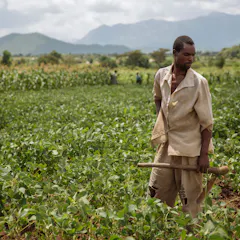
How can we feed a growing world population while protecting the environment? One key strategy is to improve yields on small farms, which produce much of the food in the world’s hungriest countries.
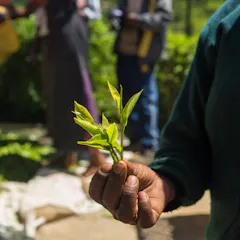
Nearly two-thirds of the billion people suffering food insecurity are themselves farmers. Here’s how some are protecting themselves.
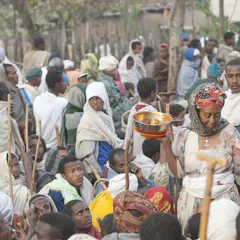
There is no one-size-fits-all answer to global food insecurity except that the West needs to learn to consume, and waste, less.
Top contributors
-

Senior Fellow, Department of Agricultural Economics, Stellenbosch University
-
Associate Professor in Food Systems, The University of Melbourne
-
Research Fellow, Tegemeo Institute, Egerton University
-
Associate Professor, Department of Entomology; African-American Studies, University of Illinois Urbana-Champaign
-
PhD, Political Economy, Macquarie University
-
Professor of Food Policy, City St George's, University of London
-
Researcher in sustainable food systems, The University of Melbourne
-
Director of the Arrell Food Institute and Professor in the Dept. of Geography, Environment and Geomatics, University of Guelph
-
Network and Research Manager: ARUA – UKRI GCRF FSNet Africa, University of Pretoria
-
Professor in Food Security; Head of the Department of Agricultural Economics, Extension and Rural Development, University of Pretoria
-
Emeritus Fellow in Plant Biochemistry, University of Westminster
-
Professor of Social Development Studies, University of Johannesburg
-
Food Systems Research and Partnerships, The University of Melbourne
-
Adjunct Professor, Curtin Business School, Curtin University
-
Climate Scientist and Researcher, University of Cape Town