
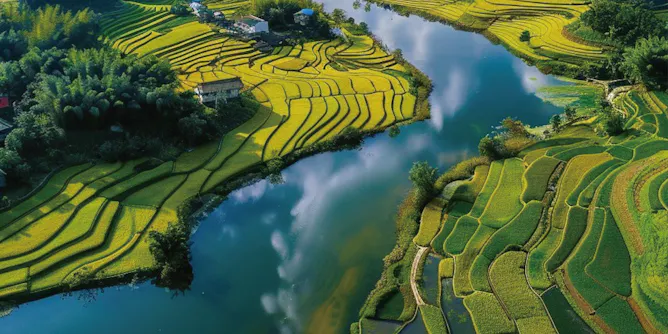
There are ways to reduce emissions without sacrificing yield. A new study shows how, and looks at a technique billed as ‘climate-friendly’ that makes emissions worse.
Articles on Farming
Displaying 61 - 80 of 722 articles
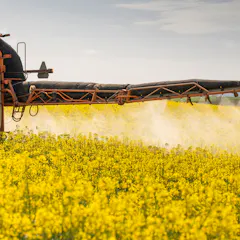
A labour and political ecology expert looks back at imperialistic logic and how chemical fertilisers have repeatedly served as strategic objectives and weapons, particularly in wartime.
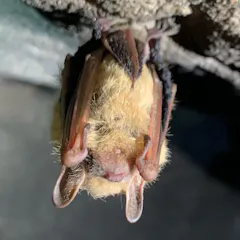
When bats disappear, farms become less productive, and that has broad implications far beyond the crops.
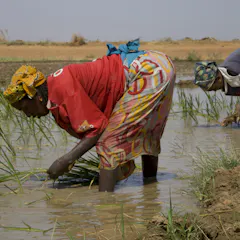
Science can only change the world when societies decide to give it the means to do so.

Pollinators support our nutritional health and are critical for crops of fruit, vegetables and beans.
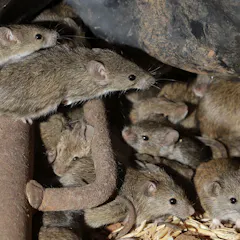
In parts of Western Australia and Southern Australia, mouse numbers are reaching plague proportions.

Wheat is one of the most popular grains globally. But climate change is making it harder to grow, harvest and distribute this crucial crop.
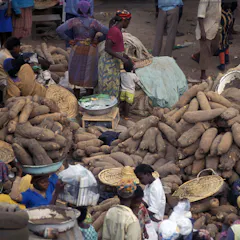
Communities affected by mining project delays live in a state of suspended time for three years.

Agricultural workers are six times more likely to die on the job than the average American worker.
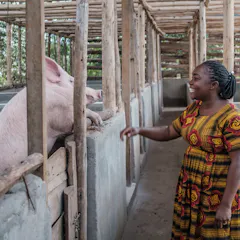
It’s possible to work with and change social norms about suitable work for women.

Regenerative agriculture began as a grassroots movement led by farmers. It has been described in many different ways, but a common thread is a set of values.
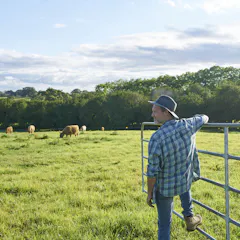
Nature and agriculture are often at odds. But an Australian study suggests farmers who plant more trees are better off – financially and environmentally.
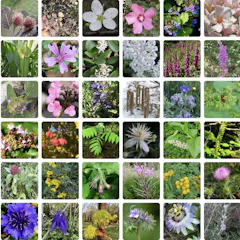
Pl@ntNet, the “shazam” for plants is a well-known app among the hiking community and nature enthusiasts, but not many know that it’s a precious resource for scientists.
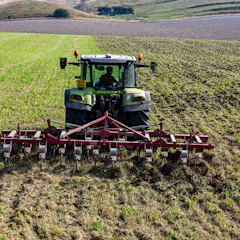
UK farmers are struggling with rising prices, as the war in Iran and the closure of the strait of Hormuz starts to affect supply.
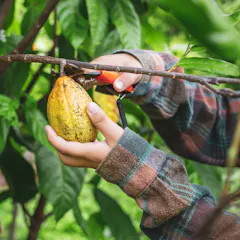
Research shows how cocoa farmers in Nigeria are profiting from protecting trees alongside their farms.
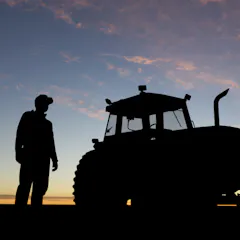
If we want to keep our food supplies secure, understanding what farmers need in diesel supplies now – and in coming months – will be crucial.

What is the future for Britain’s sheep? Farmers are choosing to keep fewer animals.
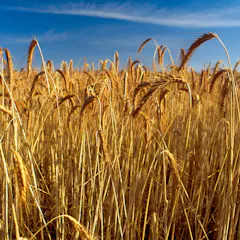
Sustained extreme heat can damage, weaken and kill all living things, from wheat crops to koalas and fruit bats.
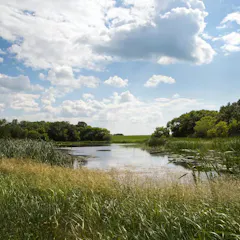
Some tout wetland drainage as providing numerous benefits, including reducing emissions. This assertion is not supported by science.
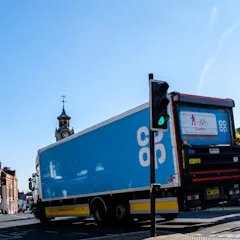
If the systems sending our food to market are just overseen by machines, then there’s going to be issues that could result in a food crisis.
Top contributors
-

Senior Fellow, Department of Agricultural Economics, Stellenbosch University
-
John M. Thompson Chair in Information Technology and Innovation and Professor, Western University
-
Professor in Wildlife Ecology and Conservation, School of Life & Environmental Sciences, Deakin University
-
Associate Professor in Food Systems, The University of Melbourne
-
Adjunct Associate Professor, Centre for Regional and Rural Futures, Deakin University
-
Emeritus Professor of Agroecology and Food Politics, Centre for Agroecology, Water and Resilience, Coventry University
-
Lecturer in Ecology, University of New England
-
Professor, Dept of Food, Agricultural and Resource Economics, University of Guelph
-
Research Fellow, Centre for Rural Policy Research, University of Exeter
-
Emeritus Professor, Poverty, Land and Agrarian Studies, University of the Western Cape
-
Adjunct Professor in Animal Welfare, Curtin University
-
Professorial Fellow, ARC Centre of Excellence for Coral Reef Studies, James Cook University
-
Research Director, Institute for Sustainable Futures, University of Technology Sydney
-
Professor, Food Economics, University of Guelph
-
Canada Research Chair in Equitable and Sustainable Food Systems, Lakehead University