
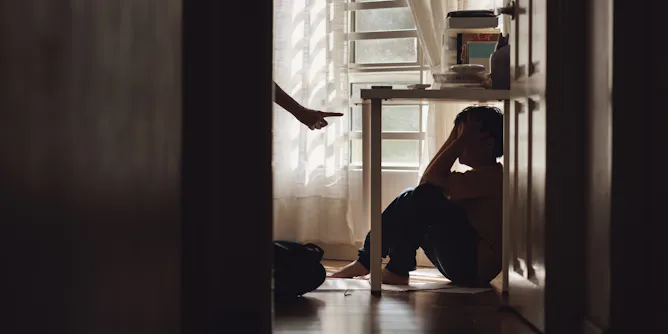
A study interviewing teenagers reveals how parents can coercively control their children under the guise of parental discipline.
Articles on Family violence
Displaying 21 - 40 of 224 articles

The recent deaths of two babies have both been reported as family violence. The overdue change in language gets us one step closer to keeping children safer.

One woman told the researchers: ‘He would come home and tell me that the group agreed with him.’

First came psychological abuse, then physical, then came sexual abuse.

The special bond between owners and pets has been recognised in family law changes, with dogs and cats defined as companion animals and not just property.

GPs can engage men who are at risk of perpetrating family violence – and prevent them harming their families. Here’s how.

Australia wants to end domestic violence in a generation. To do so, we need to focus on the next one.

The results of a landmark longitudinal study into domestic violence paint a grim picture, but they also point to key solutions, especially before men offend.

Interviews with female prisoners in WA show many struggled with violence, drugs, alcohol, poverty and homelessness from an early age.
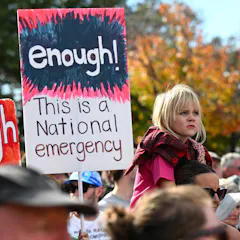
After an election campaign largely silent on women’s safety issues, the major parties have unveiled their policies. They fall well short of what is needed.
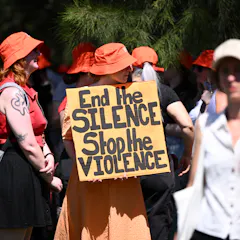
Domestic and family violence hasn’t been a major election issue. While the major parties are starting to talk about it, it’s not enough.
Distrust, systemic racism and fear all drive First Nations families away from using the court.

Primary prevention is aimed at addressing the underlying drivers of violence so it never occurs. But many interventions also aim to reduce and respond to violence.
One person said: ‘I had to report at the police station where he works, where everybody knows everybody’.

Despite best intentions, social and family workers say they can feel helpless because of bigger problems such as housing or family violence.

The holiday season is supposed to be a happy time, but many find themselves at increased risk of harm by family violence.

Current crisis accommodation is isolating, frightening and doesn’t meet the needs of woman and children, but one program is succeeding where others fail.

Despite global efforts to see economic harm as a form of domestic violence, New Zealand’s Family Violence Act doesn’t recognise it as a standalone form of abuse.
New data from Victoria shows that in a quarter of deaths by suicide between 2009 and 2016, the person had experienced family violence before they died.
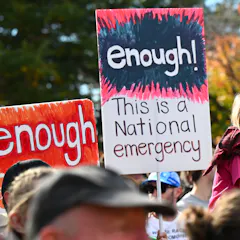
National Cabinet unveiled a $4.7 billion partnership, starting July 1 2025, to address domestic violence. It’s funding that’s sorely needed and enthusiastically welcomed, but needed immediately.
Top contributors
-

Professor (Practice), Faculty of Business and Economics, Monash University
-
Professor of Family and Sexual Violence, RMIT University
-
Eleanor Rathbone Chair of Sociology, University of Liverpool
-
Professor of Social Work; Leneen Forde Chair in Child & Family Research, Griffith University
-
Chief Investigator for the Australian Research Council Centre of Excellence for the Elimination of Violence against Women (CEVAW), School of Philosophical, Historical & International Studies, School of Social Sciences (SOSS), Monash University
-
ARC Future Fellow and Professor of Criminology, The University of Melbourne
-
Emeritus Professor Monash University, Monash University
-
Professor of Law and Deputy Director of the Centre of Excellence for the Elimination of Violence Against Women (CEVAW), The University of Melbourne
-
Associate Professor of Social Work, The University of Melbourne
-
Professor of Family Violence Prevention, The University of Melbourne
-
Managing Director, Her Story Consulting & Postdoctoral fellow, Australian National University
-
Professor, Centre for Women's Studies & Gender Research, Sociology, Monash University
-
CEO, Sentencing Advisory Council
-
Director of the Monash Gender and Family Violence Prevention Hub and Senior Lecturer in Criminology Monash University, Monash University
-
Lecturer in Criminology, University of Liverpool