

A domestic violence disclosure scheme is a resource people can check to find out if a particular person has a documented history of domestic violence.
Articles on Royal Commission into Family Violence
Displaying 1 - 20 of 27 articles

Nearly one-quarter of young people surveyed said women exaggerated claims of sexual assault. This is only one reason why education on underlying values that lead to violence against women matters.

Psychological abuse of intimate partners is a public health problem, and is not well-regulated by the law.

Police sometimes misidentify victims as perpetrators – because the real perpetrator has misled them, or because the victim is not displaying “typical” behaviour.

The enthusiasm around swift, certain and fair approaches to sentencing offenders may not be backed by evidence.

Research is revealing that both families who have experienced adolescent family violence and those working with them feel the criminal justice system is not an appropriate way to respond to it.

Family violence will not always be ‘obvious’ to CCTV. Therefore measures must be put in place to ensure that footage cannot be used against victims should circumstances of violence be challenged.
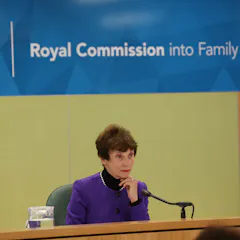
A year since its royal commission reported, Victoria continues to lead the nation in how to respond to, and prevent, family violence.

Following Victoria’s Royal Commission into Family Violence, should the state change the way it sentences offenders?

Othello is one of Shakespeare’s most famous tragedies. But in the light of 21st-century understandings of abuse, the play is recast as a textbook case of domestic terrorism.

To formulate better policy on family violence, we need to understand economic abuse.
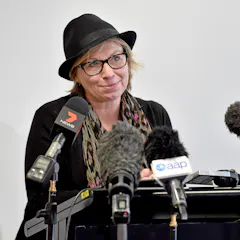
The Victorian Royal Commission into Family Violence put the pressure on banks to respond to economic abuse. Now the banks are taking the first steps.

Victoria’s family violence system unintentionally protects male perpetrators by making them invisible and providing opportunities for them to avoid responsibility.

Mainstream family violence services must also become culturally sensitive and responsive so they too can provide services to Indigenous community members.

Children may endure family violence directly, or witness violence perpetrated on others. Both scenarios result in severe adverse effects for children in the short and long term.
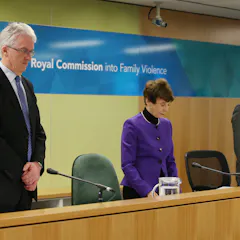
The royal commission’s recommendations seek a complete transformation of Victorian family violence services, and the state’s prevention of and response to family violence.
The silencing of children has as long a history as child abuse itself. It is why we need royal commissions, books, and now a play: to allow children to tell us the truth of what was done to them.

Victoria’s Royal Commission into Family Violence will today hear how the health system can better respond to partner abuse, with the help of trained professionals and broader, government support.

Many public awareness campaigns fail to change attitudes and behaviours because they start from the flawed premise that just telling someone something is bad will make them stop doing it.

To reduce family violence, we need to examine the culture of masculinity and the way we socialise our children into gender roles.
Top contributors
-

Professor (Practice), Faculty of Business and Economics, Monash University
-
CEO, Sentencing Advisory Council
-
Eleanor Rathbone Chair of Sociology, University of Liverpool
-
Professor, Centre for Women's Studies & Gender Research, Sociology, Monash University
-
Lecturer in Criminology, University of Liverpool
-
Associate Professor of Social Work, The University of Melbourne
-
Professor of Family Violence Prevention, The University of Melbourne
-
Emeritus Professor Monash University, Monash University
-
Arie Freiberg is a Friend of The Conversation.
Emeritus Professor of Law, Monash University
-
Honorary Professor, University of Wollongong
-
Lecturer Dispute Resolution Advocacy, University of Technology Sydney
-
Associate Professor, University of Waikato
-
Senior Lecturer, Faculty of Law, University of Technology Sydney
-
Professor, School of Economics, Finance and Marketing, RMIT University
-
Professor Emeritus, Griffith Criminology Institute, Griffith University