

Violence against women is a national priority, and Aboriginal women are disproportionately affected. This must be reported on appropriately in the media.
Articles on Family violence
Displaying 181 - 200 of 224 articles

Initial experience indicates that private security companies can provide a beneficial service to victims of family violence, but there are still concerns that need to be addressed.

A study being launched today by Australia’s National Research Organisation for Women’s Safety confirms the serious impacts of intimate partner violence.

The uneven provisioning of poker machines across Victoria may be contributing to the incidence of domestic violence in areas with many poker machines.

A domestic violence disclosure scheme does not in itself assist people to achieve safety from an abusive partnership.

Thousands of Australian men are sitting on waiting lists every year to get help to end their violent behaviour – even though behaviour change programs can reduce their likelihood of offending again.

Political parties should commit to supporting the evidence-based recommendations of decades worth of reports into family violence.

While there is still some way to go, media reporting of violence against women and children has improved markedly in recent years.

Adding to the trauma of a relationship breaking down, families can find themselves caught in a tangle of state and commonwealth laws.
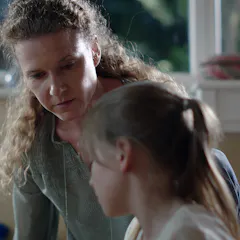
To formulate better policy on family violence, we need to understand economic abuse.
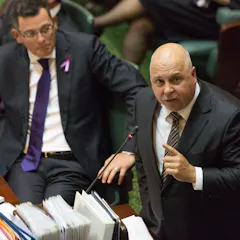
Victoria’s big-spending budget will fund education and services, but infrastructure is the big winner.
The Victorian Royal Commission into Family Violence put the pressure on banks to respond to economic abuse. Now the banks are taking the first steps.

Victoria’s family violence system unintentionally protects male perpetrators by making them invisible and providing opportunities for them to avoid responsibility.

Mainstream family violence services must also become culturally sensitive and responsive so they too can provide services to Indigenous community members.

Children may endure family violence directly, or witness violence perpetrated on others. Both scenarios result in severe adverse effects for children in the short and long term.
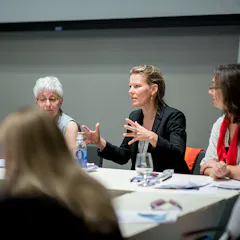
Programs that aim to prevent violence against women through gender equality at work are facing opposition from leaders who don’t see it as a workplace issue.

With incidence of elder abuse, mostly within families, on the rise, the government is looking for much-needed legislative measures to combat it.
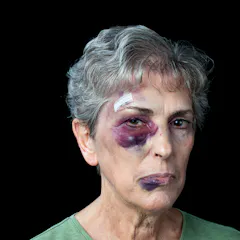
When adult children abuse their parents, feelings of parental love and responsibility coupled with shame and guilt often stop the parent from seeking help and protecting themselves.

Australia is poised to lead the world by demonstrating the kind of nationwide, cultural and structural change necessary to forever change the story of violence against women.

Can the Queensland government’s domestic violence reforms address the heightened risk involved in leaving an abusive or controlling partner?
Top contributors
-

Professor (Practice), Faculty of Business and Economics, Monash University
-
Professor of Family and Sexual Violence, RMIT University
-
Eleanor Rathbone Chair of Sociology, University of Liverpool
-
Professor of Social Work; Leneen Forde Chair in Child & Family Research, Griffith University
-
Chief Investigator for the Australian Research Council Centre of Excellence for the Elimination of Violence against Women (CEVAW), School of Philosophical, Historical & International Studies, School of Social Sciences (SOSS), Monash University
-
ARC Future Fellow and Professor of Criminology, The University of Melbourne
-
Emeritus Professor Monash University, Monash University
-
Professor of Law and Deputy Director of the Centre of Excellence for the Elimination of Violence Against Women (CEVAW), The University of Melbourne
-
Associate Professor of Social Work, The University of Melbourne
-
Professor of Family Violence Prevention, The University of Melbourne
-
Managing Director, Her Story Consulting & Postdoctoral fellow, Australian National University
-
Professor, Centre for Women's Studies & Gender Research, Sociology, Monash University
-
CEO, Sentencing Advisory Council
-
Director of the Monash Gender and Family Violence Prevention Hub and Senior Lecturer in Criminology Monash University, Monash University
-
Lecturer in Criminology, University of Liverpool