
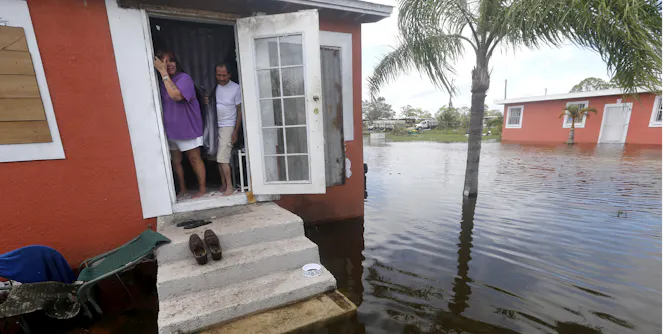
Researchers tracked power outages after 8 major storms to see how wealth corresponded to recovery time.
Articles on Extreme storms
Displaying 21 - 34 of 34 articles
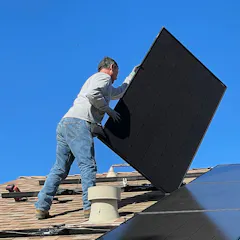
Australians want government to act on climate change, but not necessarily now, or in their neighbourhood. How can governments resolve this dilemma?
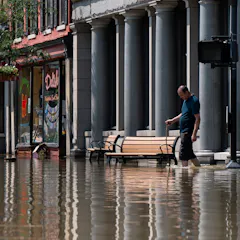
An atmospheric scientist explains how rising temperatures are helping to fuel extreme storms, floods, droughts and devastating wildfires.
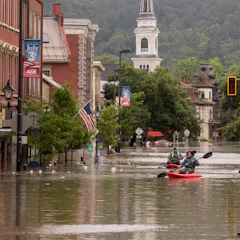
The US saw a record number of billion-dollar disasters in 2023, even when accounting for inflation. The number of long-running heat waves like the Southwest experienced is also rising.

There’s a rule of thumb that rainfall intensity increases by about 7% per degree Celsius as temperatures rise. But the increase is much higher in the mountains, scientists found.

Forecasters warned of ‘potentially historic rainfall’ and ‘dangerous to locally catastrophic flooding.’ A hurricane scientist explains what El Niño, a heat dome and mountains have to do with the risk.
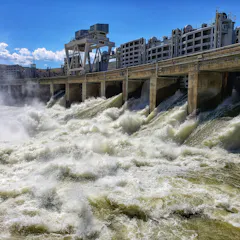
An engineer who managed dams for years explains the tradeoffs operators make as they decide when to release water and how much to stay safe.
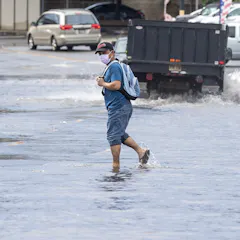
Honolulu, Baltimore, Charleston, S.C. and several other cities harmed by rising seas and extreme weather are suing the oil industry. At stake is who pays for the staggering costs of climate change.
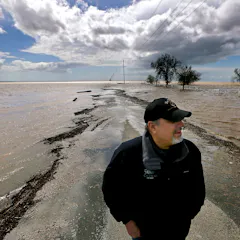
This year’s Sierra snowpack is looking a lot like 1983’s, and that was a year of flooding and mudslide disasters. A meteorologist explains what’s ahead.
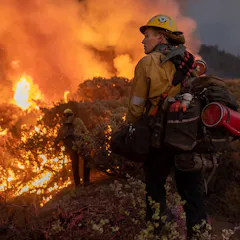
The final report in the IPCC’s sixth assessment series says countries will have to cut their greenhouse gas emissions 60% in the next 12 years to keep global warming in check.

Atmospheric rivers can melt fragile new sea ice. When these storms arrive in waves, the sea ice doesn’t have a chance to recover.
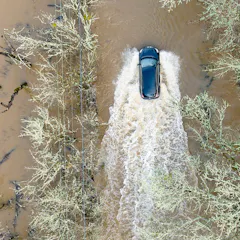
The majority of flood-related deaths involve vehicles in water. What if flood models could warn of the risks street by street using real-time storm forecasts? Machine learning can make it possible.
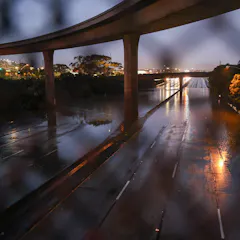
Urban infrastructure was designed to take stormwater out to the ocean quickly. Now, California needs that precious water.
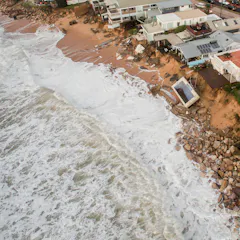
As sea levels rise, this natural form of beach replenishment might be an important factor in offsetting some of the damaging effects of climate change on beaches.
Top contributors
-

Professor of Geology and Environmental Geosciences, University of Dayton
-
Meteorologist and Research Program Manager, University of Wisconsin-Madison
-
Professor of Atmospheric Science, University at Albany, State University of New York
-
Operations Manager, Monash University
-
Professor of Law Emeritus, Vermont Law & Graduate School
-
Professor of Atmospheric Science, Iowa State University
-
Research and Operations Meteorologist, Center for Western Weather and Water Extremes, University of California, San Diego
-
Distinguished Professor of Meteorology, Penn State
-
Professor of Policy Analysis, RAND School of Public Policy
-
Assistant Professor of Climate and Space Sciences Engineering, University of Michigan
-
Associate Professor of Climate Change, Technology and Policy, Carleton University
-
Professor of Earth and Planetary Sciences, University of California, Santa Cruz
-
Associate Professor of Engineering, Georgia Institute of Technology
-
Professor of Hydrosystems Engineering, University of Michigan
-
Assistant Research Professor of Atmospheric Science, Penn State