

People with eating disorders often struggle with staying in control. For many, the pandemic took away control. A health scholar shares her story of how that loss of control affected her bulimia.
Articles on Eating disorders
Displaying 81 - 100 of 135 articles
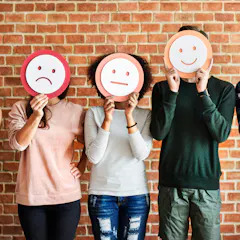
New findings that alexithymia in autistic people made them more vulnerable to eating disorders.

Some people turn to a tub of ice cream. Others, to clean eating.
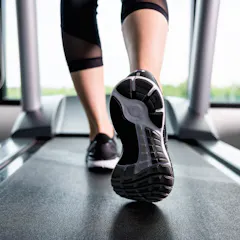
Exercise addiction describes an obsessive or compulsive need to exercise – even when you’re injured.

As National Eating Disorders Awareness Week is observed Feb. 24-March 1, here are some things to consider.

The more people watch TV the more likely it is that they prefer a slimmer female body size.
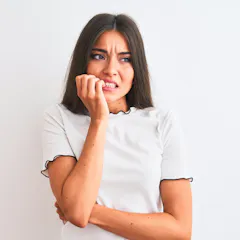
Anxious teenage girls are more likely to fast – one of the symptoms of anorexia nervosa.
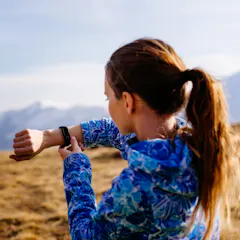
A small body of research has started to explore how fitness trackers and calorie counting apps might be linked to disordered eating and exercise.

As Australia considers its next national mental health survey, it’s crucial to include eating disorders. If we don’t have good data on how many people are suffering, we can’t come up with solutions.

Data from England has found no link between increased social media use and a rise in diagnosed eating disorders.
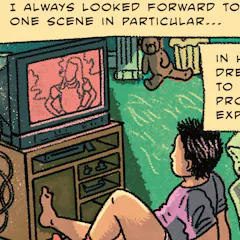
Queer men’s comics are contributing to changing cultural narratives about what queer men’s bodies should be, and health researchers are taking note.
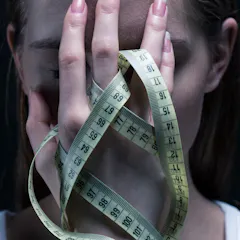
New research has found several physical and mental health indicators that often appear before an eating disorder diagnosis.
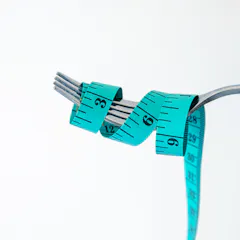
Interoception – the awareness of internal body signals – is important for regulating eating and interpreting emotions.

Many elite female athletes show signs of eating disorders. Does Norway hold the solution to this problem?
The results of stigma can be deeply damaging – we all need to show greater sensitivity.

TV shows that don’t provide an accurate portrayal of eating disorders do a disservice to their viewers.

While thousands have called for the show to be cancelled, Insatiable actually does a good job of depicting the complex nature of disordered eating, sexuality and female pleasure.
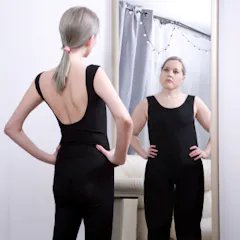
Anorexia nervosa can be a deadly disease. A recent analysis of several studies showed that it may be even harder to treat than previously believed. But the news isn’t all bad.

Is the belief in art’s healing power just wishful thinking, or is there something to it?

A new study explores whether how we perceive our body weight affects our prospects in the job market and at work.
Top contributors
-

Clinical Psychologist and Senior Lecturer in Psychology, University of Canberra
-
Assistant Professor of Psychiatry, University of Colorado Anschutz
-
Professor, Head of Body Image, Eating and Weight Disorders Research, Adelaide University
-
Professor of Psychology, Flinders University
-
Senior Lecturer in Clinical Psychology, University of the Sunshine Coast
-
Senior Lecturer in Clinical Psychology, University of the Sunshine Coast
-
Research Fellow, School of Psychological Sciences, Monash University
-
Associate Professor in Health and Physical Education, Victoria University
-
Assistant Professor of Pediatrics, University of Virginia
-
Associate Professor of Clinical Psychology, University of Reading
-
Assistant Professor of Pediatrics, University of Virginia
-
Professor of TV Studies, University of East Anglia
-
Senior Lecturer, Psychology, Bournemouth University
-
Senior Research Fellow, The University of Melbourne
-
Professor of Health Psychology, University of Surrey