

Since the 1990s, transnational corporations have once again become the dominant force as owners and managers of major mining projects.
Articles on Democratic Republic of the Congo (DRC)
Displaying 101 - 120 of 393 articles

Rwandan forces have been able to keep civilian casualties low in Cabo Delgado despite carrying out a counterterrorism operation.
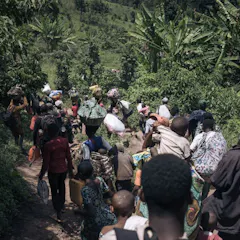
The international effort to address three decades of violence in eastern DRC has drawn in the UN, east African troops and now a southern African force.
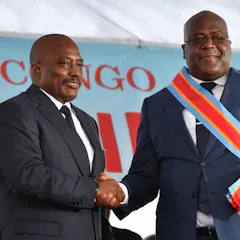
Laurent Kabila and his son Joseph were the Democratic Republic of Congo’s third and fourth presidents.
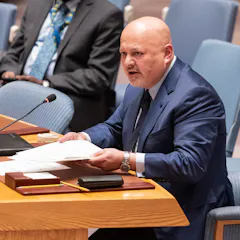
The push for national trials reflects a disappointment with the slow pace and high costs of international justice.

Central to the DRC’s politics is a broken relationship between the seat of government in Kinshasa and underrepresented groups in the eastern region.
Without policies that take account of a growing population with few working-age people, DRC risks seeing an increase in poverty and hunger.
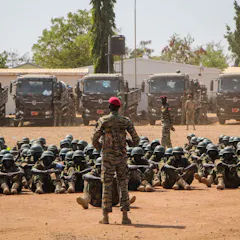
The causes of violence in the DRC are complex. Narrowing them down to the single lens of ethnicity can be misleading.
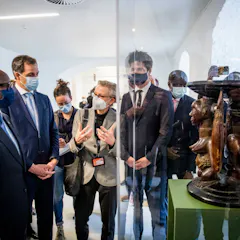
The restitution of looted objects from former colonies in Africa is an essential component of post-colonial reparation.
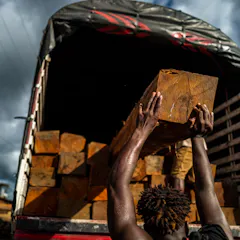
Timber parks, where the paperwork for loads of timber is inspected, can help stem the financial losses from illegal exports.
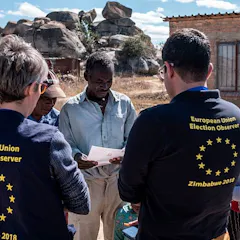
Observers regularly face dangers owing to political instability, insecurity, violence and other crises in some countries.

A comprehensive strategy does not seem to be an immediate priority for Congolese authorities with an eye on elections.
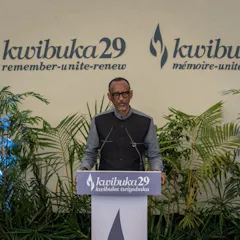
The circumstances, challenges and history of Rwanda are intertwined with Paul Kagame’s own life story.
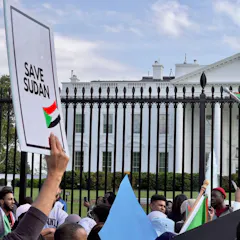
An agreement to end conflict is only one small step in an often long process.
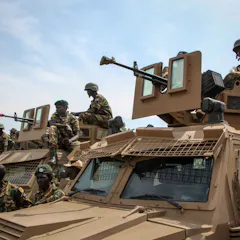
The region’s forces are seen as important in addressing the long-running conflict in the DRC – but their involvement is complicated.
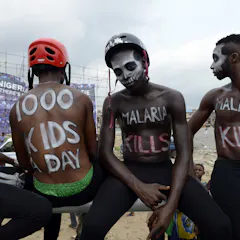
Nigeria must do more to reduce its high malaria burden.
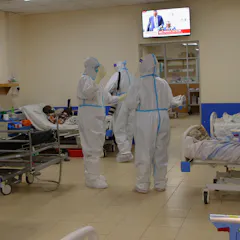
A new global dataset shows there is no clear global increase of infectious disease outbreaks over time. And it can suggest which countries would most likely be affected by an outbreak.

Dignity is at the centre of many rights-based declarations, but to eradicate racist policy and practices, we must commit to noticing each other’s personhood in new ways.

Countries must ensure adequate and full immunisation of every child to curb polio mutations.
Thirty years ago the World Bank recognised that its position was untenable. It put in place mechanisms to make the bank more accountable to ordinary people.
Top contributors
-

Lecturer in African History, Queen Mary University of London
-
Professor in International Development, University of Antwerp
-
Postdoctoral Research Associate, King's College London
-
Reader in International Development, University of Bath
-
Professor in the faculty of Medicine, Mbarara University of Science and Technology
-
Visiting Researcher, University of Leeds
-
Research Director of the Insecure Livelihoods Project, Ghent University
-
Assistant professor, Utrecht University
-
Part-time lecturer at the Global Health & Social Medicine, Harvard University, and Lecturer at the School of Public Health, College of Health Sciences, University of Liberia
-
Researcher and lecturer, City University of New York
-
Associate Professor International Law, Roskilde University
-
Lecturer and Senior Research Fellow at the South African Research Chair in International Law (SARCIL), University of Johannesburg
-
Adjunct assistant professor, Roskilde University
-
Professor of Democracy, University of Birmingham
-
Senior researcher, Danish Institute for International Studies