
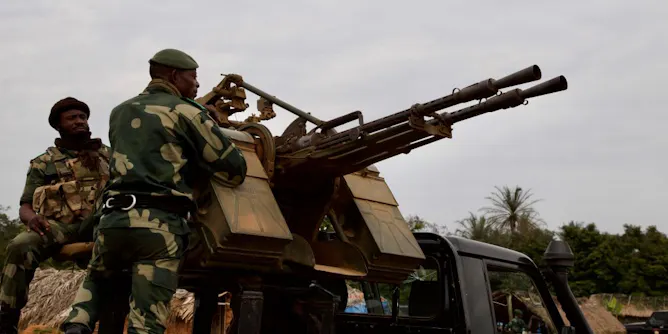
Uganda’s interest in natural resources during the second Congo war has had a lasting impact on how it’s perceived in the DRC.
Articles on Democratic Republic of the Congo (DRC)
Displaying 81 - 100 of 393 articles

The Southern African Development Community Parliament will have the delicate job of ensuring good participatory regional governance while protecting national sovereignty.

Kigali wants to be seen as a reliable security provider at home and abroad.

Vaccinating public village leaders or respected older community members might be an effective approach to increasing vaccine uptake.
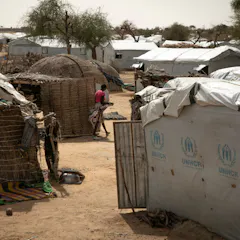
Burkina Faso tops the list of the world’s most neglected crises in the world for the second time in a row.
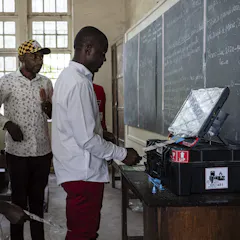
Digital technologies can help more people to participate in building their countries’ democracies.

Africa hosts substantial reserves of critical minerals.

The members of the Society for Ambience and Elegance (Sape) are impossible to overlook. Born in Central Africa at the beginning of the 20th century, the style is now found from Paris to Dubai.
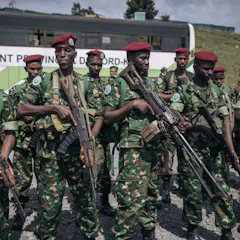
The RED-Tabara armed group operates out of the DRC’s volatile eastern region, which shares a porous 243km border with Burundi.

Children benefit enormously from regular, cognitively stimulating interactions with their caregivers.

The fate of several colonial statues in Africa continues to be a subject of controversy.
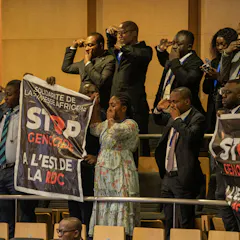
Protests in Kinshasa are an indictment of the lack of attention to the Congolese crisis.
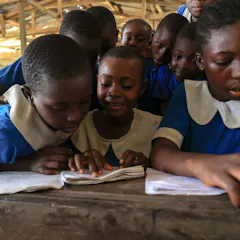
Education can spur peace and development. Here are five essential reads on the topic.

Those who reject recourse to the courts in favour of street demonstrations are taking the wrong approach to the current democratic turning point.
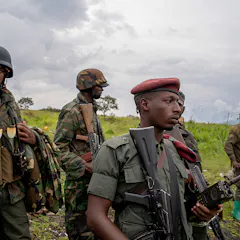
The new intervention force must be sizeable, and have proper air cover as well as transport and air elements. None are guaranteed.

Dreaming differs across cultures, and these differences may hold the clue to how and why dreaming evolved for humans and other species.
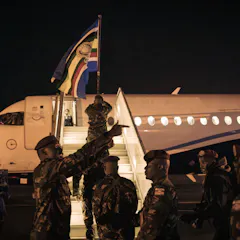
Chances of longer term peace are small because of the DRC’s assumption that it can achieve peace through sheer military force.

Regional rivalries have functioned as oxygen, allowing the rebel group to survive and grow.
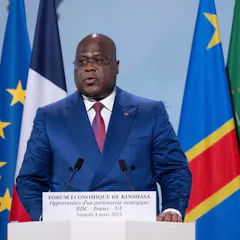
Plenty remains to be done to improve the lives of Congolese citizens.
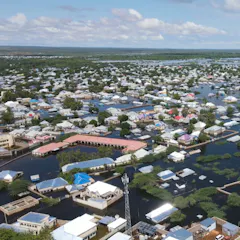
Funding climate adaptation in conflict areas may require engaging local communities and armed groups where national governments are absent.
Top contributors
-

Lecturer in African History, Queen Mary University of London
-
Professor in International Development, University of Antwerp
-
Postdoctoral Research Associate, King's College London
-
Reader in International Development, University of Bath
-
Professor in the faculty of Medicine, Mbarara University of Science and Technology
-
Visiting Researcher, University of Leeds
-
Research Director of the Insecure Livelihoods Project, Ghent University
-
Assistant professor, Utrecht University
-
Part-time lecturer at the Global Health & Social Medicine, Harvard University, and Lecturer at the School of Public Health, College of Health Sciences, University of Liberia
-
Researcher and lecturer, City University of New York
-
Associate Professor International Law, Roskilde University
-
Lecturer and Senior Research Fellow at the South African Research Chair in International Law (SARCIL), University of Johannesburg
-
Adjunct assistant professor, Roskilde University
-
Professor of Democracy, University of Birmingham
-
Senior researcher, Danish Institute for International Studies