
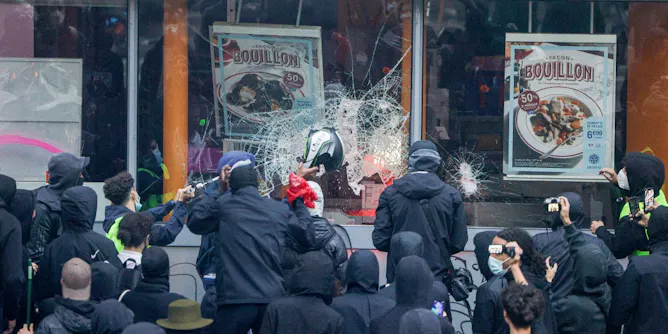
The term the French media are using to describe the people behind the chaos on the fringes of legitimate protests seems to be raising more questions than answers.
Articles on Democracy
Displaying 21 - 40 of 1731 articles

Money or other material benefits are often not enough to override a voter’s preferences and partisanship.
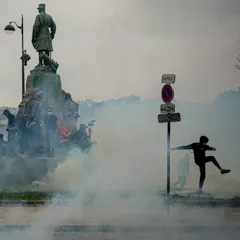
Montesquieu’s philosophy on the need for counter-powers for safeguarding against revolt in societies serves as a reminder for France amid a climate of enduring unrest.

Co-founded by U.S. Vice President J.D. Vance, Rockbridge offers candidate Flávio Bolsonaro, son of former and now jailed President Jair Bolsonaro, strategic advantages in the tight race against incumbent President Lula
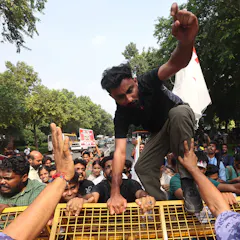
Protesters in India have taken to the streets over a controversial revision of the country’s voter rolls.
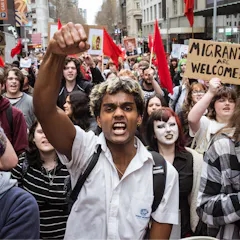
A new report maps how protest permit systems work in every state and territory. The result is a tangle of laws, council by-laws and complicated rules.

The second annual Shopfront Youth-Led Conference was designed by young people for young people. They wanted to talk about ‘redesigning success’.
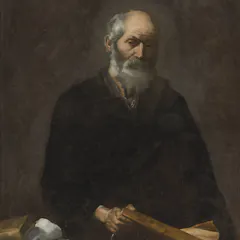
Many Americans have decried today’s politics as ‘shameless.’ The antidote, a political philosopher argues, may be more reverence – awe at just how difficult democracy is.
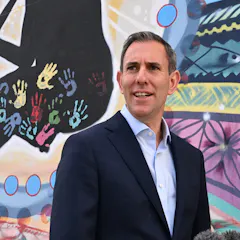
By directly acknowledging the seriousness of One Nation’s support, Chalmers is underscoring that the party is a threat to Labor, not just to the Coalition.

Afghanistan’s own democratic aspirations long predate the West’s intervention in 2001. The Taliban’s return dealt a devastating blow, but these aspirations endure.
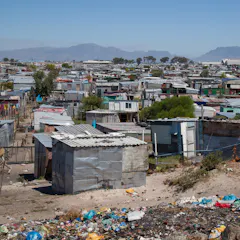
Potholes and water outages often begin with bad planning. A town planner explains seven ways South Africans can push municipalities to do better.
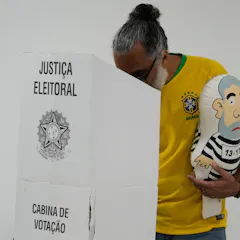
Far-right lead in the presdential race and landslide victories in legislative and local elections have affective, value-based, and political-ideological explanations.

Political project born in the mid-1980s from the debris of a 21-year military dictatorship in Brazil is over, and the question now is what will replace it.
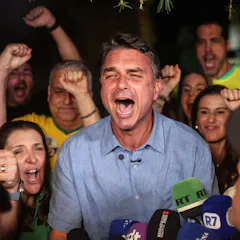
Once the 2026 election is over, Brazil must ensure the strength of its institutions far beyond simply guaranteeing fair elections.
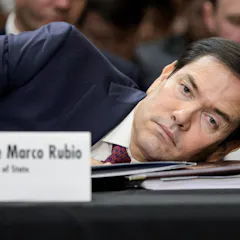
Research shows that electoral threats do not only affect the ballot box, but also hijack public debate, using polarization to erode trust in democratic institutions.
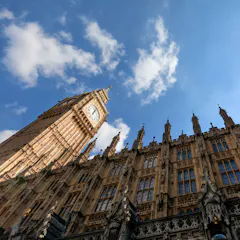
Elected politicians make decisions that can affect millions, but do they receive the support they need?
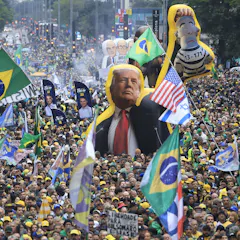
With the two presidential candidates running neck-and-neck, this election has stakes beyond Brazil. The growing power of US big tech is also in the spotlight.

A majority of Supreme Court justices follow originalism, the mode of constitutional interpretation championed by late Justice Antonin Scalia. A former Scalia law clerk explains what originalism means.
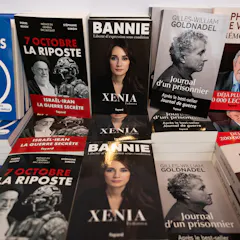
The Fedorova case is emblematic of a rhetorical method used by Russian propaganda: appealing to the targeted public’s critical thinking to convince them to disregard sources seen as “official” and “dominant.”
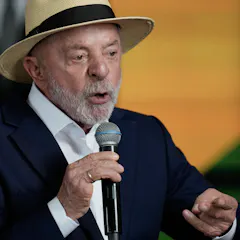
A political scientist analyzes the uncertain outlook for this year’s elections and the risks their results pose to governability and democracy in Brazil.
Top contributors
-

Senior Lecturer in Democracy Studies, University of Canberra
-
Professor of Politics, University of Sydney
-
Professor of Democracy, University of Birmingham
-
Professorial Fellow, University of Canberra
-
Assistant researcher, University of Sydney
-
Adjunct professor, Charles Sturt University
-
Senior Research Fellow, Centre for Advancing Journalism, The University of Melbourne
-
Senior Visiting Scholar with the Center for the Study of Genocide and Human Rights, Rutgers University
-
Professor of Communication Studies, Colorado State University
-
Professor of World Politics, SOAS, University of London
-
Professor of Politics and Public Policy, University of East Anglia
-
Associate Researcher, Arnold Bergstraesser Institute
-
Nonresident Research Fellow, Rice University
-
Honorary Professor of International Relations, University of the Witwatersrand
-
Professor, Department of Communication Arts, University of Waterloo