
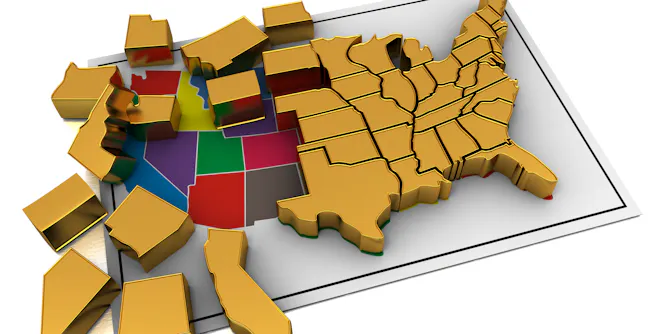
What would the United States be without its states? A better, more democatic country, says one legal scholar.
Articles on Democracy
Displaying 221 - 240 of 1731 articles

Protests can serve two opposing purposes. They can represent a mass movement in favor of democracy – and simultaneously serve a nascent dictator in their efforts to undermine democracy.

Europeans are still struggling to adjust to new conditions – and the conditions to which they need to adjust also continue to change dramatically.

In its governance structure, the modern workplace operates as a kind of mini dictatorship. But what if there were an actual legal right to workplace democracy?

Children absorb the power dynamics and gender roles they observe and this shapes their understanding of who a political leader should be.
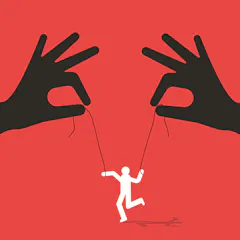
Autocrats today are polished, appear mainstream and use the media, not overt repression or violence, to gain public support and consolidate power. They govern through a ‘spin dictatorship.’

Overshadowing almost everything in the country is the impeachment of the former president for abuse and the ensuing political paralysis.

A campaign hat and a partisan speech are unusual in a military setting in the United States.
Former Harvard president Larry Summers says a ban on foreign students would cause damage not just to the university but to the US’s image globally.
Political leaders in El Salvador, the Philippines and Israel, among other places, have also positioned judges as the enemy of the people.
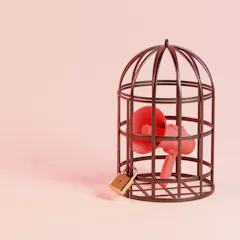
Americans across all generations still value free speech. But for younger Americans, especially, that support is less strong and seems increasingly conditional.

Calls by Pierre Poilievre and Donald Trump to defund public broadcasters seem aimed at silencing criticism and obscuring oversight of their actions. That’s dangerous for democracy.
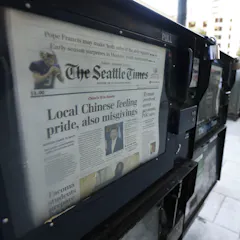
Public media can’t replace everything that’s been lost during journalism’s economic crisis. But it has plugged some major holes, particularly at the local level.
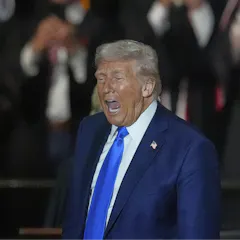
Decisions made by Donald Trump’s administration in its first 100 days will have impacts on people’s lives around the world.

The signs of the return of authoritarianism are evident. We must let go of the illusion that apolitical movements alone can protect democracy.

An expert helps explain why people don’t always immediately push back when politicians attack their democracies.
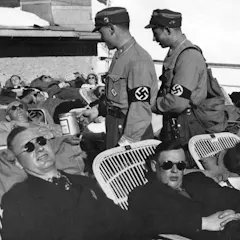
Amy Buller’s Darkness of Germany describes the difficult decisions Germans faced as fascists took over their country – including whether to flee or stay and fight.
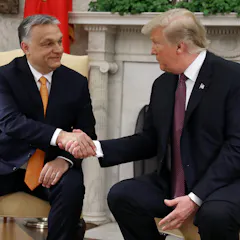
In his second term, President Donald Trump asserted new control over the press − as Hungary’s strongman leader Viktor Orbán had urged him to do.

A general decline in trust in public institutions across Africa reflects the disconnect between state officials and the people.
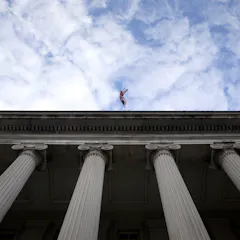
More than a century of evidence suggests that bureaucrats, at their best, stand for expertise, fairness and public service.
Top contributors
-

Senior Lecturer in Democracy Studies, University of Canberra
-
Professor of Politics, University of Sydney
-
Professor of Democracy, University of Birmingham
-
Professorial Fellow, University of Canberra
-
Assistant researcher, University of Sydney
-
Adjunct professor, Charles Sturt University
-
Senior Research Fellow, Centre for Advancing Journalism, The University of Melbourne
-
Senior Visiting Scholar with the Center for the Study of Genocide and Human Rights, Rutgers University
-
Professor of Communication Studies, Colorado State University
-
Professor of World Politics, SOAS, University of London
-
Professor of Politics and Public Policy, University of East Anglia
-
Associate Researcher, Arnold Bergstraesser Institute
-
Nonresident Research Fellow, Rice University
-
Honorary Professor of International Relations, University of the Witwatersrand
-
Professor, Department of Communication Arts, University of Waterloo