

The solution demands two simple and clear actions: declare that photo manipulation has taken place and disclose what manipulation was carried out.
Articles on Deepfakes
Displaying 41 - 60 of 127 articles
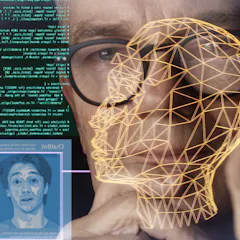
Some countries have already moved to regulate the use of artificial intelligence in political campaigning. New Zealand should follow suit.
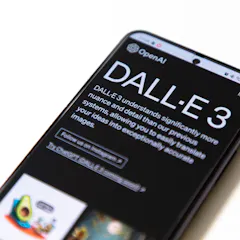
Generative AI tools are constantly improving — making it increasingly difficult for us to detect which images are AI-generated and which are real.
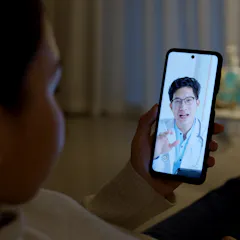
Strategies to combat misinformation often focus on written materials and fact-checking. Identifying deepfakes requires different skills.
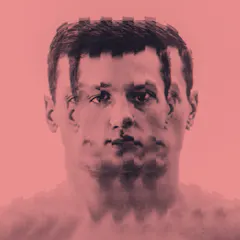
AI-powered voice cloning apps are now easily accessible and cost as little as $100 to use. The law needs to catch up. But how?
US lawmakers are looking at intellectual property rights as one weapon in the arsenal against AI-driven deepfakes. New Zealand can learn from how it plays out.
US law tries to strike a balance between free speech and protecting people from harm. When it comes to child pornography, AI makes that task all the more difficult.
The report contains 67 recommendations – none of which address misinformation and disinformation.

The law on deepfakes of children is more established than for adults, but there are still a lot of challenges.
To say there is a lot of hype about AI is an understatement. Yet a pragmatic policy discussion is possible, and the public is more ready than we might think.
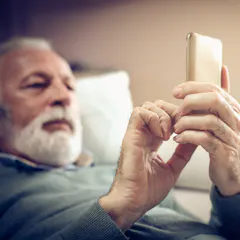
If left unchallenged, political deep fake videos could have profound impacts on Australian elections.
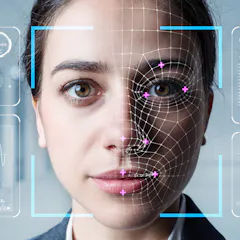
While AI promises to transform criminal justice by increasing operational efficiency and improving public safety, it also comes with risks around privacy, accountability, fairness and human rights.

There’s ever-evolving ways for children and young people to be harmed online. Here’s what kids think about the harms they experience and how to prevent them.
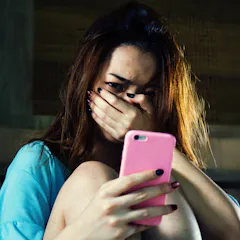
Within seconds, an app can turn anyone’s photo into an explicit image. The law is catching up to make this a criminal offence, but we need to do more.

As they improve, we’ll likely trust AI models with more and more responsibility. But if their autonomous decisions end up causing harm, our current legal frameworks may not be up to scratch.

Our survey of more than 16,000 people in ten countries found Australia had the highest rate of deepfake porn victims.
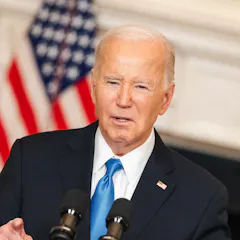
Technology could come to the rescue, protecting the integrity of elections.
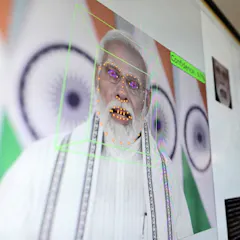
Campaigns used deepfakes to connect with voters rather than deception, and AI also helped them break through language barriers.
Deepfakes and disinformation are on the rise as the world faces the ‘biggest election year in history’. But AI doesn’t have to spell the end of democracy.

Scarlett Johansson said one of the five voices used for OpenAI’s new product sounded very like her.
Top contributors
-

Professor of Global & Language Studies, RMIT University
-
Director, Institute for AI and Data Science, Distinguished Professor, Computer Science and Engineering, University at Buffalo
-
Professor of Law, Durham University
-
Professor of Criminology, Monash University
-
Professor of Computer Science, University of California, Berkeley
-
Professor of Law, University of Melbourne; Chair of Private Law, Te Herenga Waka — Victoria University of Wellington
-
Professor of Family and Sexual Violence, RMIT University
-
Professor of Philosophy and Director of Applied Ethics Center, UMass Boston
-
Assistant Professor of Journalism and Emerging Media Studies, Boston University
-
Research Scientist in Cybersecurity, Rochester Institute of Technology
-
Professor and Chair of Cybersecurity, Rochester Institute of Technology
-
Associate Professor, Educational Technology, Université Laval
-
Adjunct Lecturer in Public Policy, Harvard Kennedy School; University of Toronto
-
Senior Lecturer in Artificial Intelligence, Te Herenga Waka — Victoria University of Wellington
-
Professor of Community Information, University of Michigan