
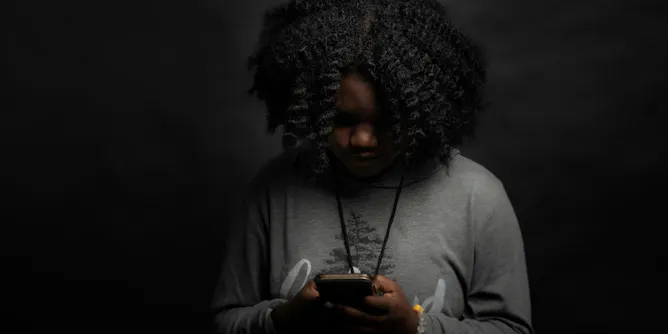
Non-consensual sexual deepfakes are easy to make and share. A study with more than 7,000 people shows how widespread they have become.
Articles on Deepfakes
Displaying 1 - 20 of 127 articles

In an age where AI can create an image of everything and anything, verifying the truth is becoming much harder.
Some governments use legitimate AI concerns as a pretext to control political discussion, particularly chatbot responses about those in power.
Almost 170 ads and $80 million in spending and only 31% with a disclaimer: Here’s what researchers found when they tracked AI in this year’s campaign ads.
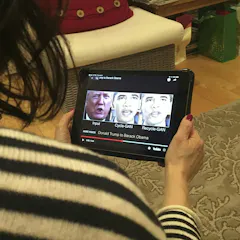
Most states require warnings on AI-generated political ads, but studies show these disclosures do little to alter people’s willingness to share the content.
Most states have legislated election deepfakes by requiring a warning
28 states require disclosures on the media

Voters need to become better at questioning what they see, without automatically disbelieving it.

‘Pics or it didn’t happen’ is no longer a reliable test for what’s real.

AI’s risks and harms are already affecting Australians. There are new ones coming.
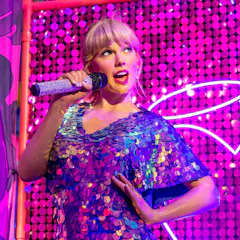
Listen to intellectual property expert Graeme Austin talk about the legal routes celebrites are using to fight back against AI deepfakes.
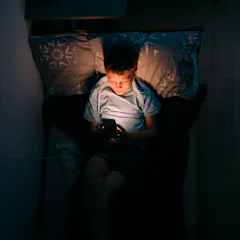
The language used in response to gender-based violence erases who’s doing the harm and who’s experiencing it, making it harder to report on and easier to excuse.
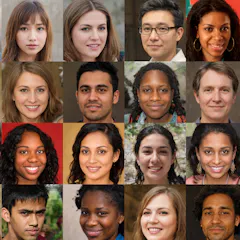
AI-generated faces don’t look weird anymore – they’re ‘hyperaverage’, which is a giveaway to the trained eye.

Sextortion is a form of online blackmail where a perpetrator coerces or tricks a victim into sending intimate images. New research shows it’s on the rise.

AI poses serious risks to Holocaust memory through denial, distortion and clickbait. AI-literate younger generations may be our best tool for combating the misinformation it enables.

Anthems generate emotional responses, tying communities together, and deepfake, inauthentic and foreign-generated videos are part of what’s circulating.
The rapid development of new technologies means criminalisation alone is unlikely to stop the spread of sexualised deepfakes.

Government and tech firms need to step up.

Indian courts are leading the way in extending the law of torts to include harms caused by deepfakes – if you can afford it.

Information has always been a weapon of war, and misinformation evolves alongside technology.

The Pacific has some of the highest rates of gender-based violence in the world. Smartphones, social media and AI deepfakes are where much of the abuse plays out.

Private use of AI porn may not be illegal, but it doesn’t make it morally right. Here’s why.
Top contributors
-

Professor of Global & Language Studies, RMIT University
-
Director, Institute for AI and Data Science, Distinguished Professor, Computer Science and Engineering, University at Buffalo
-
Professor of Law, Durham University
-
Professor of Criminology, Monash University
-
Professor of Computer Science, University of California, Berkeley
-
Professor of Law, University of Melbourne; Chair of Private Law, Te Herenga Waka — Victoria University of Wellington
-
Professor of Family and Sexual Violence, RMIT University
-
Professor of Philosophy and Director of Applied Ethics Center, UMass Boston
-
Assistant Professor of Journalism and Emerging Media Studies, Boston University
-
Research Scientist in Cybersecurity, Rochester Institute of Technology
-
Professor and Chair of Cybersecurity, Rochester Institute of Technology
-
Associate Professor, Educational Technology, Université Laval
-
Adjunct Lecturer in Public Policy, Harvard Kennedy School; University of Toronto
-
Senior Lecturer in Artificial Intelligence, Te Herenga Waka — Victoria University of Wellington
-
Professor of Community Information, University of Michigan