
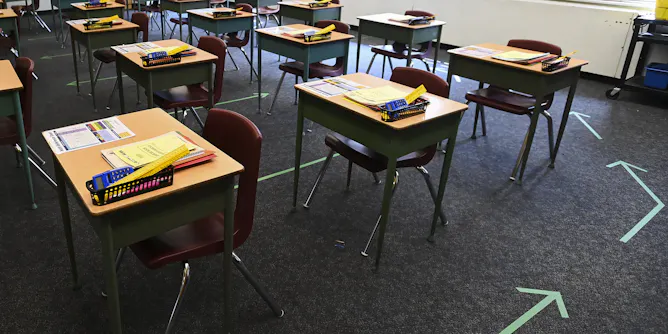
Canadians for the most part have been well served with dispassionate professional judgements about matters of public interest, except when it comes to what kids learn at school.
Articles on Curriculum
Displaying 61 - 80 of 173 articles

Schools are back, but NCEA level 1 media studies soon won’t be — at a time when media literacy is more vital than ever.

Health education curriculums need to specifically prepare healthcare professionals to respond to a pandemic when it comes to aspects like infection control, aged care and mental health.
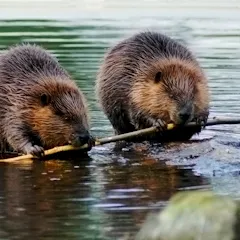
Leaked curriculum drafts in Alberta show a desire to revive old colonial myths. To face today’s challenges, we need stories that teach how humans are related to each other and to all life forms.

From medieval thinkers to James Baldwin, loving one’s country has never meant you can’t be critical of it too.
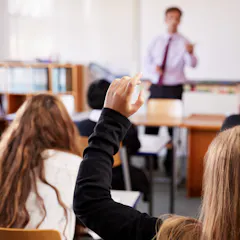
The UK government has published new guidance barring materials produced by groups opposed to capitalism from schools.

In a recent survey, 64% of youths said they’ve experienced bushfires, heatwaves and drought in the past three years. But 88% believe they’re not taught to protect themselves and their communities.

The fact that teachers in Uganda’s rural schools weren’t trained in the local language means they can’t teach children in their mother tongue and this leads to poor literacy acquisition.
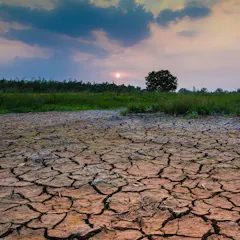
Despite calls for climate change to be part of our education, Australia has not designed, implemented nor funded a coherent, educational approach to our climate emergency.
The questions in the NAPLAN numeracy tests are often years behind the level of mathematics students following the curriculum are studying that year.
The number of students achieving GCSEs in technical and creative subjects along with religious education has declined yet again.
Poor understanding can be put down to the content in Kenyan schools’ curricula.

The link between empire, inequality – and Brexit.
It’s taken more than 30 years for Welsh education to be overhauled – but will these changes benefit pupils?
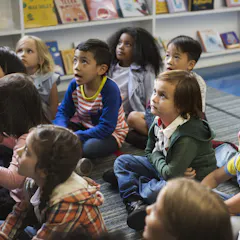
Culturally-responsive student assessment and evaluation is key to student success in diverse, globalized societies.
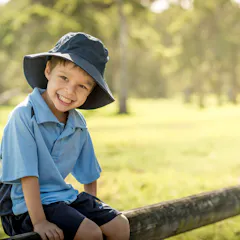
National programs have not yielded improved achievement rates in schools. We need to empower local people to take responsibility and collaborate to develop programs.
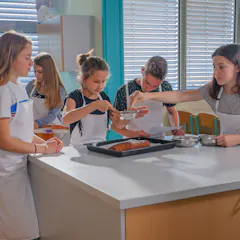
Food education in Australia tends to be patchy, and doesn’t fully met the present and future life needs of students and their families.
Is it really the best use of time for children, teachers and parents?

By changing the curriculum, Scotland acknowledges that society has always been diverse – and that will help more young people feel accepted.
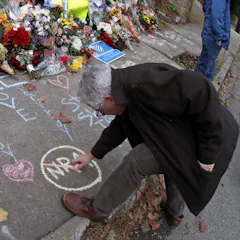
To grasp how extraordinary evils are often committed by ordinary people, we need to consider how we define evil, and most importantly, whom we consider to be the agents of evil.
Top contributors
-

Adjunct Professor, University of Technology Sydney
-
Senior Lecturer in Entrepreneurship, Consumer Studies and Technology Education, North-West University
-
Programme Leader, MA in Educational Assessment, UCL
-
Professor of Secondary Education, Faculty of Education, University of Alberta
-
Researcher in TESOL & Language Literacy Education, University of Notre Dame Australia
-
Associate Professor, Early Childhood Education, Queen's University, Ontario
-
Associate Professor, School of Education, Aarhus University
-
Campus and Secondary Principal at the International School of Geneva's La Grande Boissière, Research Associate at the University of Geneva's department of Education and Psychology, Université de Genève, Université de Genève
-
Emeritus Professor of Education, University of Derby
-
Professor, University of Cape Town
-
Emeritus professor, The University of Western Australia
-
Associate Professor in Sociology, Deakin University
-
Senior Lecturer in language education, University of Botswana
-
Course coordinator: Language in Humanities, University of Cape Town
-
Academic Development