

Alberta’s proposed curriculum risks reinforcing weight stigma, restrictive eating and unhealthy exercise habits among young people.
Articles on Curriculum
Displaying 1 - 20 of 173 articles

Test results from 2024 suggest more than 70% of Year 10 students don’t understand how Australia’s democracy works and our system of government.

We interviewed 22 educators, scholars and museum professionals who teach the Holocaust in Australia to find out what works – and what requires more guidance.
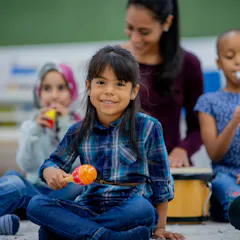
A new longitudinal study followed kids from pre-K through grade 12 and found that those who attended public school pre-K programs had an academic advantage.
Sweeping changes to the curriculum, NCEA and school governance have divided the education sector, all while major challenges remain overlooked.

While curriculum reform is relatively easy to announce, changing what happens in classrooms is much harder.
The new proposals shift to a single core modern language, only required at secondary school in the 11-14 age range.

Difficult stories are not obstacles to democratic education. Learning how to communicate about them are conditions for it.
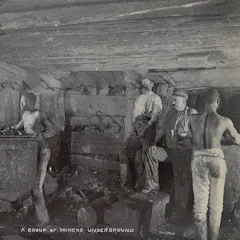
More inclusive history teaching doesn’t just add new topics to the curriculum, it values the languages of all learners.

Ontario’s revised kindergarten program asks teachers to use both explicit literacy instruction and play-based learning.
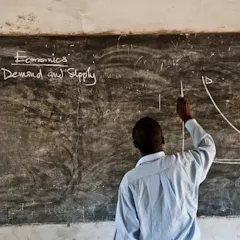
Teachers do not simply implement curriculum reforms exactly as policymakers design them.
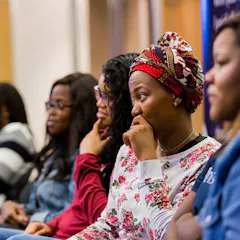
Rural students face extra challenges.

Children need physical play to develop their strength, coordination, and motor skills.

Study finds a gap between policy and textbook that skews literacy test results.
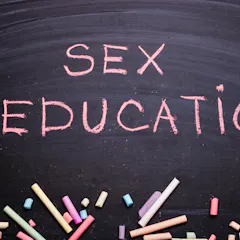
Comprehensive sex education has benefits, but the birds and the bees appear to be a taboo topic for some families.

A scholar and former college dean explains why higher education’s reliance on majors to measure academic quality may be an outdated approach.

Mahmoud v. Taylor stems from some families’ efforts to excuse their children from lessons that use storybooks with LGBTQ+ characters.
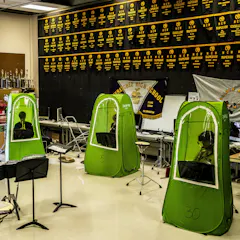
Public school access to high-quality teachers is shrinking, while teen reports of feeling unsafe at school are on the rise.
Charter schools enjoy smaller classes and better teacher-pupil ratios. But big questions remain about their success rates – and why the public system isn’t better resourced.

Policymakers commonly suggest that teaching to ‘fidelity’ − following a plan word for word − is best for student learning. However, research suggests the opposite is true.
Top contributors
-

Adjunct Professor, University of Technology Sydney
-
Senior Lecturer in Entrepreneurship, Consumer Studies and Technology Education, North-West University
-
Programme Leader, MA in Educational Assessment, UCL
-
Professor of Secondary Education, Faculty of Education, University of Alberta
-
Researcher in TESOL & Language Literacy Education, University of Notre Dame Australia
-
Associate Professor, Early Childhood Education, Queen's University, Ontario
-
Associate Professor, School of Education, Aarhus University
-
Campus and Secondary Principal at the International School of Geneva's La Grande Boissière, Research Associate at the University of Geneva's department of Education and Psychology, Université de Genève, Université de Genève
-
Emeritus Professor of Education, University of Derby
-
Professor, University of Cape Town
-
Emeritus professor, The University of Western Australia
-
Associate Professor in Sociology, Deakin University
-
Senior Lecturer in language education, University of Botswana
-
Course coordinator: Language in Humanities, University of Cape Town
-
Academic Development