

Scientists have discovered a natural sunscreen – made by microbes – that may be better for humans and the marine critters they are hoping to see.
Articles on Coral reefs
Displaying 161 - 180 of 266 articles
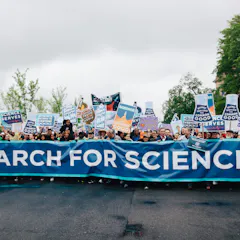
On the eve of the March for Science, a marine biologist explains why she’s returning from abroad to speak out for science in the Trump era.
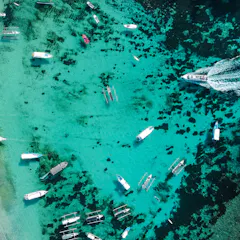
The noise from motor boats, sonar and other industrial activity interferes with the underwater chatter of fishes.

With coral reefs in crisis around the world, many organizations are working to restore them by growing and transplanting healthy corals. A new study spotlights techniques that help restored reefs thrive.
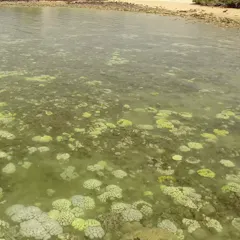
Coral bleaching has struck the Northern Territory, adding urgency to the need for better national management strategies for our warming oceans.
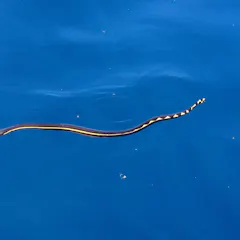
Sea snakes spend their lives in the water, giving birth to live young at sea, so why are they only found in some of the world’s oceans? The answer lies in a combination of climate and geography.
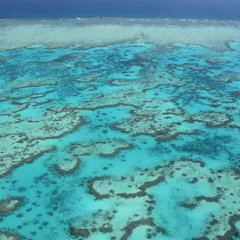
Ocean acidification poses an increasing threat to the sediments that form the framework of coral reefs - within around 30 years, these carbonate sands may no longer be able to form.

If you want to live like a local when on holiday, you should defecate like one.
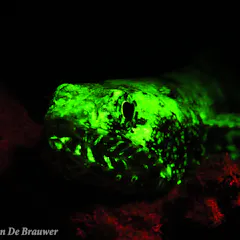
Much of the world’s ocean is teeming with ‘cryptic’ fish species, which are small and hard to spot. But a new technique shines a light on these fish, which may in turn help to keep our seas healthy.
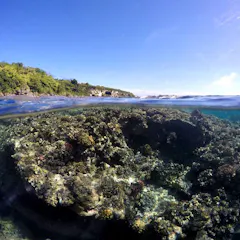
If researchers shared their data, we could take a big step towards saving the world’s coral reefs.
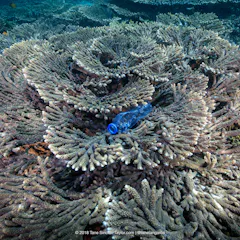
Coral reefs in the Asia-Pacific have been deluged with an estimated 11.1 billion pieces of plastic waste, increasing the risk of coral disease more than 20-fold.

A new study identifies dozens of individual reefs on the Great Barrier Reef that are especially important for coral larvae dispersal and which could help the entire ecosystem bounce back.
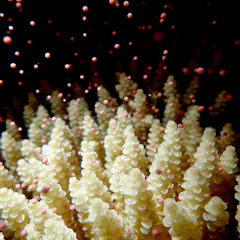
Every year buoyant bundles rise from a spawning coral, giving the impression of an upside-down snowstorm.
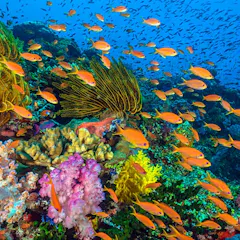
It is estimated that 75% of the world’s coral reefs are already threatened.
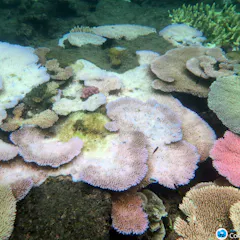
Regional variations in sea temperature can make all the difference between a coral reef suffering major bleaching or surviving as a refuge for corals, new research shows.

Mining social media posts from tourism hotspots such as coral reefs could turn tourists into environmental citizen scientists without them even realising it.
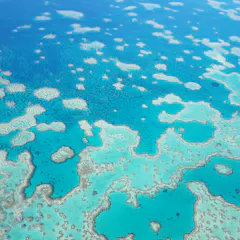
Coral bleaching on the Great Barrier Reef could lead to increased vulnerability of Queensland coastal cities and towns, and not only through its impacts on the tourism industry.
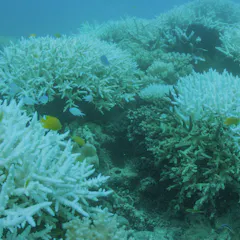
Amid fears for the world’s coral reefs, the UN World Heritage Committee has issued its most wide-ranging statement so far on protecting heritage sites from climate. But the problem doesn’t end there.
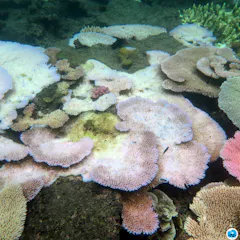
The Great Barrier Reef has avoided being listed as “in danger” by UNESCO. But celebrating this is dangerously short-sighted.
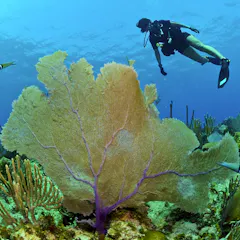
Cuban and US scientists are forming partnerships to protect coral reefs and fisheries in both countries. But President Trump may soon announce steps to slow or reverse the US opening to Cuba.
Top contributors
-

Distinguished Professor, James Cook University
-
Professor, School of the Environment, The University of Queensland
-
Adjunct Principal Research Fellow, College of Science and Engineering, James Cook University
-
Adjunct Research Associate, Faculty of Fisheries and Marine Sciences, IPB University
-
UNESCO Chair on Climate Change Variability of Natural and Cultural Heritage and Professor in Physics, James Cook University
-
Professor of Marine Ecology, Universidad Nacional Autónoma de México (UNAM)
-
Assistant Professor, School of Energy, Geoscience, Infrastructure and Society // CEO MarFishEco Fisheries Consultant Ltd, Heriot-Watt University
-
Professor of Biological Oceanography & Head of the Coral Reef Laboratory, University of Southampton
-
Postdoctoral Research Associate in Coral Reef Ecology, Newcastle University, Newcastle University
-
Associate Professor, Coral Reef Laboratory, University of Southampton
-
Postdoctoral Research Associate in Climate Change Ecology and Evolution, Newcastle University
-
Reader in Coral Reef Ecology, Newcastle University
-
Professorial Fellow, ARC Centre of Excellence for Coral Reef Studies, James Cook University
-
DECRA Research Fellow in molecular ecology, James Cook University
-
Coral Reef Ecologist, National Oceanic and Atmospheric Administration