

With inflation finally starting to stabilize in Canada, a new type of consumer has emerged, marked by value consciousness, digital savviness and a preference for experiences over material goods.
Articles on Consumers
Displaying 101 - 120 of 330 articles
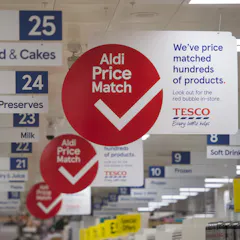
Branding experts have long used visual cues to communicate with consumers – but the rising cost of living is changing the nature of their messaging.

Consumer psychology can help explain why boycotts sometimes fail, as well as help predict when they are likely to succeed.

VINs can tell a story if you know what to look for.

Misleading potency labels can disrupt medical dosages, misguide recreational users and erode trust in the industry.

Sometimes, good news for investors is bad for consumers.

Preachy commercials do not go down well when big brands are suspected of disingenuous motives and virtue signalling.

If history had taken another path, bar codes would look dramatically different today.

China has a lot of vacant retail space, including many underused shopping malls. An urban policy scholar describes how the Chinese are rethinking what the mall is for.

Trust in brands may be eroded as awareness of misinformation increases according to new research.

In the Fall Economic Statement, the Canadian government signalled its commitment to the right to repair.

Before AI becomes widespread in health care, we need to ask what matters to consumers.

Marketers are caught between using traditional marketing practices focused on profit, planned obsolescence and overconsumption, and newer approaches centred on sustainability and social impact.

With the state of the economy unclear, shoppers seem hesitant to get too festive, too fast.

Countries that have adopted clear food labels have seen the health benefits. Researchers explain how a new system to alert South African consumers to unhealthy choices was developed.

Pared-down packaging designs send a subtle yet powerful message of purity to shoppers – and they’re willing to fork over more cash for these goods, regardless of the actual number of additives.

Understanding the traits of different customer groups can help shoppers and businesses serve their communities more ethically and effectively, especially in times of crisis.

To really understand social interactions, researchers need to look beyond figures like mobile phone location data.

Ad Net Zero is a new initiative aimed at reducing the advertising industry’s carbon footprint. But agencies have yet to take the next and most difficult step.

Taxing consumption that contributes to climate change hits the poor the hardest, while overlooking the huge profits tied to greenhouse gas emissions.
Top contributors
-

Associate Professor of Business, Boston University
-
Professor of Marketing and Consumer Behaviour, Queensland University of Technology
-
Professor of Law, St. John's University
-
Emeritus Professor of Marketing, University of Birmingham
-
Associate Professor of Quantitative Marketing and Computational Data Science, Binghamton University, State University of New York
-
Professor of Marketing, The Ohio State University
-
Susman Professor in Sustainability and Professor of Marketing, Penn State
-
Professor of Clinical Education, St. John's University
-
Associate Professor of Marketing, Tasmanian School of Business and Economics, University of Tasmania
-
Assistant Professor, Faculty of Business, University of New Brunswick
-
Professor of Energy and Environmental Economics and International Affairs, Penn State
-
Professor of Clinical Education, St. John's University
-
Director, Master of Business Administration Program (MBA); Co-Director, Better Consumption Lab, Deakin University
-
Professor of Law, Monash University
-
Lecturer in Marketing, Newcastle University