

The key to understanding why life is not explainable in current physics may be to reconsider our notions of time and information.
Articles on Consciousness
Displaying 41 - 60 of 107 articles
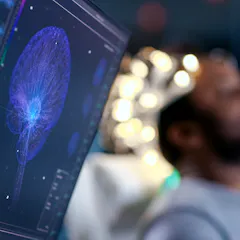
New research shows that post-coma patients who appear to be in a minimally conscious state can still mentally react to language. This finding could help improve their diagnosis and treatment.

Recent studies suggest that the mind of a bee is far more sophisticated than once believed.
Irony is linked to the ability to say one thing while thinking another – which means it’s also intrinsic to being human. What does new research into artificial intelligence and irony reveal?

Fluent expression is not always evidence of a mind at work, but the human brain is primed to believe so. A pair of cognitive linguistics experts explain why language is not a good test of sentience.

A Google engineer claims one of the company’s chatbots has become sentient. Experts disagree, but the debate raises old questions about the nature of consciousness.
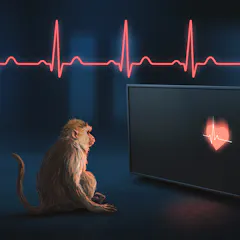
Researchers used a test designed for babies to show that rhesus monkeys can sense their own heartbeats. The finding opens up important paths of research into consciousness and mental health issues.
Plus, how a team of musicologists and computer scientists completed Beethoven’s unfinished 10th Symphony using AI. Listen to The Conversation Weekly podcast.
For each decision we make, we assign a certain level of confidence. How does the brain decide how much?
The mind is a powerful thing – it can generate both symptoms of illness and symptoms of healing. Here’s what this could tell us about consciousness.
Drugs which act through the brain chemical dopamine may one day help restore consciousness in people who have lost it.

New experiments could help scientists settle the longstanding debate about whether consciousness is generated by quantum activity.

When you lose focus or your mind goes blank, sections of your brain may be having a quick snooze.
Consciousness is sometimes referred to as ‘the ghost’ in the machinery of our brain. Is it time we gave up the ghost to focus on the machine?
Decades of research gives insight into how free our choices really are.
As the UK’s first clinic to offer psychedelic drugs for mental health disorders opens, a study reveals that informed users don’t have problems with self control.

The mystery of how the brain creates consciousness still puzzles scientists, but the mechanics of waking up are starting to be understood.

How we perceive what’s going on in the periphery can reveal a lot about our conscious minds.
Philosophers say now is the time to mull over what qualities should grant an artificially intelligent machine moral standing.

Amid trying times, the collaboration between Western science and Eastern philosophy provides numerous health benefits and a path to understanding the natural world.
Top contributors
-

Senior Lecturer in Psychology, Leeds Beckett University
-
Professor of Philosophy, Durham University
-
Associate Professor, Department of Philosophy, University of Birmingham
-
Professor, School of Natural Sciences, Macquarie University
-
Professor, School of Philosophy, Australian National University
-
Hon Professor of Neuropsychology, Cardiff University
-
Emeritus Professor of Psychology, UCL
-
Lead, Cognition and Consciousness Imaging Group, Division of Anaesthesia, University of Cambridge
-
Professor of Philosophy, Monash University
-
Visiting Researcher, Cambridge Neuroscience, University of Cambridge
-
Lecturer in Bioethics, Monash University; The University of Melbourne
-
Professor of Electrical and Computer Engineering, Oklahoma State University
-
Affiliate Guest in Psychology, University of California, Santa Barbara
-
Professor of Clinical Neuropsychology, University of Cambridge
-
Senior Research Fellow, Uehiro Centre for Practical Ethics, University of Oxford