
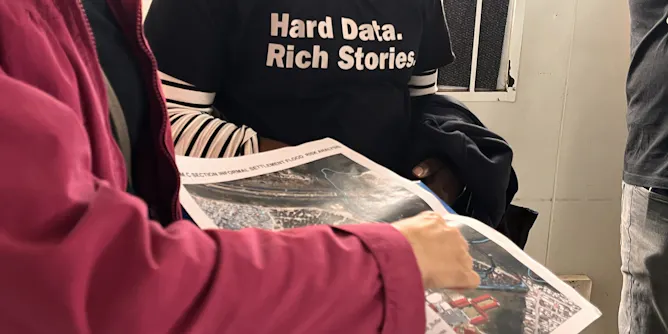
Climate adaptation funders want projects ready to launch. But new research shows why communities must help design climate solutions if the projects are to last.
Articles on Climate finance
Displaying 1 - 20 of 142 articles
This year’s climate summit ended without agreement on an overarching deal and little progress on other goals, including more financing for developing countries.
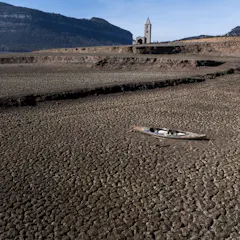
People from different parts of the world might face different climate hazards. But each could recognize something of their own loss in the other’s story.
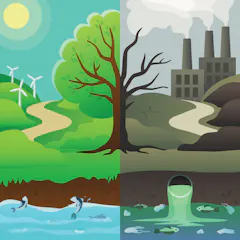
Pollution, ecological degradation and ill health can result from an economic system in which market prices exclude many of the real costs of production.
Climate change has been accelerated, in large part, by technologies developed at universities.
As president of COP31 negotiations, Australia has the opportunity to rally more backing for climate finance for those on the frontline.

Samoa is one of 39 island nations recognised by the UN as being exceptionally vulnerable to climate change.
Beyond the monetary value of carbon credits sits something more complex: every restoration project involves trade-offs, and somebody carries them.

Pacific leaders are seeking support for regional climate-finance options that give communities better access and stronger input into global decision making.

Climate finance should not be separated from development funding.
Most climate aid arrives after the disaster. A handful of countries are proving it doesn’t have to.

Africa has a chance to host a climate conference that makes an impact.
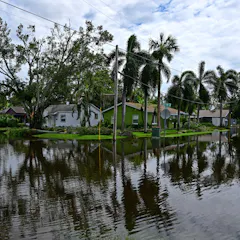
Florida’s current approach to insurance is forcing those who can least afford it to bear the cost of the climate crisis. But different approaches are available.

Mauritius is securing climate funding, but weak oversight and poor coordination risk leaving vital adaptation money mismanaged.

Behind the large numbers lies a mix of financial instruments that require Global South countries to repay government and private sector investors with interest.
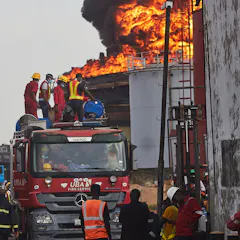
Wealthy nations will need to help fund clean energy, green industrial growth and mineral processing.
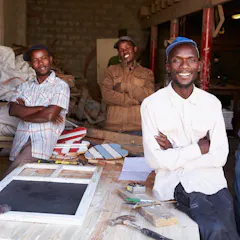
When up to 3.5 million small businesses go green, this will benefit South Africa’s environment and help the businesses survive in a changing climate.
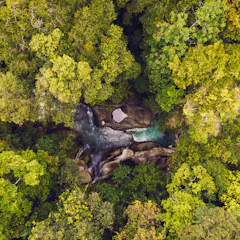
While Africa and Latin America have dominated these deals, Asia has lagged behind with just 13% of total global ‘debt-for-nature’ swaps.
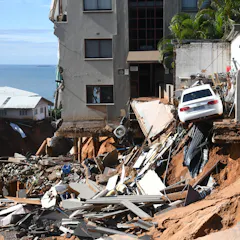
South Africa needs almost US$15 billion over a decade just to reach a basic level of climate adaptation, that protects water, food, health and infrastructure.

Africa holds key green energy minerals but exports them raw. If the continent had its own Green Bank, it could finance local manufacturing and green industry.
Top contributors
-

Professor of Practice in Climate Policy, University of Oxford
-
Professor of Political Science, UCL
-
Professor of Law, The University of Melbourne
-
Professor of International Relations, The University of Queensland
-
Research Associate, Institute for Climate Risk and Response, UNSW
-
Honorary Senior Lecturer, Australian National University
-
Senior Lecturer in Climate Justice, University of Bristol
-
Research Fellow, Oxford Net Zero, Institute for Science, Innovation and Society (InSIS), University of Oxford
-
PhD Candidate in Climate Justice Policy, University of Warwick
-
Environment + Energy Editor and Host of the Climate Fight podcast series, The Conversation
-
Professor of Earth System Science, UCL
-
Lecturer in International Development, UCL
-
Research associate at African Centre for Cities, University of Cape Town
-
Director, Columbia Center on Sustainable Investment, Columbia University
-
Senior Lecturer in Social Sciences and Public Policy, Auckland University of Technology