
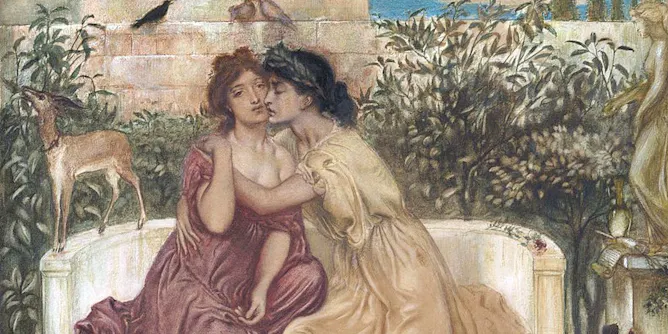
In 2014, reports of a new discovery of Sappho’s poems were remarkable. New research argues the papyrus had a fabricated backstory.
Articles on Archaeology
Displaying 361 - 380 of 670 articles
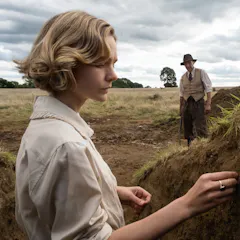
The Digs’ archaeologists are closer to reality than the intrepid Indiana Jones, and that’s refreshing.

Two starkly different research projects at East Gippsland’s Cloggs Cave, 50 years apart, show the importance of Indigenous perspectives in archaeology.
Recent archaeological studies suggest that early Christians were identifying important sites as little as a century after the last of the gospels.

Archaeologists used to dig primarily at sites that were easy to find thanks to obvious visual clues. But technology – and listening to local people – plays a much bigger role now.

A war with Neanderthals makes a compelling narrative but the evidence is limited is best.
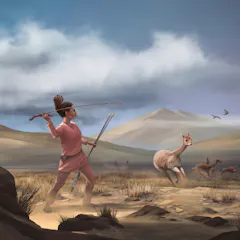
New research is challenging the hypothesis that men did the hunting in prehistoric societies.

Five centuries before Columbus arrived, migrants were spreading across North America, carrying their culture with them and mixing with those they encountered in new places.
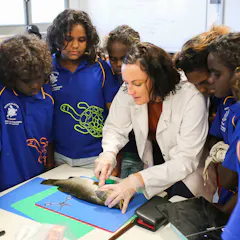
Archaeologists had some questions about an ancient Aboriginal site. So they involved the community and local school kids on their search for answers.

A new environmental record for a prehistoric site in Kenya helped researchers figure out how external conditions influenced which of our ancient ancestors lived there, with what way of life.
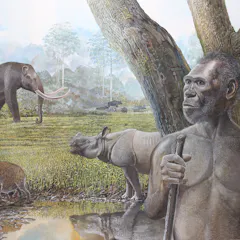
Several theories have suggested either humans, climate change or both drove megafauna extinctions in Southeast Asia. Our newest work suggests otherwise.

More than 500 paintings at 87 rock shelters provide a remarkable glimpse into past Aboriginal life.

Did people settle these islands by traveling north from South America, or in the other direction? Reanalyzing data from artifacts discovered decades ago provides a definitive answer.

By studying the DNA of people who lived in East Asia thousands of years ago, scientists are starting to untangle how the region was populated.
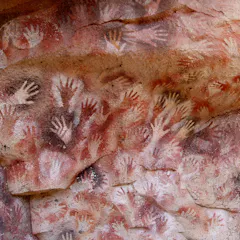
Artefacts suggest a ‘great leap’, a recent evolution of modern intelligence. Fossils and DNA argue that’s an illusion.
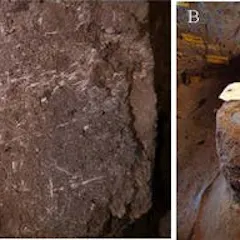
Before 200,000 years ago, close to the origin of our species, people preferred the use of broad-leaved grasses to build their beds and resting areas using ash layers underneath.
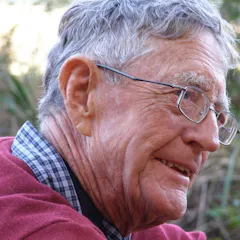
Mason tirelessly sought to convince officials of the need to recognise and celebrate the African past, and the role that African people played in the making of modern South African society.

There is not much information on artefacts used by Stone Age humans to make sound and music – but the first comprehensive survey is a good start.
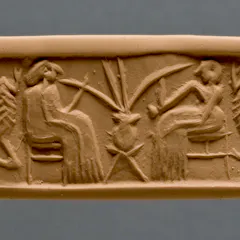
Beer was extremely popular in ancient Mesopotamia. Sipped through straws, it differed from today’s beer and was enjoyed by people from all walks of life.
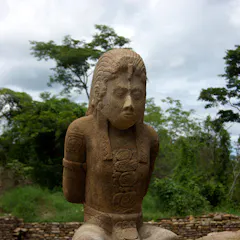
A new study of centuries-old Mesoamerican statues lends weight to the idea that many human facial expressions are universal.
Top contributors
-

Professor of Environmental and Geographical Sciences, Bournemouth University; University of Reading
-
PhD Candidate, Anthropology and Archaeology, University of Bristol
-
Associate Professor of Archaeology, Griffith University
-
Professor in Geochronology and Geochemistry, Southern Cross University
-
Director, ARC Centre of Excellence for Transforming Human Origins Research, Griffith University
-
Professor of Archaeology and Biological Anthropology, School of Social Science, The University of Queensland
-
Professor of Archaeology, Griffith University
-
Associate Professor and Director, Flinders Microarchaeology Laboratory, Flinders University
-
Curator of Human Evolution of the Cleveland Museum of Natural History and Research Assistant Professor of Anthropology, Stony Brook University (The State University of New York)
-
Senior Lecturer, University of Mpumalanga
-
Honorary Professor, Archaeology, The University of Queensland
-
Honorary Associate Professor, UNSW
-
Associate professor, University of Johannesburg
-
Postdoctoral fellow, University of Tübingen
-
Associate Professor of Anthropology, Rice University