
Up to 50% of the people who take the efavirenz antiretroviral react particularly badly to it and need to change drug regimens.
Articles on Algorithm
Displaying 261 - 280 of 295 articles

The ethics and psychology of trust suggest ways we might learn to understand self-driving cars, but also show why doing so might be more challenging than we expect.
Politicians want to regulate the software that decides if we get a loan or a job, but existing laws can already protect us – if we know how to use them.

If the site is increasingly where people are getting their news, what could the company do without taking up the mantle of being a final arbiter of truth?
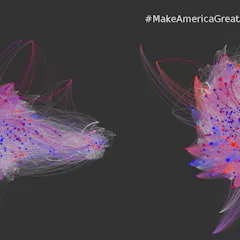
If people can be conned into jeopardizing our children’s lives, as they do when they opt out of immunizations, could they also be conned out of democracy?
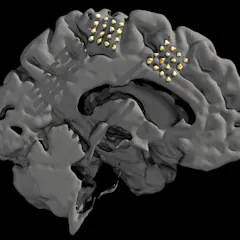
Our brains may be slower at making decisions than computers, but there is a massive evolutionary benefit to this tardiness.
Think it’s a mere coincidence the first two letters of “algorithm” hint at Artificial Intelligence?
Some have suggested that deracialising the academy requires all researchers, teachers and students to link knowledge and identity. What might this mean for mathematics?

We need better surveillance systems to detect epidemics early. But while social media has been flagged as a potential solution, we’re not quite there yet.
Is the rise of big data and the use of algorithms by businesses to blame for modern society’s ills?
Changes in news media distribution and the impartiality of news sources provide good reason to be concerned. However, digital inequality is not the way to understand or measure it.
Algorithms that learn from large data sets can pick up inherent social biases. That could perpetuate the biases, or even worsen them.

Making decisions about what people do and don’t read is the traditional role of an editor, no matter what Facebook claims.
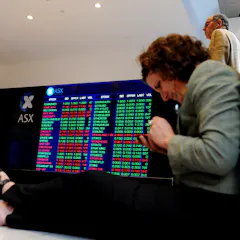
Business Briefing: trusting an algorithm with investment decisions
The Conversation13.9 MB (download)
Financial advice was once the realm of bankers and brokers now startups are developing digital platforms to take advantage of how trusting we are of investment advice from computers.

Algorithms can discriminate, even when their designers don’t intend that to happen. But they also can make detecting bias easier.

Machine learning is being used to see if it’s possible to predict whether someone will commit a crime some time in the future. But does this risk condemning people for a crime they haven’t committed?

Imagine a CEO that could bridge international work days, across country markets, working 24 hours a day.
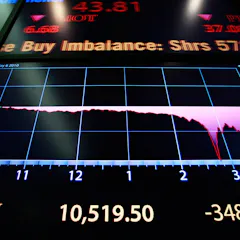
New research shines light on whether creating such a haven as a new type of exchange that slows trading down a bit could attract enough traders to be effective.
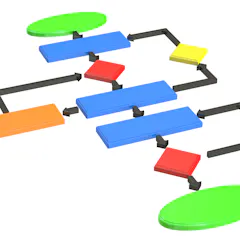
Data-driven algorithms drive decision-making in ways that touch our economic, social and civic lives. But they contain inherent biases and assumptions that are too often invisible to the public.

Software is eating everything in this online, digital world. We need to design code that uses as little energy as possible.
Top contributors
-

Professor of Informatics and Computer Science, Indiana University
-
Professor of Information Systems, Michigan State University
-
Senior Research Associate in Media and Communications, University of Sydney
-
Professor in Business Information Systems, University of Sydney
-
Professor of Data Science; Director, Adelaide Data Science Centre, Adelaide University
-
Professor of Computer Science and Director of the Art & AI Lab, Rutgers University
-
Associate Professor in Digital Media, Queensland University of Technology
-
Senior Lecturer in Public Policy and Politics, UNSW
-
Head of Art and Design, University of Hertfordshire
-
University of Hertfordshire
-
Lecturer in Computer Science/Co-founder Women Leading in AI, Keele University
-
Scientia Professor of Evolution, UNSW
-
Professor, Real Estate, Université du Québec à Montréal (UQAM)
-
Professor of Strategic Design, Queensland University of Technology
-
Visiting researcher, Alan Turing Institute