

Several scientific fields rely on visual evidence to illustrate their claims. Inaccurate AI-generated images put the credibility of science at risk.
Articles on AI-generated images
Displaying all articles
The rapid development of new technologies means criminalisation alone is unlikely to stop the spread of sexualised deepfakes.

After a year of fast advances, deepfakes are entering a new era defined by real-time interaction with people.
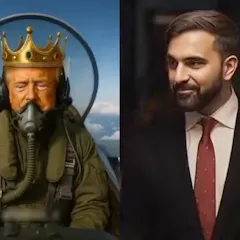
Don’t discount the threat of AI political videos fooling people, but for now, they’re mostly about bolstering group identity and cashing in on viral content.

AI-generated images reinforce narrow, unrealistic and exclusionary body ideals, which are harmful to our body image.

AI-generated images of wildfires have been circulating online, leading the British Columbia government to issue an online warning.

During scrolling, the brain processes visuals quickly not critically, making it easy to miss details that reveal a fake. As technology advances, slow down, look closer and think critically.
Participants in a study were willing to spend just as much time and money on an AI-generated story as one they were told was written by a human.

There has been an 830% rise in online child sexual abuse imagery since 2014 – and AI is fuelling this further.
Top contributors
-

Research Associate in Gender Equity and Sport Science, University of Toronto
-
Post-doctoral researcher, Faculty of Kinesiology & Physical Education, University of Toronto
-
Professor and Canada Research Chair in Physical Activity and Mental Health, University of Toronto
-
Associate Professor of Psychology, Vanderbilt University
-
Director, Institute for AI and Data Science, Distinguished Professor, Computer Science and Engineering, University at Buffalo
-
Professor of Investigative Psychology and Public Protection, Anglia Ruskin University
-
Chair, International Policing and Public Protection Research Institute, Anglia Ruskin University
-
Senior Lecturer in Russian, East European and Eurasian Studies, Bowdoin College
-
Assistant Professor of Economics, Bowdoin College
-
Assistant Professor of Psychology, University of Richmond
-
Associate Professor, Computer Science and Engineering, York University, Canada
-
Professor, Disaster & Emergency Management, Faculty of Liberal Arts & Professional Studies & Director, CIFAL York, York University, Canada
-
Senior Lecturer in Law, University of Canterbury
-
Associate Professor of Science Communication, University of Wisconsin-Madison