

Late last week CSIRO announced that a new species of horse fly had been named after pop diva Beyoncé’s bottom. The story generated a real buzz across traditional and social media both in Australia and…
CSIRO

As Australia’s national science agency, CSIRO is solving the greatest challenges through innovative science and technology.
CSIRO - unlocking a better future for everyone.
Links
Articles
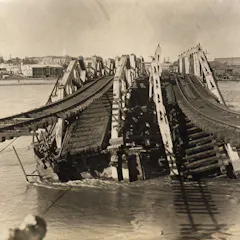
A popular misconception in the public mind is that science “proves” things by turning them from ideas and theories into absolute “facts”. This more or less confuses science with mathematics. Mathematical…

As the climate gets warmer, growing conditions and ripening times of crops will be affected. This raises all kinds of challenges for food security, but as we hit the festive season you may also be wondering…
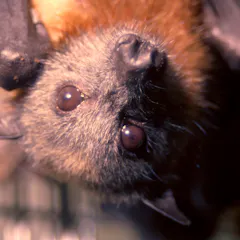
In the Chinese zodiac, 2011 is the year of the rabbit but for those of us working on viruses from wildlife animals, it was much more like the year of the bat. In February, the deadly Nipah virus re-emerged…

2011 saw a couple of unusual outbreaks of food-borne disease, one from a previously unknown pathogen and the other from a well-known one in a food not usually associated with such outbreaks. The outbreaks…
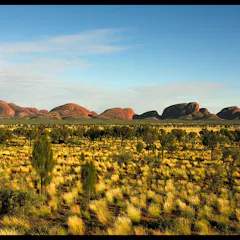
Every five years the Australian Government must report on how our environment and heritage are fairing. The 2011 State of the Environment Report gives Australians the clearest and most comprehensive assessment…
In the future fewer tropical cyclones may form off Western Australia but they may become more intense. There could be a 50…

Which is the greater deprivation for an animal: to live a good-quality life abbreviated at less than its natural term by painless slaughter for meat, or to never live at all? How much of an animal’s life…
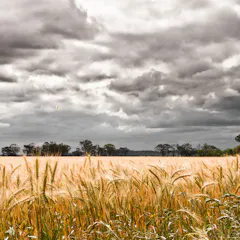
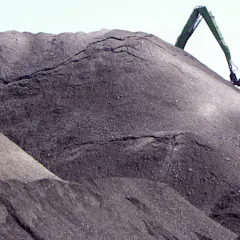
Phosphorus fertiliser might not spring to mind as highly important to our everyday lives in Australia, but it is critical for our grazing and cropping farms. This is because the majority of Australian…
DURBAN CLIMATE CHANGE CONFERENCE: A paper published yesterday shows global industrial emissions of carbon dioxide, overwhelmingly from fossil fuels, jumped by 5.9% from 2009 to 2010. This is a big increase…

CSIRO, like many other research institutions, has helped provide research, models and data to inform the development of the Murray-Darling Basin Plan. But the proposed Basin Plan, which was released on…
Close approaches by boats impede the feeding and resting habits of Indo-Pacifc bottlenose dolphins. The dolphins are frequent…

The world’s population has just hit seven billion and nearly one billion people do not get enough to eat. Agricultural land is being degraded at the rate of 12 million hectares a year and the world faces…

THE STATE OF SCIENCE: Is Australia at risk of becoming a “mendicant nation” with regards to science and scientific knowledge? Can its government afford to cut support for international collaboration? Cathy…
Scientists at CSIRO have developed an experimental vaccine to immunise horses against the hendra virus, with field trials…
Global transport networks are increasing the number of exotic invasive species coming into Australia, some of which have…
New research from CSIRO finds that marine life needs to relocate faster than land species to keep up with changing temperatures…

SEVEN BILLION PEOPLE: In the early 1970s, three leading American scientists were locked in a passionate debate about what had made the greatest contribution to humanity’s impact on the environment. The…
Concrete infrastructure in urban environments appears to be altering the chemistry of rainwater flowing into our urban streams…
The toxins produced by cane toads kill many Australian predators that eat them. But to date, the potential economic impact…
Authors
-

SKA-Low Commissioning Scientist, Square Kilometre Array Observatory; and Affiliate, Space and Astronomy, CSIRO
-
Chief Research Scientist - Environment, CSIRO
-
Research Lead, Carbon Dioxide Removal, CSIRO
-
Principal Research Scientist in Aquatic Ecology, CSIRO
-
Behavioural Scientist, CSIRO
-
Professor, Senior Principal Research Scientist, CSIRO
-
Molecular Virologist, CSIRO
-
Postdoctoral Research Fellow, Marine Carbon Dioxide Removal, CSIRO
-
Senior Research Scientist, Team Leader Rabbit Biocontrol, CSIRO
-
Radio Astronomy Research Scientist, CSIRO
-
Research Director, CSIRO
-
Research scientist, CSIRO
-
Principal Research Scientist, CSIRO
-
Principal Research Scientist in Ecosystem Ecology, CSIRO
-
Senior Principal Research Scientist, CSIRO