
Predators are major beneficiaries of artificial water points in arid environments. But little is known of the effects of…
CSIRO

As Australia’s national science agency, CSIRO is solving the greatest challenges through innovative science and technology.
CSIRO - unlocking a better future for everyone.
Links
Articles
International scientists have found that Australia’s pasture systems, on average, have low phosphorus-use efficiency (15-30…
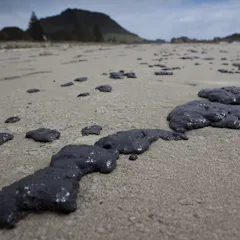
Responding to oil spills, like that in New Zealand’s Bay of Plenty, is a very complex, high pressure situation. Decisions must be made based on whatever data are available at the time. One of the difficulties…
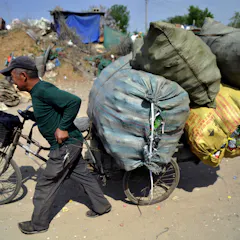
For over 200 years, since the industrial revolution, we have seen economic growth strongly coupled with the consumption of more and more resources. The more we grew, the more we consumed. This model works…

Models, forecasts, scenario projections … they’re all viewed with a certain degree of scepticism. And, for the most part, rightly so – we’ll never know the future with complete certainty. But what modelling…
Image courtesy of Noel Burkead. A highly invasive fish that can tolerate and adapt to a range of environmental conditions…
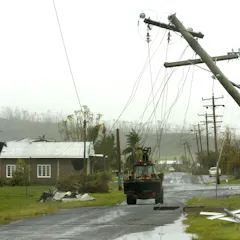
Billions of energy-investment dollars are exposed to the vagaries of climate. Those billions include dollars committed to or planned for renewable energy generation in this country. Now a new branch of…
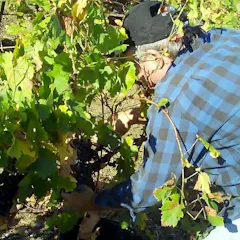
Mental health has been an issue in rural areas for the past few decades. Climate change will only add more stress to the lives of rural people. While a report by the Climate Institute shows broad scale…

The Conversation asked CSIRO scientist, Richard Richards, to look at the top five myths about genetic modification (GM), and correct the public record. Myth one: GM is just haphazard, imprecise cross-breeding…

Just as medical researchers work to unlock the role our human genes play in disease, CSIRO investigates how plant genes can be used to boost the health benefits of food, increase crop yields and prevent…

I work on the mathematics of sharing resources, which has led me to consider emotions such as envy, behaviour such as risk-taking and the best way to cut a cake. Like, I suspect, many women, my wife enjoys…
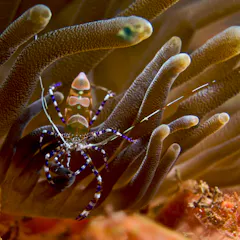
Human-induced climatic changes are altering ecosystems worldwide. Because of these ecosystem changes, the geographic range of species is shifting towards the poles or to higher elevations. The speed of…

Why are there fewer women working in science than men? Things have certainly improved, with participation in many branches of science at undergraduate and graduate levels now broadly balanced between the…
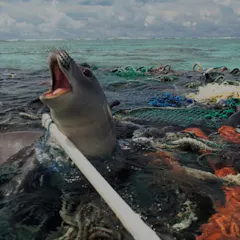
Pollution from human activities has major impact on the world’s marine ecosystems. Plastic refuse is one of the most pervasive types of pollution. More than 80 million tons of plastics are estimated to…
Fewer stars are forming in the universe than ever before because the gas is starting to run out. Distant (and hence older…

Region by region projections of how climate is likely to change over the coming decades help to make the prospect of global warming more tangible and relevant. Picturing the climate we are likely to have…
Drought, drought and more drought is the forecast for the Australian climate unless significant steps are undertaken to reduce…
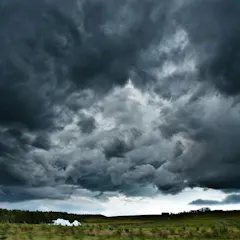
Most Australians believe that climate change is real and want to learn more about it, but the debate in the media and on the internet makes it difficult for lay people to know who and what to believe…
The reproductive ecology and dispersal ability of Australia’s most invasive species of willows is being explored to help…

Most people are familiar with solar energy generated by photovoltaic (PV) solar cells; they are the tiny PV cells on your calculator or the large PV installations that many people are installing on their…
Authors
-

SKA-Low Commissioning Scientist, Square Kilometre Array Observatory; and Affiliate, Space and Astronomy, CSIRO
-
Chief Research Scientist - Environment, CSIRO
-
Research Lead, Carbon Dioxide Removal, CSIRO
-
Principal Research Scientist in Aquatic Ecology, CSIRO
-
Behavioural Scientist, CSIRO
-
Professor, Senior Principal Research Scientist, CSIRO
-
Molecular Virologist, CSIRO
-
Postdoctoral Research Fellow, Marine Carbon Dioxide Removal, CSIRO
-
Senior Research Scientist, Team Leader Rabbit Biocontrol, CSIRO
-
Radio Astronomy Research Scientist, CSIRO
-
Research Director, CSIRO
-
Research scientist, CSIRO
-
Principal Research Scientist, CSIRO
-
Principal Research Scientist in Ecosystem Ecology, CSIRO
-
Senior Principal Research Scientist, CSIRO