
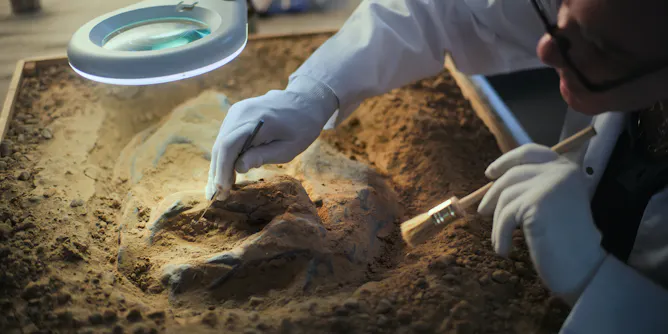
Scientists have long debated how old animal life is.
Articles on Evolution
Displaying 1 - 20 of 1210 articles
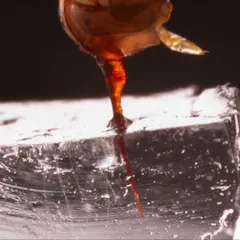
The stinger is effectively a fully autonomous micro-pump, but it works in an unusual way.
New genomic tools let scientists dig into the family trees of crops like rice, corn and adzuki beans to learn more about how they transitioned from wild plants to domesticated crops.

Isolation has been both blessing and curse for the wildlife of both countries.
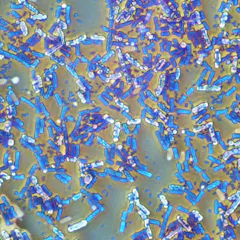
Bacteria make a survival gamble when they devote all their energy to forming spores. Evolution is quick to get rid of this function, and researchers did the accounting to understand why.
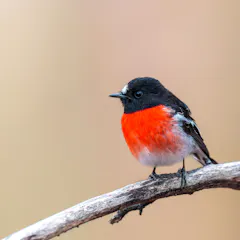
Research suggests all of the world’s songbirds can be traced back to Australia.

Decades of pollution at Pittsburgh brownfields left bacteria that evolved to survive it – and maybe help clean up contaminated soil.

New study suggests ancient campfires may have encouraged our ancestors to develop language.
In tests, some AI systems resisted being shut down. But an instinct to stay “alive” isn’t the reason they behaved that way.

Archaeopteryx is an evolutionary icon for scientists.
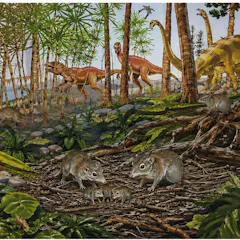
Our mammalian ancestors living 160 million years ago sometimes lived in pairs.

Some animal species have their eyes positioned on their heads differently than how people do – and it comes with pluses and minuses for how they see.

Mutations that occurred tens of thousands of years ago made humans uniquely sensitive to particulate air pollution.

Want a deeper voice to sound more ‘manly’?
Why faking it might appeal to other men, but not women.
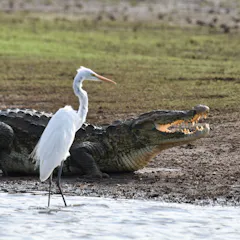
New research suggests crocodiles used to have hot blood and fast metabolisms, but gave it all up to lurk underwater waiting for prey.

Most people are overconfident. There’s an evolutionary reason for this.
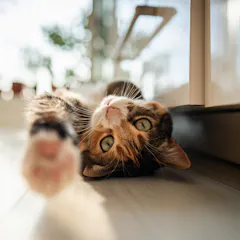
It’s not just you – many people have been getting more intense about their pet cat over the decades.

Human infant helplessness is not a weakness to be outgrown. It is an evolved trait that may be central to our ability to care for others.
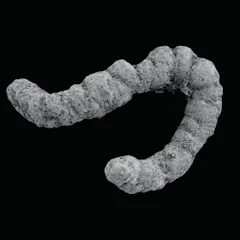
Is the evolution of excrement the reason we exist?
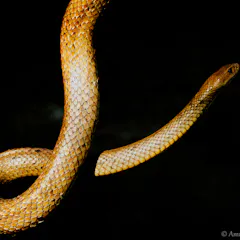
A new study changes what we know about one of nature’s most enigmatic animals.
Top contributors
-

Scientia Professor of Evolution, UNSW
-
Emeritus Strategic Professor in Palaeontology, Flinders University
-
Senior Research Scientist, South Australian Museum; Flinders University
-
Honorary Associate Professor, UNSW
-
Professor of Evolutionary Palaeobiology at the Milner Centre for Evolution, University of Bath
-
Senior Lecturer in Paleontology and Evolutionary Biology, Life Sciences at the University of Bath, University of Bath
-
Associate Professor, Department of Physiology, Monash University
-
Associate professor in Vertebrate Palaeontology, University of the Witwatersrand
-
Principal Lecturer in Wildlife Conservation, Nottingham Trent University
-
Research Associate in the College of Science and Engineering, Flinders University
-
Jenny Graves is a Friend of The Conversation.
Distinguished Professor of Genetics and Vice Chancellor's Fellow, La Trobe University
-
Adjunct Research Associate, Monash University
-
Mark Elgar is a Friend of The Conversation.
Emeritus Professor of Evolutionary and Behavioural Ecology, The University of Melbourne
-
Professor, School of Biological Sciences, Monash University
-
Professor of Earth System Science, UCL