
Health care systems in many African countries are very poor. Instead of fixing them, many African leaders seek medical attention abroad incurring huge bills which are ultimately paid by taxpayers.
Articles on Zimbabwe
Displaying 301 - 320 of 382 articles
There is no basis in customary, conventional international law or domestic law for the spouse of a head of state to claim - as a right - some form of immunity when visiting a foreign state.
Information to weather changes is often unavailable to Africa’s farmers and even if it does exist, the quality is poor or inaccessible to those who need it most.

All over the world people who have been harmed by the conventional money systems are devising alternative currencies, challenging the centralised monetary policy approach.
The land reform programme in Zimbabwe has come at the cost of wildlife and opens up the debate on people versus nature. But there is a way forward.
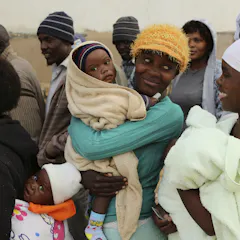
Lay workers are being trained to help Zimbabwe manage mental issues in communities. So far it’s proving successful.
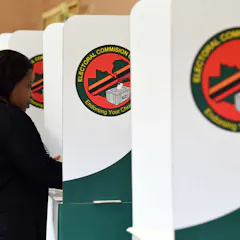
Democracy is in a parlous state in many countries in southern Africa. Autocrats hold onto power, while electorates have little to choose from at the polls.
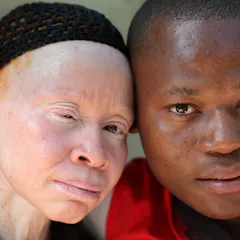
People with albinism tend to identify with the black rather than the white community. Their physical differences, though, mean they don’t fit into either race group.
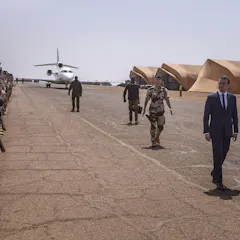
The state of democracy isn’t looking good in southern Africa – but these countries’ Western ‘partners’ don’t really seem to care.
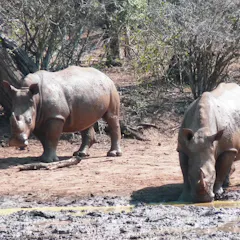
South Africa’s KwaZulu-Natal province is bearing the brunt of renewed rhino poaching efforts. This is a result of increased security and anti-poaching in the Kruger National Park.
The world’s media, which has in the past found Zambia uninteresting, are suddenly paying more attention to the impoverished nation, for all the wrong reasons.
Three democracies once considered beacons of hope are in varying states of disarray.
The growth of new, vibrant, independent media sites and projects in South Africa have challenged conceptions of what a newsroom is. On limited budgets, some even fare better than mainstream media.
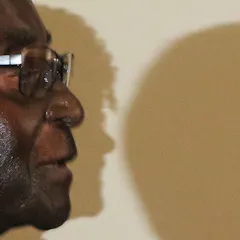
Leo Zeilig’s novel features a superbly crafted cast of characters. It’s a page turner for readers interested in the profound questions of radical politics and humanity.
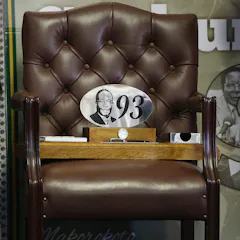
It’s hard to award a prize to esteemed former leaders when so many are determined to die in office.
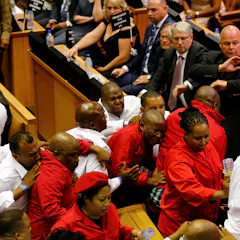
Opposition parties in sub-Saharan Africa struggle to prove themselves worthy to skeptical voters who, unlike in Western competitive systems, don’t trust them over former liberation movements.
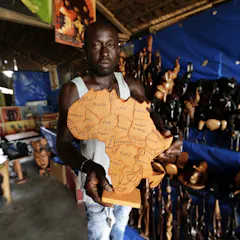
One of the ways by which Africa can overcome problems of underdevelopment is by using its abundant linguistic and cultural resources.
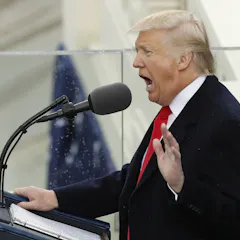
Rhodesia’s white supremacists appealed to the white electorate by taking a stand against African liberation. Similarly, Donald Trump appealed to white Americans who feel overwhelmed by globalisation.
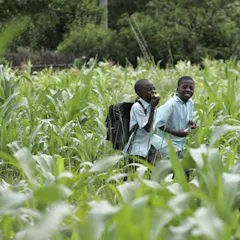
Official statistics in Tanzania do not capture small-scale irrigation, meaning that it’s impact is unclear. Yet new research reveals that it’s two to three times greater than previously thought

South Africa lacks a clear definition of disability – and its limited view of who should be regarded as having a disability in the labour market is at odds with international practice.
Top contributors
-

Professor of World Politics, SOAS, University of London
-
Research Associate, Dept of Anthropology & Development Studies and Fellow, Clare Hall, University of Cambridge, University of Johannesburg
-
Professorial Fellow, Institute of Development Studies
-
Senior Research Associate, University of Johannesburg
-
Professor of Sociology, University of the Witwatersrand
-
Senior Lecturer, Stellenbosch University
-
Professor of Democracy, University of Birmingham
-
Professor of Economics, Salisbury University
-
Extraordinary Professor, Department of Political Sciences, University of Pretoria
-
Assistant Professor, Harvard University
-
Visiting Professor, University of Kent
-
DLitt et DPhil Student in Politics, University of South Africa
-
Senior Research Fellow, Centre for the Advancement of Scholarship, University of Pretoria., University of Pretoria
-
Associate Professor in the Politics of Africa, University of Oxford
-
Honorary Senior Research Fellow, University of Stirling