
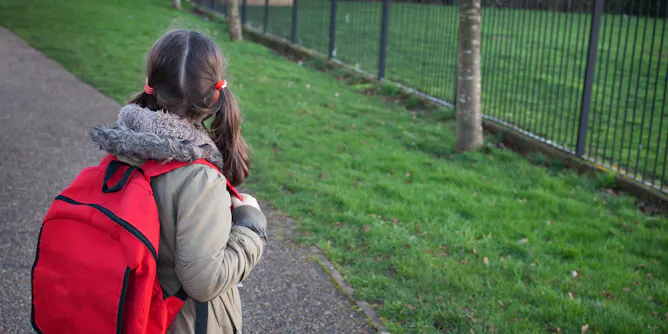
Autistic girls may already be struggling and hiding their difficulties to fit in. It may not always be obvious to others how difficult they are finding school.
Articles on UK Schools
Displaying 1 - 20 of 297 articles

The classrooms teachers enter are not always the ones they trained for.

Class segregation between schools is quite simply unfair.

UK clean energy jobs are expected to double by 2030.

The broadening of the curriculum to allow for vocational qualifications from the age of 14 is not new.

Supporting struggling readers requires explicit knowledge of how spoken and written language work.
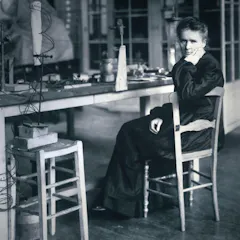
Despite social, economic and institutional barriers limiting women’s formal participation in science, they made numerous key breakthroughs.

Leaving is treated as a single event, when for many teachers it is closer to a slow unravelling.

schools can provide a supportive environment that allows children to explore, but also to return to safety when they feel vulnerable.

Preparing for an uncertain future is less about predicting which jobs will survive than developing skills that allow people to adapt as work changes.

Trauma informed care shifts approaches from ‘what is wrong with this person’ to ‘what does this person need?’

Inclusion is often treated as a self-evident term.

Having to move home and school can mean disrupting trusted adult relationships and the loss of access to established support.

The new proposals shift to a single core modern language, only required at secondary school in the 11-14 age range.

The results for the UK nations are mixed.

Pisa should be seen as a warning light, rather than a diagnosis of what is wrong with Welsh education.

Teachers have gained some skills, but the GPS test is not an effective means of helping pupils become better writers.

Rest matters, but it cannot indefinitely compensate for working conditions that repeatedly deplete staff.

Schools provide a link between generations in a local area.

Schools already treat some life skills, such as swimming, as essential.
Top contributors
-

Professor of Education and Public Policy, Durham University
-
Associate Professor at the Health Services Management Centre, University of Birmingham
-
Professor of Early Childhood and Primary Education, UCL
-
Rosalind Hollis Professor of Education for Social Justice, University of Hull
-
Associate Professor, School of Education, Durham University
-
Professor of Education Research, School of Education, University of Birmingham
-
Professor of Education, Sheffield Hallam University
-
Assistant Professor of Behavioural Science, Warwick Business School, University of Warwick
-
Research Fellow in Social Sciences, Nottingham Trent University
-
Lecturer in Education, Swansea University
-
Associate Pro Vice Chancellor for Student Inclusion and Professor of Learning and Teaching in Higher Education, University of East Anglia
-
Director, Nottingham Institute of Education, Nottingham Trent University
-
Professor of Sociology of Education, UCL
-
Associate Professor of Education Policy, Nottingham Trent University
-
Senior Lecturer in Psychology in Education, University of Bristol