

New Zealanders have less choice over their grocery shop than consumers in most developed countries. Breaking up the existing supermarket conglomerates would be a next logical step.
Articles on Woolworths
Displaying 21 - 40 of 124 articles
A push to overhaul laws to stamp out land banking is part of a Government bid to crack down on anti-competitive and unconscionable conduct by supermarkets.
The competition watchdog reported hearing ‘concerning’ reports from suppliers about being paid prices below the cost of production but having ‘little choice but to agree to highly unfavourable terms’.
Woolworths and Coles face potentially massive fines if they are found guilty of misleading shoppers over the price of hundreds of products.

Foodstuffs has applied to merge its North and South Island operations. But this move will only further concentrate market power and the biggest losers will be New Zealand consumers.

By declaring cash an ‘essential service’ the government would secure its future for those Australians who still use it.

A Senate enquiry has found both suppliers and customers of our supermarkets are struggling. Regulators have to find a way to rebalance the market, which doesn’t make these groups bear the cost.
Both are measures of profitability, but the disparity between return on investment and return on equity grows larger as a company relies more heavily on borrowing.
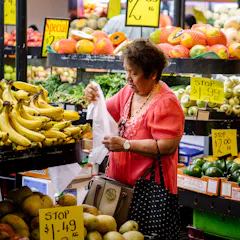
Proposed toughening of the food and grocery code of conduct is long overdue. However, the Australian Competition and Consumer Commission will need to be well resourced to properly regulate the sector.

Despite growing wariness of supermarkets, Australians have an enduring trust for retail brands that sets us apart from other countries.

We really are being charged more than we used to be. If the government is concerned about price gouging, it could try this bold idea: offering its own low-cost bank loans.
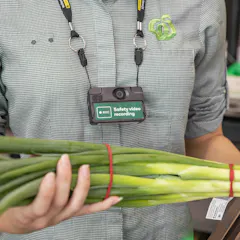
The hidden side of the supermarket giants’ quest for profits is an increasingly elaborate system for monitoring and managing shoppers and workers.

Woolworths promoted itself as a place where “goods are so cheap and shopping easy and pleasant” when it opened 100 years ago. Australia’s biggest grocer has moved away from its humble beginnings.
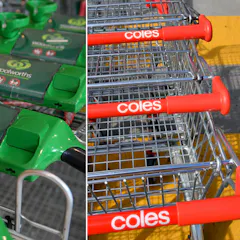
Suppliers and customers are squeezed harder in Australia than in other countries because Coles and Woolworths control 65% of the market.

Australia’s Soft Plastics Taskforce has been under pressure to fill the vacuum left by the demise of REDcycle. But this time the small trial announced for Melbourne has the potential to succeed.

Profits, not social justice, appear to be why the big grocers are dropping support for Australia Day. But creating a distraction when they’re being criticised for high prices is also possible.

The former president leads his only remaining Republican rival, Nikki Haley, by 68% to 12% in an aggregate of national polls.

Supermarket pricing is a big story but let’s forget the media coverage, the politician sound bytes and the corporate PR for a moment. What are ordinary Australians saying about supermarket pricing?
Pressure for greater transparency by food producers and retailers about costs is increasing as rising grocery prices hit the hip pocket.

Why wait until a Senate inquiry to explain how supermarkets come up with the prices in their stores? There’s an opportunity now for the big supermarkets to be more transparent on pricing.
Top contributors
-

Professor of Marketing and Consumer Behaviour, Queensland University of Technology
-
Professor, College of Business, University of Sharjah
-
Associate Professor of Marketing, Tasmanian School of Business and Economics, University of Tasmania
-
Lecturer, College of Business and Economics, Australian National University
-
Competition Lawyer; Senior Fellow, The University of Melbourne
-
PhD Candidate, ARC Centre of Excellence for Automated Decision-Making and Society, RMIT University
-
Associate Dean, School of Business and Law, Edith Cowan University
-
Professor of Law (consumer protections and credit law), The University of Melbourne
-
Professor, Queensland University of Technology
-
Associate Professor in Operations and Supply Chain Management, UTS Business School, University of Technology Sydney
-
Professor of Economics, Monash University
-
Associate Professor, Faculty of Business and Law, QUT, Queensland University of Technology
-
Senior Lecturer of Marketing, Swinburne University of Technology
-
Emeritus Professor, University of Tasmania
-
Retail Academic Researcher, Business School, University of Sydney