

Basket weaving and knitting are used pejoratively to make a point but not ‘manly’ pursuits such as metalcrafts or woodwork.
Articles on Vocational education and training
Displaying 41 - 60 of 91 articles

Funding debates dominated most education policy talks in 2017, but discussions look to be extending past the dollar value in 2018 with a number of high profile reports due for release.

Students should consider all their options and remember the ATAR is just one measure that doesn’t necessarily dictate how well they will do in future.

To stimulate innovation in the agriculture sector education and training is in dire need of substantial reform for greater integration, cooperation and accountability.
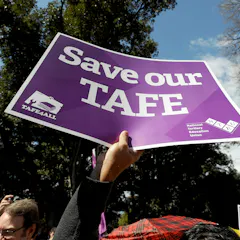
VET certification standards differ greatly from university. Students qualify for diplomas with no set course length, assignments, or campus contact.
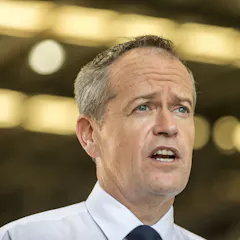
Bill Shorten will put creating new jobs, sustaining existing ones, and training and retraining Australian jobseekers at the heart of his economic agenda in a major speech on Tuesday.

The government is right to cut back on funding certain VET courses that have low-enrolment rates and are unlikely to lead to work.

The history of artisanal training and employment in South Africa has been one of systematic social exclusion and inequality.

England’s apprenticeship levy will require employers with a payroll of over £3 million (A$5.2 million) to spend 0.5% of that on approved apprenticeships.

The murky world of post-16 education choices is overdue a radical simplification.
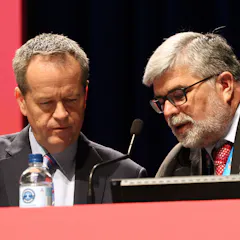
Labor’s policy essentially creates a new layer of tertiary education that would involve universities and TAFE Institutes working together to deliver associate degrees and advanced diplomas.

Suggestions that the government could introduce a two-tier system for post-16 education could still leave some young people behind.
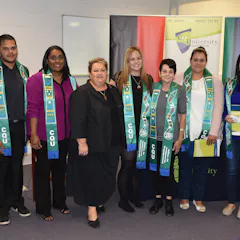
If we’re serious about closing the gap in Indigenous education, our new research shows the value of building better bridges into universities and vocational education.

The risks posed by deregulating the vocational education and training sector have serious impacts for large sections of the labour market.

Tightening regulation will contain the damage but this alone will not address the deeper problems in vocational education.
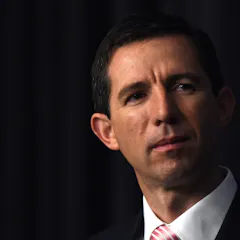
Michelle Grattan speaks with Simon Birmingham about his negotiations for a new higher education package, efforts to crack down on rorting in the vocational educational sector and the government's overhaul of the childcare system.

Less than half of young people in Australia go to university, so why do we make this the gold standard that all should strive for?

In recent times, the front pages of our newspapers have provided an almost daily reminder that some Vocational Education and Training (VET) providers are to be avoided.

Lured by government subsidies, registered training organisations are enrolling people into VET courses that do not match their needs and for which there is a dubious case at best for taxpayer support.

Vocational training is regarded as “low status” in South Africa. Much of the negativity around technical and vocational work seems to lie in the country’s history.
Top contributors
-

Associate Professor, College of Business, Government and Law, Flinders University
-
Professor of Entrepreneurship and Innovation, Edith Cowan University
-
Mitchell Professorial Fellow, Victoria University
-
Professor & William G. Davis Chair in Community College Leadership, University of Toronto
-
Professor and Director, Mitchell Institute, Victoria University
-
Adjunct Professor, Department of Leadership, Higher and Adult Education, OISE, University of Toronto
-
Senior Lecturer, Melbourne Graduate School of Education, The University of Melbourne
-
Senior Research Fellow in Youth, Research & Policy Centre, Brotherhood of St Laurence, Honorary Fellow in Education Policy, Melbourne Graduate School of Education, The University of Melbourne
-
Research Director at the Centre for Policy Development and PhD Student, Macquarie University
-
Professor of Higher Education Policy, Monash University
-
Professor in the School of Economics, University of Surrey
-
Professorial Fellow, University of Canberra
-
Education Lecturer and Researcher, Monash University
-
Honorary Professorial Fellow, Melbourne CSHE, The University of Melbourne
-
Professor of Economics, Queen's University Belfast