
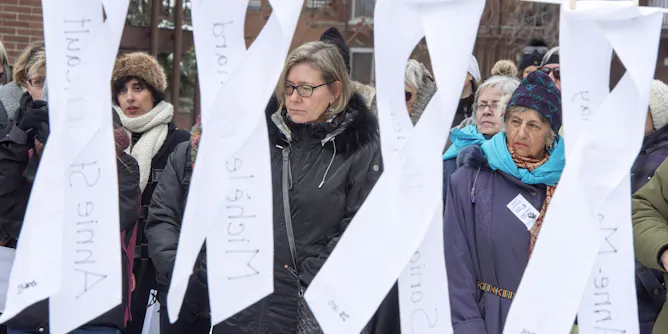
The day of remembrance and action, also called White Ribbon Day, marks the anniversary of the murders of 14 female engineering students killed in 1989 at l'École Polytechnique de Montréal.
Articles on Violence against women
Displaying 201 - 220 of 304 articles
A study in Kenya found that the lower men ranked themselves in society, the more violent they were with their intimate partners.

There’s increasing global recognition that violence against women and children often occur together in homes.

A video uploaded to YouTube last month depicted an avatar in a video game physically assaulting a female character until she was unconscious. Should that be allowed in today’s gaming culture?

Prevailing patriarchal and cultural norms in some societies prevent women victims of sexual crimes from talking out by shaming them.
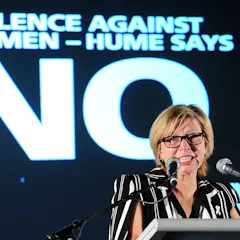
In order to change public opinion, campaigns need to move beyond awareness raising and start addressing the perpetrators and causes of domestic violence.
There is an urgent need for a binding convention for the prohibition of violence against women.
It has been 14 years since Indonesia enacted the Anti-Domestic Violence Law, but victims are still stigmatised for speaking out.
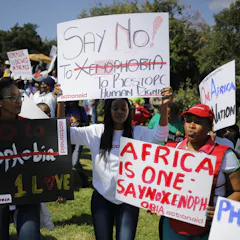
A survey shows 70% of South Africans feel immigrants pose a threat to the country.

Rigid gender roles and stereotypes are key drivers of violence against women. So let’s challenge these by starting young.
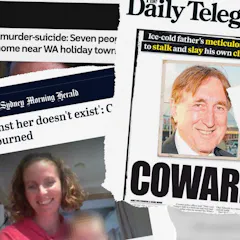
Despite several barriers, journalists are changing the way they report on violence against women for the better.
We tend to pay attention to mass killings and terrorism. But one girl or woman is killed every other day in Canada. If we identify that as terrorism, we might pay more attention and do something.
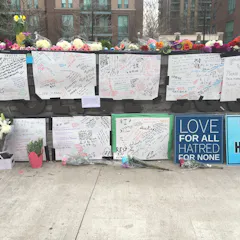
Men who subscribe to ideological masculinity believe that women’s empowerment has left them victimised and discriminated against. And they play out their resentment through violent acts.

Low-income women suffer evictions and violence in Canada’s most “livable” cities.

Many female politicians have had to endure sexist abuse, from Cheryl Kernot to Julia Gillard to Sarah Hanson-Young. And it is not a matter that should simply be brushed aside.
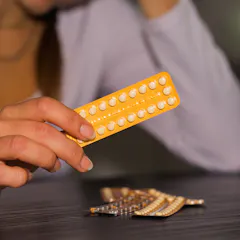
Associated with intimate partner violence, there are many ways in which reproductive choice is taken away from women.

Sexual assault in the workplace (and beyond) has many negative health benefits. It needs to be treated as a health and safety issue.

Australia’s record on women’s rights will come under scrutiny, including its treatment of Indigenous women and girls, sexual harassment and violence against women.
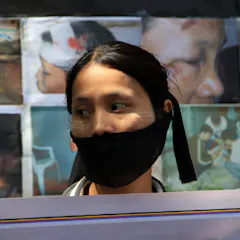
International law recognizes that women and LGBTQ people face unique forms of violence that may qualify them for asylum. The US now asserts that domestic abuse is a ‘private’ matter.
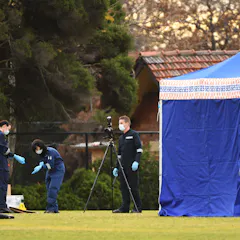
Advising women to “stay safe” is problematic because it transfers the responsibility for men’s violence onto women, and distracts us from more difficult conversations.
Top contributors
-

Professor of Family and Sexual Violence, RMIT University
-
Professor (Practice), Faculty of Business and Economics, Monash University
-
Professor of Social Work; Leneen Forde Chair in Child & Family Research, Griffith University
-
Professor, Department of Sociology & Anthropology, University of Guelph
-
Professorial Fellow, University of Canberra
-
Professor of Criminology, Durham University
-
Associate Professor in Criminology, The University of Melbourne
-
Chief Investigator for the Australian Research Council Centre of Excellence for the Elimination of Violence against Women (CEVAW), School of Philosophical, Historical & International Studies, School of Social Sciences (SOSS), Monash University
-
Associate Professor of Social Work, The University of Melbourne
-
Professor, Center for Research on North America, Universidad Nacional Autónoma de México (UNAM)
-
Managing Director, Her Story Consulting & Postdoctoral fellow, Australian National University
-
Eleanor Rathbone Chair of Sociology, University of Liverpool
-
Professor in Criminal Law, Durham University
-
Professor of Communication Studies; Research Chair on Intersectionality, Violence and Resistance, Concordia University
-
Professor of Cybercrime and Gender, University of Portsmouth