
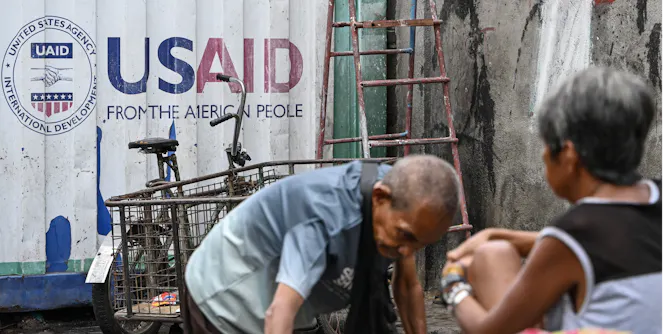
USAID has a decades-long history of fighting smallpox, polio, malaria, tuberculosis and HIV.
Articles on USAID
Displaying 41 - 60 of 76 articles

The U.S. funded HIV/AIDS program PEPFAR has saved over 25 million lives since it began in 2003.

The DRC illustrates how millions of people in fragile, violent and conflict-affected parts of the world are at risk of disaster.

The US has donated nearly US$4 billion to Afghanistan since the Taliban came into power. Gutting USAID will have enormous consequences for women and children.
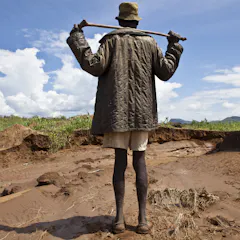
The absence of the early warning network will affect Kenya’s ability to address food insecurity.

The EU and China may fill the aid vacuum left by Trump’s aid cuts.

The problem goes beyond the political leanings of judges to the speed of change and the administration’s apparent willingness to ignore court rulings it dislikes.
The consequences of a U.S. retreat from the global response to HIV/AIDS would be immense, jeopardizing 40 years of progress.

Trump’s power is not absolute. It is constrained by the relative decline in US power in the world.
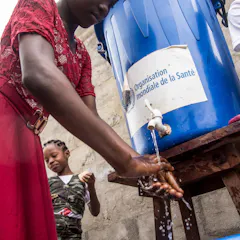
US withdrawal from the WHO and of all foreign aid will have dire consequences for Africa. It’s time the continent took responsibility for its own people.

The dismantling of USAID underscores a larger trend of strategic and ideological considerations that have always influenced international development aid.
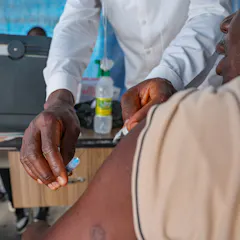
Nigeria needs to step up disease prevention and control and decentralise disease surveillance as the US pulls donor funding.
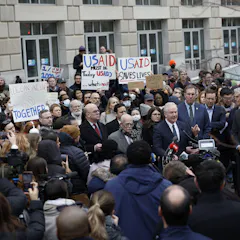
The United States spends very little on foreign aid relative to the size of its economy.
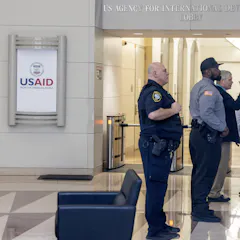
Donald Trump’s administration started work to shrink USAid’s workforce and align its spending with the government’s priorities.
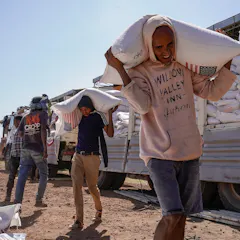
Talk of the Trump administration closing USAID, the largest provider of food assistance, has sparked concerns on how it might impact global hunger.
When foreign aid stops flowing, local leaders and diaspora communities can, under certain conditions, step in.
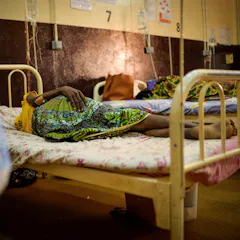
Each life lost to Aids is a life too many. As donor funds dry up, Africa needs new ways to fight this epidemic.
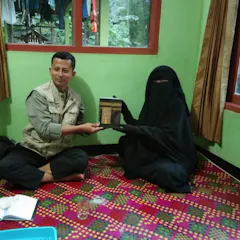
The US gives money to help Indonesia and other countries fight terrorism. But research shows that this money might not be effective, unless it directly reaches former extremists.

The money is evenly split between military support and funds for economic, humanitarian and other needs.
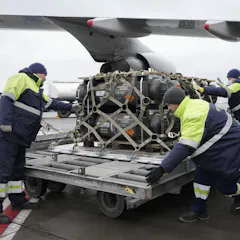
Assistance that began when the Soviet Union collapsed has grown since Russia’s annexation of Crimea, in southern Ukraine, in 2014.
Top contributors
-

Honorary Fellow, Asia Institute, The University of Melbourne
-
Adjunct Associate Professor of Epidemiology, Columbia University
-
Professor of Political Science, Middlebury College
-
Professor of Philosophy, Binghamton University, State University of New York
-
Postdoctoral research fellow, African Studies Program, McGill University
-
Associate Professor of Political Science, Virginia Commonwealth University
-
Lecturer in American Politics, University College Cork
-
Visiting Professor of Sustainability Science, Technical University of Denmark
-
-
Professor of Francophone Studies (Africa, Caribbean), Faculty Affiliate with Africana Studies, World Literature Program and Human Rights Pracice, University of Arizona
-
Associate Professor in American Politics and American Foreign Policy, University of Leicester
-
Lecturer in Economics, University of South Africa
-
Dornsife Endowed Professor of Global Health, Drexel University
-
Research Coordinator, University of Oslo
-
Assistant Professor, Sociology, Concordia University