

Two Supreme Court rulings on the use of race appear at odds with each other. Blame Chief Justice Roberts’s ambivalence on race, a constitutional law scholar writes.
Articles on US Supreme Court
Displaying 361 - 380 of 958 articles

Judicial activism can be a double-edged sword. While it swiftly penalized Brazil’s Jair Bolsonaro for election misinformation that stoked violence, it’s resulted in anti-choice laws in the U.S.
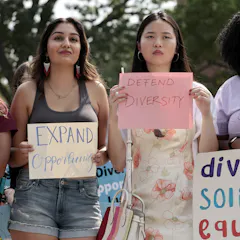
The Supreme Court’s decision to ban affirmative action programs reverses nearly 50 years of its own decisions that ruled diversity was of vital national importance.
Two sociologists break down how cases related to plaintiffs’ beliefs and LGBTQ+ rights have fared in federal courts over several decades.

A designer opposed to same-sex marriage argued that a Colorado anti-discrimination law would effectively force her to speak against her beliefs.
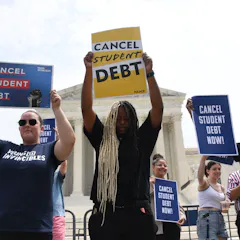
The Supreme Court rejected President Joe Biden’s student loan program that aimed at delivering up to $20,000 of relief per borrower.
The Supreme Court’s decision to eliminate affirmative action programs sent shock waves across the US and is expected to impact racial diversity throughout society.

It’s official: State courts can review lawmakers’ election-district boundary decisions to ensure they comply with state law.
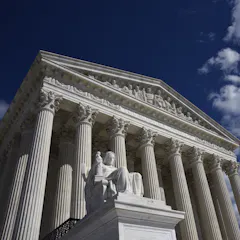
The Supreme Court has not yet committed to making livestreaming oral arguments a permanent part of its work. But this measure could lead to more transparency and possibly confidence in the court.

Even with laws to protect a woman’s right to have an abortion, Black women found it hard to find access to reproductive health care. It’s only gotten worse since Roe v. Wade was overturned.
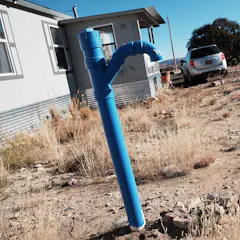
By a narrow margin, the Supreme Court has ruled against the Navajo Nation in a case over water rights in the drought-stricken US Southwest.

Abortion bans and restrictions have numerous downstream effects on health care. For instance, medical students in states where those laws exist will not receive training for some standard procedures.
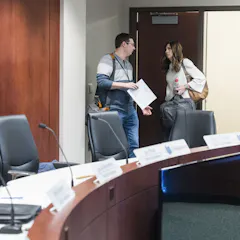
By declaring a ‘constitutional county,’ local leaders assert they are creating a refuge from anti- or unconstitutional actions undertaken by an overzealous state or federal authority.
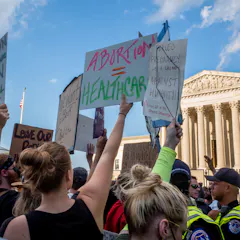
In the year since the Supreme Court overturned Roe v. Wade, giving decisions about the legality of abortion back to states, voters and state legislatures have made their preferences on abortion clear.
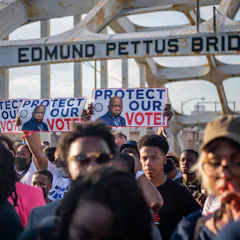
At a time when state legislatures are enacting laws that restrict who, when and where people can vote, the US Supreme Court ruled to protect voting rights.
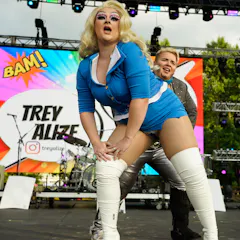
The law passed by Tennessee legislators that banned many drag performances violated the First Amendment. A legal scholar explains the judge’s decision in the case.

President Lyndon Johnson’s commencement address at Howard University in 1965 offered a compelling argument on the need for affirmative action. His policies have been challenged ever since.

Courts have no army or police force to enforce their decisions. Their power rests on their legitimacy in the public eye. How does scandal affect that?
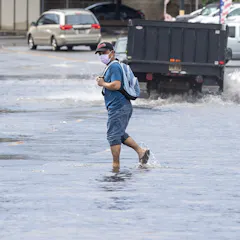
Honolulu, Baltimore, Charleston, S.C. and several other cities harmed by rising seas and extreme weather are suing the oil industry. At stake is who pays for the staggering costs of climate change.
The decision may make it hard to report the news, make documentary films, write biographies or even teach a class.
Top contributors
-

Professor of American Civics, University of Tennessee
-
Joseph Panzer Chair in Education and Research Professor of Law, University of Dayton
-
William Nelson Cromwell Professor of Jurisprudence and Political Science, Amherst College
-
Professor of Legal Studies and Political Science, UMass Amherst
-
Professor of Law, University of Virginia
-
Associate Professor of Political Science, College of Charleston
-
Professor of Law, George Washington University
-
Associate Professor of American History and Politics, University of East Anglia
-
Associate Professor of Law, Quinnipiac University
-
Professor of Law and Adjunct Professor of Political Science, Wayne State University
-
Professor of Law and Director of the Center for Professional Ethics, Case Western Reserve University
-
Professor of Law Emeritus, Vermont Law & Graduate School
-
President, Dickinson College
-
Associate Professor of Philosophy and Law, Wayne State University; Institute for Humane Studies
-
Professor of Law, University of Richmond